Tesla targets million-unit robot output
The automaker has begun mass-producing its humanoid robots on a dedicated line in California, aiming for a massive annual capacity.
By Priya Sharma ·
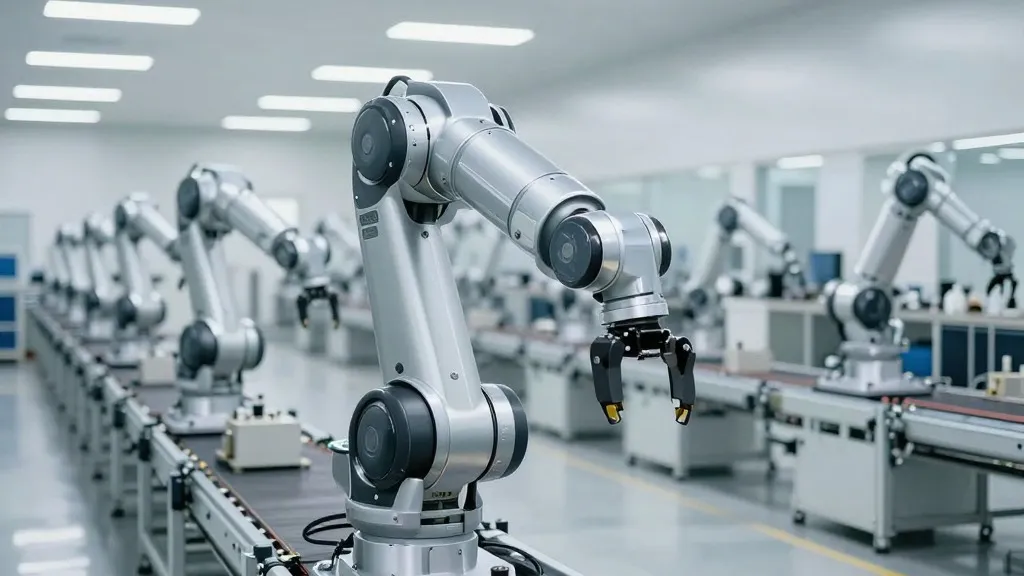
One million units per year. That is the production capacity Tesla is now sizing for its humanoid robot, Optimus, marking a significant shift from prototype development to high-volume manufacturing. The company confirmed on Wednesday that the robots rolling off the new line in Fremont, California, are the first to meet the quality standards required for a commercial product. In its third-quarter shareholder letter, Tesla stated that it has proven the current manufacturing process is suitable for a real-world product, a critical milestone for the robotics division.
The transition to this production model began in the spring when Tesla cleared the legacy Model S and Model X assembly line in just 46 days. This rapid reconfiguration allowed the company to install the infrastructure necessary for robot production. By mid-2026, the site was prepared for the new line, which is now actively producing units. The speed of this conversion highlights the company's urgency to scale its robotics business before competitors can establish a foothold in the market.
CEO Elon Musk outlined the production trajectory during the earnings call, describing the ramp-up as a classic S-curve. He noted that the initial phase will feature a shallow slope, but output is expected to climb sharply toward approximately 20,000 robots per week. Most of the equipment required to reach this level of capacity is already installed in Fremont. The company is currently refining the robot's AI, electromechanical design, and reliability metrics, with a goal to complete this phase by the end of next year.
A unique challenge for Tesla is the lack of a large fleet of robots to generate training data, a resource that has been instrumental in improving its autonomous vehicle technology. To solve this, the company has launched the Optimus Academy. This initiative involves using 10,000 to 20,000 robots to practice a wide variety of tasks. The data generated from these exercises will be fed back into the AI model, creating a continuous learning loop. Every unit produced on the Fremont line will contribute to this dataset, accelerating the robot's ability to handle complex, unscripted environments.
Hardware improvements are also on the horizon. Tesla plans to integrate its AI5 chip into the Optimus platform next year, which should enhance processing power and efficiency. Musk indicated that a new video demonstrating the robot's capabilities will be released within one or two months. This demo will focus on tasks driven by AI rather than preprogrammed motions, addressing previous criticisms that rival humanoid robots only perform scripted routines that may not hold up in real-world conditions.
The supply chain is moving in lockstep with these production goals. In September, Tesla certified Tuopu, Joyson, and Sanhua as mass production partners for key Optimus components. This certification is a crucial step in securing a reliable supply of parts for the high-volume line. The company is also preparing for even larger scale operations at its Giga Texas facility, where construction is nearing completion on a dedicated robotics plant.
Drone footage of the Giga Texas site shows the steel frame of the new factory taking shape. Tesla has set a long-term target for this facility to produce 10 million robots per year, a figure that would dwarf its current automotive output. This expansion suggests that the company views the humanoid robot not as a niche product, but as a core pillar of its future revenue stream. The investment in physical infrastructure underscores the commitment to scaling the technology.
Cost management remains a priority as Tesla engineers the robot for volume. Executives noted that Optimus production costs are trending toward the expected manufacturing cost of the Cybercab, a self-driving vehicle. This alignment indicates that the robot is being designed with economies of scale in mind from the outset. However, the hands remain the most difficult component to engineer, a challenge that has been a focus of recent development efforts. Solving this issue is key to ensuring the robot can perform the dangerous, repetitive, and around-the-clock jobs that Tesla plans to offer to outside companies starting next year.
Source: Teslarati