Musk's Terafab Push: Suppliers Accelerate Shipments for 2028 Chip Target
Tesla and SpaceX are pressing semiconductor partners to move up delivery schedules for a Texas facility aiming to produce one terawatt of AI computing power annually.
By Andrew Fletcher ·
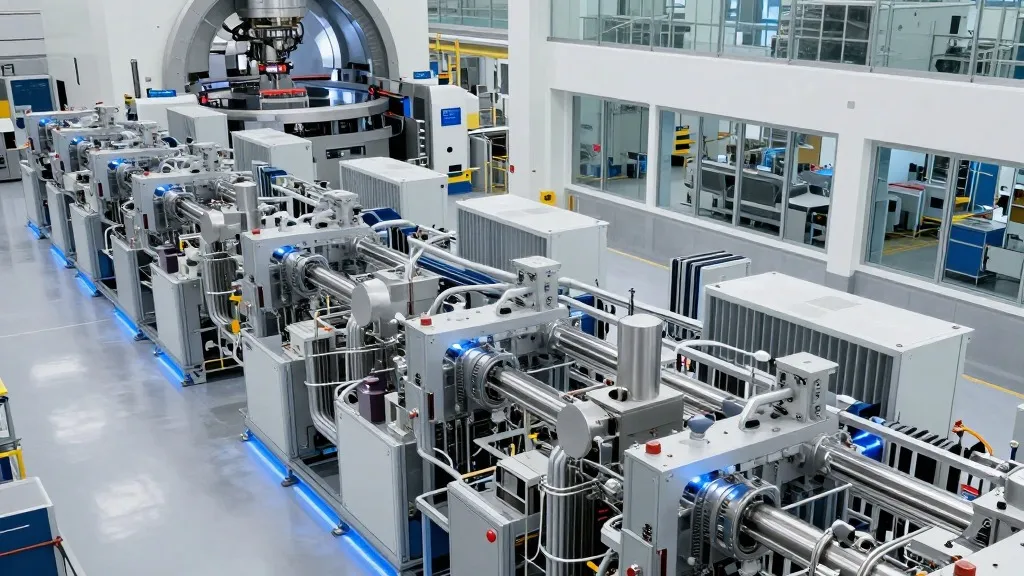
The semiconductor supply chain is under increasing strain as the joint Terafab project between Tesla and SpaceX moves from planning to active procurement. Elon Musk confirmed on October 20 that critical equipment vendors are speeding up deliveries to support the facility’s aggressive manufacturing schedule.
During a live broadcast of SpaceX’s third-quarter earnings call, Musk stated that the project is targeting volume production of chips at its primary site in Gibbons Creek, Texas, by the third or fourth quarter of 2028. He described this timeline as "highly aspirational" and noted it carries "big error bars," acknowledging the difficulty of meeting such tight deadlines in the hardware sector.
The path to this target has involved significant logistical coordination with major industrial players. Musk expressed appreciation to ASML, the Dutch maker of extreme ultraviolet lithography machines, and other suppliers for accelerating equipment deliveries. This support is crucial because Terafab relies on traditional EUV lithography systems using Intel’s 14A manufacturing node technology. Intel formally joined the venture in April 2026 to co-develop and refactor silicon fabrication processes for this specific project.
ASML is the world’s sole commercial supplier of the high-end EUV tools required for leading-edge chip production, making it the most critical partner in the supply chain. While unofficial sources previously suggested the first EUV tool might arrive in mid-2027, it remains unclear if this date has been moved up in response to Musk’s latest remarks. The project also involves American firms Applied Materials, Lam Research, and KLA Corporation, along with Japan’s Tokyo Electron, which are providing front-end processing, metrology, and process control machinery.
Beyond the heavy machinery, Tesla and SpaceX are in discussions with approximately ten South Korean equipment manufacturers. These partners include Hanmi Semiconductor, which specializes in advanced packaging, and HPSP, a maker of high-pressure hydrogen annealing equipment. Other firms in these talks provide specialized piping components and process valves, indicating a vertically integrated approach to facility construction.
The commercial ambitions of Terafab are vast, with a goal of manufacturing one terawatt of AI computing power per year from a single physical building. Musk suggested that once fully operational, the facility’s output could place its value within the top 20 global country GDPs, a figure comparable to Switzerland’s economy of approximately $1.14 trillion. The facility will fabricate logic, memory, and advanced packaging architectures in one location, aiming to reduce reliance on external foundries like TSMC.
These chips are intended to power a wide range of products, including Musk’s xAI computing clusters, self-driving vehicles, Optimus humanoid robots, and SpaceX’s planned orbital AI data center. The project is part of a broader push by Musk’s entities to secure computing capacity. He expects his AI companies to have 2.5 to 3 gigawatts of active computing capacity by the end of 2026, with a goal of reaching 13 gigawatts by the end of 2027.
To achieve this 13 gigawatt milestone, SpaceX and xAI are aggressively procuring next-generation NVIDIA hardware, with plans to bring a 440,000-GPU "Vera Rubin" training cluster online by the end of the second quarter of 2027. SpaceX also plans to manufacture an experimental test chip at its Austin, Texas research facility around the second quarter of 2027, serving as an early step in the broader Terafab roadmap.
Despite the momentum, industry analysts remain cautious about the scale of the one-terawatt ambition. Research firm Gartner estimates total global AI-optimized data center capacity at roughly 44 gigawatts as of late 2026, meaning Terafab’s target would represent 4.4% of the current global total. While global AI computing capacity has grown by roughly 3.3 to 3.4 times per year since 2022, the sheer volume required for Terafab presents a significant challenge for the supply chain even with expedited shipments.
Source: Tom's Hardware