Tesla Ends Seven-Year Wait for Australian and New Zealand Cybertruck Buyers
The automaker has voided thousands of pre-orders made since 2019, citing the high cost of adapting the left-hand-drive vehicle for right-hand-drive markets.
By Mykola Bondarenko ·
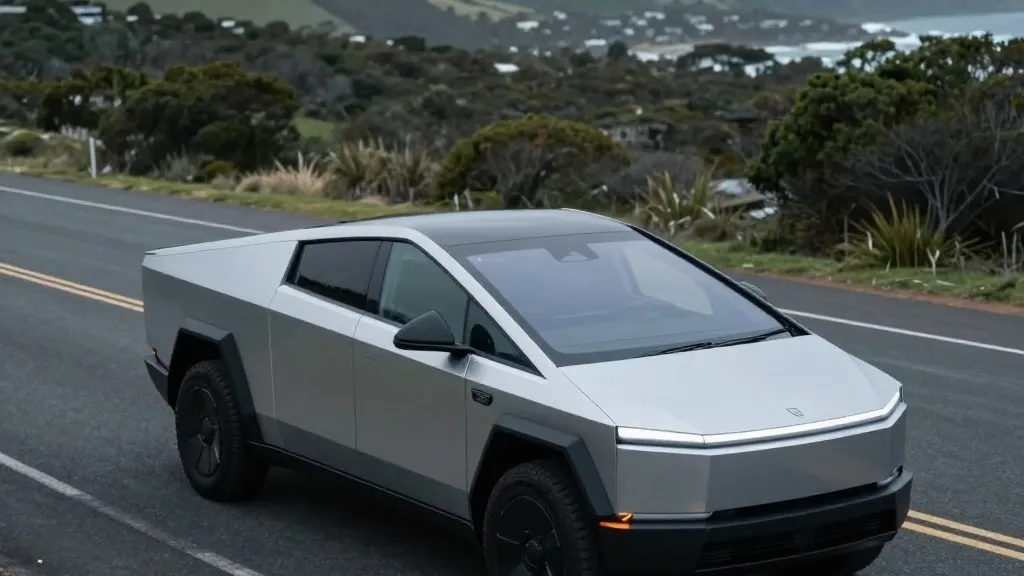
Tesla has formally terminated its plans to bring the Cybertruck to Australia and New Zealand, ending a nearly seven-year period of anticipation for local consumers. The electric vehicle maker sent notifications to reservation holders this week, informing them that their orders have been cancelled and that their initial deposits are now subject to full refunds. This decision marks the end of a long-standing commitment to these two right-hand-drive markets, where the truck was expected to compete as a flagship model.
The cancellation notice, which began circulating on social media platforms and Reddit this morning, confirms that Tesla has discontinued production plans for the region. The message states that after careful consideration, the company is unable to fulfill the reservations. Customers who paid the A$150 deposit in November 2019 will receive their money back within 30 days. In an effort to retain these customers, Tesla is offering a free one-year subscription to its Full Self-Driving (Supervised) software for those who switch their order to a Model 3 or Model Y, vehicles that are already manufactured in right-hand-drive configurations.
This move follows closely on the heels of Tesla’s Q3 2026 earnings report, released just yesterday. The timing suggests a strategic reassessment of the Cybertruck’s global viability. For years, Australia represented a significant segment of interest in the vehicle. A crowdsourced survey from 2020 indicated that Australia held the third-highest number of reservations globally, behind the United States and Canada, accounting for roughly 3% of the total. By 2023, tracking data suggested that total global reservations had reached approximately 2 million units, though Tesla never officially confirmed these regional breakdowns.
The path to this cancellation has been marked by inconsistent communication. Tesla quietly closed the Australian reservation page in May 2022, replacing the order button with a prompt to get updates, yet did not immediately refund customers. Throughout this period, CEO Elon Musk provided optimistic updates to shareholders, stating in 2024 that the company might certify the truck for other markets "sometime next year." A display tour in 2024 further fueled local expectations, but the promised right-hand-drive version never materialized.
The core technical obstacle remains the vehicle’s orientation. The Cybertruck is currently built exclusively in left-hand drive, which is incompatible with the driving standards in Australia, New Zealand, the UK, and Japan. Adapting the platform for right-hand drive, along with meeting Australia’s specific certification design rules, represents a substantial engineering and financial investment. Given that the truck has faced softening demand even in its home North American market, the cost of re-engineering for two markets with a combined population of approximately 33 million people appears difficult to justify.
Tesla’s international strategy for the Cybertruck has thus far been limited to left-hand-drive regions. Deliveries commenced in South Korea late last year and in the UAE in January, with configurators recently launched in Saudi Arabia, Qatar, Jordan, and Israel. The truck remains blocked from the European market, primarily due to pedestrian safety regulations. This geographic limitation highlights a broader trend where the vehicle is treated as a niche product rather than a global staple.
Financial metrics from the third quarter of 2026 underscore the scale of the production challenge. Tesla delivered 8,295 units categorized as "Other Models," a segment that now consists almost entirely of Cybertrucks since the production of Model S and Model X ended. Estimates place Cybertruck sales for the quarter between 7,000 and 8,000 units, translating to an annual pace of roughly 30,000 vehicles. This figure is significantly lower than the 250,000 units annually that the production line was originally designed to support.
For many Australian reservation holders, the truck that eventually reached the market differs substantially from the one they initially reserved. The current model is more expensive and offers less range than originally promised, while U.S. sales have declined from approximately 39,000 units in 2024 to a much lower figure today. The decision to cancel the Australian and New Zealand programs effectively confirms that the Cybertruck is becoming a predominantly North American product, with international expansion focused on finding buyers for existing left-hand-drive inventory rather than investing in new regional adaptations.
Source: Electrek