Israelis Vote in Knesset Election as Netanyahu and Eisenkot Face Off
Polls point to a fragmented parliament, forcing weeks of coalition talks after a vote driven by the security crisis of 2023.
By Vanessa Lopez ·
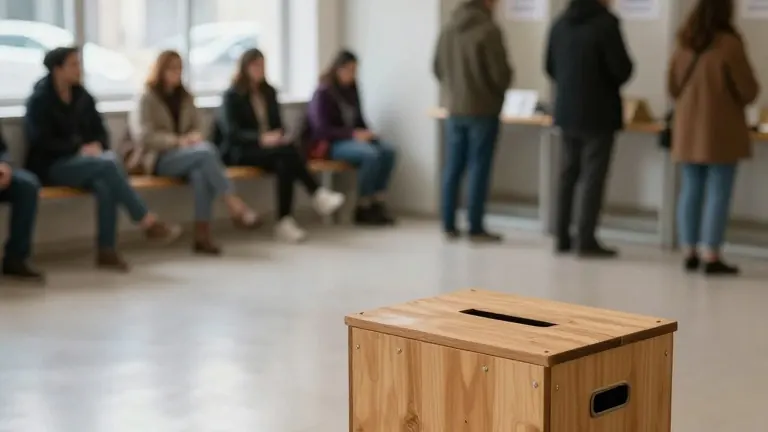
Israelis cast ballots on Tuesday in a national election that many view as a direct test of Prime Minister Benjamin Netanyahu’s leadership following the October 7, 2023, attack by Hamas.
Voters select political parties, which then negotiate to form a majority coalition. No single party has ever secured the 61 seats required for a majority in the 120-member Knesset, meaning the outcome will depend on post-election bargaining among roughly a dozen competing groups.
Opinion polls indicate a tight race with no clear winner, setting the stage for negotiations that could last weeks or months. The contest is framed by the aftermath of the deadliest militant attack in Israeli history and the subsequent wars that have reshaped the Middle East.
Tensions were visible at polling stations across the country. In Kiryat Shmona, a stronghold for Netanyahu near the Lebanese border, a man tore down a poster of former military chief Gadi Eisenkot, who is Netanyahu’s leading rival. In Tel Aviv, families of those killed in 2023 or former hostages observed a moment of silence. Yona Adam, the mother of Mapal Adam, who was killed, asked voters to remember those whose voices are no more.
Eisenkot campaigned in Ofakim, a southern community struck by Hamas-led militants on October 7, 2023. His visit aimed to remind voters of the security failures that preceded the attack and Netanyahu’s refusal to establish a state commission of inquiry. Eisenkot, who lost his son and two nephews in combat in Gaza, leads a bloc arguing that the prime minister must be held accountable for the breakdown.
Thousands of volunteer observers from groups like Elections Guards monitored the process. Eyal Sher, a volunteer, stated that a corrupt government might do anything to stay in power, emphasizing the need to keep procedures intact. This sentiment reflects a deep anxiety among some Israelis about the integrity of the vote.
For Netanyahu, the vote is a final test of his political survival. He has dominated Israeli politics for nearly two decades. A poor result could end the 77-year-old’s career on a bitter note, while a victory would cement his image as a political survivor. His tight ties to U.S. President Donald Trump, who backed his reelection earlier this month, remain a key selling point, though the late endorsement was seen as a setback.
The campaign has focused on Netanyahu’s role in the security failure of October 7, his push to exempt ultra-Orthodox Jews from military service, and the 2023 judicial overhaul. Critics view the overhaul as an assault on democratic institutions. The wars in Gaza and the occupation of parts of southern Lebanon and Syria have broad support, with little debate over wartime conduct despite an international arrest warrant against Netanyahu.
The election result will determine whether Netanyahu can form a new government or if the fragmented Knesset forces a new leader to emerge. The coalition math remains uncertain, with polls showing a tight race between Netanyahu’s bloc and the alliance led by Eisenkot.