Israelis Vote as Netanyahu and Eisenkot Chase 61 Seats
With no bloc projected to secure a majority, the outcome of Tuesday's election will depend on complex coalition negotiations and the strategic decisions of smaller parties.
By Marina Weber ·
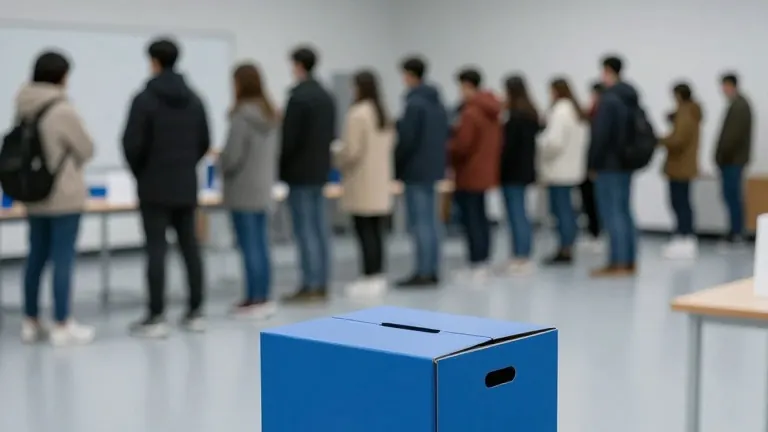
Israeli voters cast ballots on Tuesday in a general election that polling indicates will be too close to call for any single bloc to secure the 61 seats required for a majority government. Incumbent Prime Minister Benjamin Netanyahu and former military chief Gadi Eisenkot are locked in a near tie for the top post, setting the stage for potential weeks or months of coalition wrangling.
The campaign centered heavily on national security. The opposition bloc, led by Eisenkot, criticized Netanyahu for the security failures that allowed the October 7 Hamas-led attacks, which killed nearly 1,200 people and led to the capture of 251 hostages. They demanded an independent commission of inquiry, a move Netanyahu has long resisted. In response, Netanyahu positioned himself as the security expert, citing strategic victories in regional conflicts and his close relationship with US President Donald Trump.
Eisenkot, who leads the newly formed Yashar Party, heads a diverse group of parties united primarily by their goal to replace the current government. This coalition includes right-wing figures such as former Prime Minister Naftali Bennett and Avigdor Lieberman, as well as left-leaning former general Yair Golan. Netanyahu’s path to power depends on retaining the support of the far-right and ultra-Orthodox parties that form his current governing coalition, which is widely considered the most right-wing in the country's history.
Political maneuvering intensified in the final days before the vote. Channel 12 reported that Netanyahu sought last-minute military action against Iran, a plan opposed by his military chief Eyal Zamir. CNN subsequently reported that Netanyahu attempted to persuade Trump to authorize new strikes on Iran, a move Trump reportedly declined. Netanyahu denied both reports. He also gained attention for posting an AI-generated image of a nuclear bomb striking Tel Aviv, a move Eisenkot called hysterical.
Domestic policy issues also shaped the vote. Netanyahu’s government has struggled to enforce a Supreme Court ruling requiring the conscription of ultra-Orthodox men in full-time religious study, a contentious decision given the current military burden on other citizens. On the West Bank, Eisenkot supports most settlements but has pledged to crack down on extremist settler violence, which UN figures say is at an all-time high. He also proposed creating conditions for Palestinian autonomy under Israeli security control, a shift from the traditional two-state solution that has largely vanished from mainstream politics.
The war in Gaza remains a dominant backdrop. Israel has continued striking the territory almost daily since a ceasefire was agreed last year, targeting Hamas operatives. According to Gaza's Hamas-run health ministry, whose figures are considered reliable by the UN, the Israeli military has killed more than 74,000 people since the war began. International condemnation of Israel’s conduct has grown, straining relations with global allies.
Arab parties, representing about one-fifth of the population, could serve as kingmakers in this fragmented field. However, all but one leading Jewish party has ruled out formal cooperation with them. Speculation suggests they might informally support a minority government, though key coalition figure Lieberman has ruled out such an arrangement. These red lines complicate the electoral arithmetic significantly.
Turnout is expected to be high, with 70,000 citizens reportedly flying home to vote and hundreds of thousands casting ballots for the first time. Exit polls will be published at 22:00 local time, offering an early indication of results. However, many votes from soldiers and reservists will not be counted until Wednesday, a delay that could benefit right-wing parties with strong military support.
If no bloc reaches the 61-seat threshold, Israel faces the risk of political deadlock. In such a scenario, new elections would be called, and Netanyahu would remain as interim prime minister. This outcome echoes the period between 2019 and 2022, when the country held five separate elections due to coalition failures.
Results will be watched closely from two main hubs: Likud’s headquarters in Jerusalem and Yashar’s assembly in Tel Aviv. The final outcome may also depend on whether a smaller party leader demands the prime ministership in exchange for withholding support from either major bloc.
Source: BBC News