Bank of Israel holds rate at 3.25% despite inflation dropping to 5-year low
Twelve of fourteen economists polled by Reuters predicted the pause, citing political uncertainty and a weakening shekel as primary factors.
By Amir Navarro ·
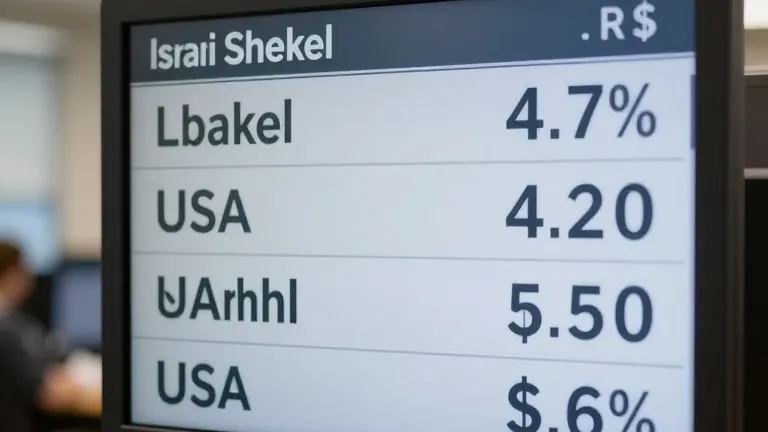
The Bank of Israel kept its benchmark interest rate at 3.25% on Monday, marking the second consecutive month of inaction. The central bank cited the lack of a new government following the recent election as a primary reason for its cautious stance, noting that political instability continues to pressure the Israeli shekel.
The decision aligns with market forecasts. A Reuters poll found that twelve of fourteen surveyed economists anticipated the rate hold. These analysts identified the uncertain political environment as the dominant factor influencing their outlook, overriding other economic indicators.
October data shows annual inflation easing to 1.1%, down from 1.6% in September. This figure sits well within the official target range of 1% to 3% and represents the lowest level in five years. Some market observers argue that such low inflation rates warrant more aggressive action to stimulate economic activity, even as political stability remains a concern.
Dror Ohev Zion, CEO and founder of DARA Real Estate Marketing, criticized the central bank's decision. He described the move as highly disappointing and out of step with current market requirements. Ohev Zion argued that the data supports a more aggressive stance to provide relief to households and businesses.
The real estate sector specifically requires continued reductions in interest rates, according to Ohev Zion. He suggested that the economy needs sharper cuts to effectively support growth, viewing the pause as a missed opportunity for the broader economy.
The central bank had previously cut rates in November of the prior year and again in January. It then paused reductions due to the conflict with Iran and concerns about supply-driven inflation. The bank resumed cutting rates in May, July, and September before holding steady in late October, one week before the October 27 election.
The shekel has depreciated sharply this month, adding complexity to the central bank's decision-making process. The currency's weakness creates a tension between the need for domestic economic stability and the risks posed by a volatile exchange rate in the post-election period.
More Business · World news · Scam Watch · Report a business · Got a Story?