At 2 a.m. Sunday, 6:13 a.m. Sunrise Arrives as Clocks Turn Back
The shift restores Pacific Standard Time while a bill to end the twice-yearly changes remains stalled in the Senate.
By Vanessa Lopez ·
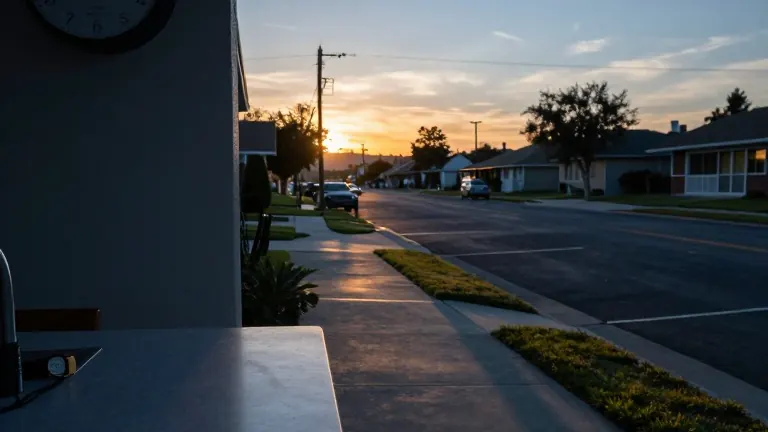
Residents across Southern California will gain an extra hour of sleep this weekend, then lose the evening light they grew used to over the summer. Clocks move back one hour at 2 a.m. Sunday, returning the region to Pacific Standard Time. The sun will come up about 6:13 a.m. and set about 5 p.m. that day, putting darkness on the road home from work and school. Connected devices such as phones and computers generally adjust themselves, while appliances, watches and some vehicles need manual resetting.
The shift marks the end of daylight saving time, which began March 8 under a federal schedule setting the changes for the second Sunday in March and the first Sunday in November. The National Highway Traffic Safety Administration tells drivers to slow down and watch for pedestrians and children near school zones and bus stops as evening darkness returns earlier. Pedestrians are advised to wear bright or reflective clothing and carry a flashlight after dark. Fire departments ask residents to use the date to test smoke alarms, practice a home fire escape plan and check carbon monoxide detector batteries.
Whether this is the last such change is unsettled. The House voted 308-117 on July 14 to pass the Sunshine Protection Act, which would make daylight saving time permanent in states that already observe it and end the spring and fall clock changes. The measure, H.R. 139, went to the Senate Committee on Commerce, Science and Transportation, where it has stalled. A companion measure, S. 29, drew a 16-12 committee vote in April 2025, but the panel said another vote was needed to meet its in-person attendance rules. Neither has reached the Senate floor. President Donald Trump urged senators to act, writing on Truth Social Monday that "The United States Senate is letting the Daylight Saving Bill die, when a vast Majority of the Country want it." He has changed position before, calling the issue "50-50" in March 2025 after describing daylight saving time as inconvenient and costly in December 2024.
Several senators oppose the House bill, arguing that year-round daylight saving time would put children and commuters in northern states on the road before sunrise during winter. The Senate is unlikely to take up the measure before the end of the year, according to media reports. California voters approved Proposition 7 in 2018, giving the Legislature authority, by a two-thirds vote, to alter the state's daylight saving schedule within federal law. California can adopt standard time year-round; keeping daylight saving time permanently requires an act of Congress. Hawaii, most of Arizona, American Samoa, Guam, the Northern Mariana Islands, Puerto Rico and the U.S. Virgin Islands do not observe the change. The nation tried permanent daylight saving time in 1974 during an energy crisis, and Congress ended the experiment early as support fell over concerns about children traveling to school in the dark. Absent a change in federal law, clocks move forward again at 2 a.m. March 14, 2027.
The change follows a 1974 precedent that shows how quickly support can shift. The nation kept daylight saving time year-round that winter during an energy crisis, but Congress ended the experiment early as public backing fell amid worries about children traveling to school before sunrise. Several senators now make the same argument against the current bill, saying permanent daylight saving time would put children and commuters in northern states on the road in darkness during winter. The Senate is unlikely to vote on the measure before the end of the year, according to media reports. Absent a change in federal law, clocks move forward again at 2 a.m. March 14, 2027, resuming the cycle Congress set for the second Sunday in March and the first Sunday in November.
Source: KNSD