US Midterms: Cost of living drives voters away from Trump-aligned Republicans
Democrats captured key statehouses and congressional seats as inflation, the Iran conflict, and corruption concerns overrode party loyalty.
By Amir Navarro ·
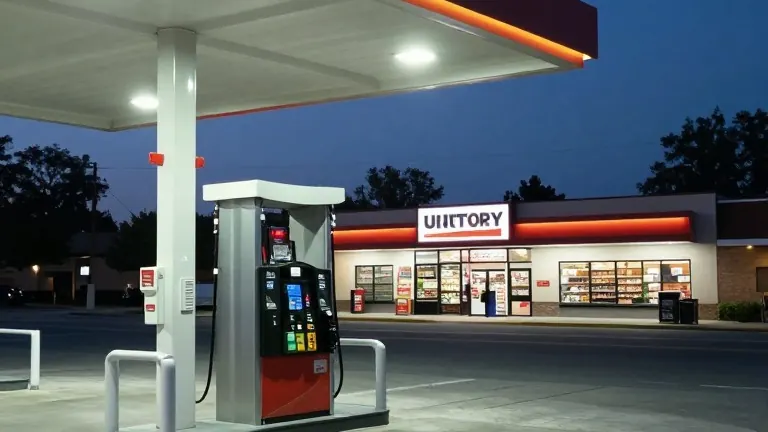
American voters rejected the economic narrative promoted by the White House during the midterm elections held on Tuesday. The results show that high prices for gas, groceries, and healthcare weighed more heavily on decision-making than the administration’s claims of a national economic boom.
President Donald Trump had spent the final days of the campaign asserting that the United States was entering a golden age. He pointed to 88 all-time highs in the stock market and claimed the country had become the most desirable destination in the world. He held a final rally at the Lincoln Memorial reflecting pool in Washington, D.C., where he stated he had kept every promise made during his 2024 campaign.
Election returns contradicted those claims. Voters in states such as Ohio, Kansas, and Iowa reported that the cost of living was the primary factor in their choice. Many cited the ongoing war in Iran, the administration’s deportation efforts, and the implementation of tariffs as additional reasons to change their vote.
Jim Conrad, a voter in Ohio, noted that there is currently a war that few people want. Linda Olson, a previous Trump supporter in Kansas, said the president appeared focused on increasing his own wealth rather than assisting the general public. Stacey, a voter in Iowa, stated that she wanted to vote against every Republican candidate on her ballot.
Republicans on the ground described a shift in voter priorities. Tom Galvin, a member of the Maricopa County Board of Supervisors in Arizona, said the issues that supported Trump’s return to power had been dropped one by one. He specifically mentioned the Epstein files, inflation, gas prices, and the pledge to avoid foreign wars.
Pollster Paul Bentz of HighGround in Arizona observed a disconnect between market performance and consumer experience. He noted that while the stock market remains strong, it is not visible from the side of the road, whereas high gas prices are a daily reality for commuters. A colleague referred to the election as the reflecting pool election, referencing the $14 million renovation of the site where Trump held his final speech.
Democrats campaigned through town halls and county fairs, emphasizing a direct connection with local residents. Bob Brooks, who won Pennsylvania’s 7th congressional district, said voters felt they had been lied to by the Trump organization. Rebecca Cooke, who took a Republican-held district in western Wisconsin, said people do not feel the federal government cares about them.
The losses extended to state legislatures. In Arizona, Republicans lost control of both chambers of the state legislature after polls closed on November 3. The Democratic governor in that state won reelection by a margin of nearly 13 points. In Minnesota, state senator Jim Abeler lost reelection despite visiting 80 percent of homes in his district. He reported meeting outright hostility toward Trump over gas prices and the war in Iran.
Trump responded to the results by promoting Stephen Miller to chief of staff. On Thursday, he posted on Truth Social that he was not on the ballot and argued that he would have won in a landslide if he had been a candidate. He maintained that the losses were due to the party structure rather than his personal popularity.
Christine Hunschofsky, the incoming Democratic leader in the Florida House, said that elected officials in both parties now have a responsibility to restore public trust. Joe Pitts of the 1912 Institute in Arizona noted that Trump will continue to exert influence over the Republican Party for as long as he remains active in politics.
More Business · World news · Scam Watch · Report a business · Got a Story?