El Niño Winter Offers Only Temporary Relief for California’s Water Crisis
Experts warn that even a strong storm season will not reverse decades of drought, as outdated infrastructure and low Colorado River levels limit long-term recovery.
By Amir Navarro ·
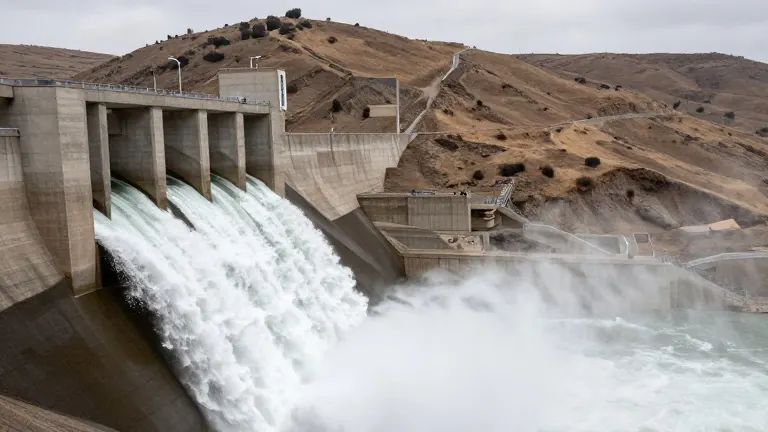
A strong El Niño winter is approaching California, yet four scholars from the University of California, Riverside, say the region should not expect a permanent fix to its water shortages. The experts argue that a single wet year cannot undo the damage of a twenty-five-year drought in the Colorado River Basin. Instead, the state faces a complex challenge of capturing floodwater without overfilling reservoirs that need space for storm surges.
The first key point is that recovery from drought is slow and often incomplete. Hoori Ajami, a professor of groundwater hydrology, notes that streams and groundwater take an average of three years to recover from drought. She adds that many aquifers, particularly those that are overdrawn, may never fully return to previous levels. Ariel Dinar, a distinguished professor emeritus of environmental economics and policy, agrees that a one-year El Niño event is unlikely to make a meaningful difference after many years of scarcity.
The second point concerns the disconnect between local rainfall and the state’s out-of-state water supplies. Kurt Schwabe, a professor of environmental economics and policy, explains that most Colorado River water comes from the Upper Basin states of Colorado and Utah. Because California is at the end of the system, heavy rain in Southern California does not automatically translate to more water in the Colorado River. Dinar points out that California uses water from the basin via canals but does not contribute to the basin. He notes that while a wet winter could theoretically lower demand from the Metropolitan Water District and the Imperial Irrigation District, these entities operate under senior water rights and are unlikely to give them up without significant compensation.
The third point involves the limitations of current infrastructure. Francesca Hopkins, an associate professor of climate change and sustainability, states that California’s water system was built for a different climate. She observes that the rainy season in Southern California has concentrated into a shorter, more intense winter period. This shift creates more runoff and less time for rain to infiltrate the soil. Hopkins cites a heat wave in March 2026 that reduced the Sierra snowpack to 18% of normal levels by April 1, removing a natural storage mechanism that previously released water gradually through spring and summer.
The context for these findings is a landscape of aging infrastructure and shifting weather patterns. Schwabe explains that reservoirs must maintain empty capacity to protect against flooding, which limits how much runoff can be stored. He argues that the current storage and conveyance systems are undersized for the volumes of water arriving during major storms. The scholars suggest that better land management, increased storage capacity, and improved real-time forecasting are necessary to manage this trade-off. They also note that agriculture, which holds priority water rights, will likely need to play a larger role in reducing usage if shortages persist, though the economic implications for farmers remain a central question for future policy debates.