Taurid meteor showers to peak over Arizona in November
Slow-moving debris from Comet Encke will produce bright fireballs visible to the naked eye, with the Southern Taurids peaking on November 4 and the Northern Taurids following on November 11.
By Marina Weber ·
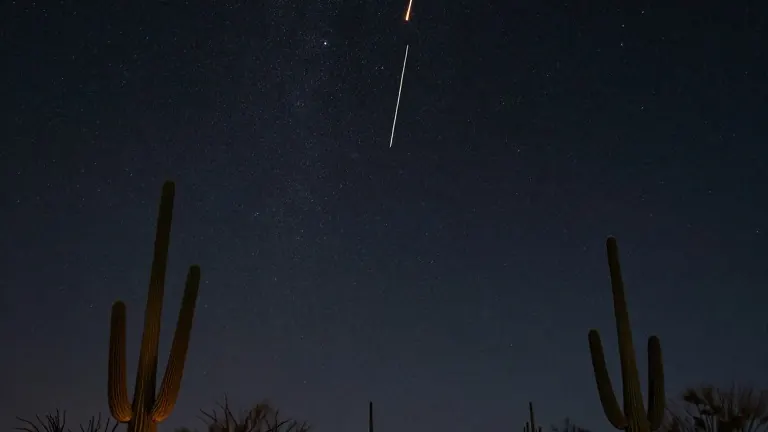
The Southern Taurid meteor shower will reach its peak activity between the night of November 4 and the morning of November 5, 2026. A second wave, the Northern Taurids, is scheduled to peak one week later, from November 11 to 12. These two annual events are currently active and will be visible from the ground across Arizona.
The meteors associated with these showers are distinct because of their speed and brightness. According to NASA, Taurid meteors travel more slowly than those from other showers. This slower velocity allows the debris to penetrate deeper into Earth's atmosphere before burning up. The increased mass of the particles results in longer-lasting and brighter fireballs compared to typical shooting stars.
The visual output of these fireballs varies in color. The light is produced by chemical elements within the meteoroids and in the atmosphere, including magnesium, iron, and sodium. Depending on the specific composition, the streaks of light can appear green, blue, yellow, or orange. Although the showers are not prolific, observers should expect approximately five meteors per hour. The high visual intensity of the fireballs compensates for the lower frequency of events.
Optimal viewing times begin after 7 p.m. local time, when the constellation Taurus rises higher in the eastern sky. The peak hours for observation for both the Northern and Southern Taurids fall between 11 p.m. and 2 a.m. Each night offers a window to see the debris trail left by Comet Encke and other stellar objects. The showers derive their names from the apparent radiant points near the constellation Taurus.
Location plays a critical role in visibility. Observers need areas with dark skies and unobstructed views of the eastern horizon. Metro Phoenix and other urban centers create light pollution that can obscure fainter meteors. Residents are advised to travel to the outskirts of the Valley for the best chance of a clear view.
Specific locations within the Phoenix metro area offer favorable conditions. Gold Canyon, Queen Creek, and San Tan Valley are cited as ideal spots because they sit outside the main zones of artificial light. These areas provide the dark sky conditions necessary to see the slower, brighter trails of the Taurid meteors.
Source: Phoenix New Times