GROM special forces deploy as Poland moves to stop border provocation
Polish Prime Minister Donald Tusk claims a rapid security response prevented a planned incursion near the Kaliningrad exclave, with operations set to continue through at least Nov. 8.
By Vanessa Lopez ·
One specific provocation was reportedly halted before it could begin, according to Polish Prime Minister Donald Tusk. He stated on Tuesday that security forces acted quickly to stop an unspecified attempt to disrupt the nation’s stability, a claim made as Poland escalated its border security measures this week.
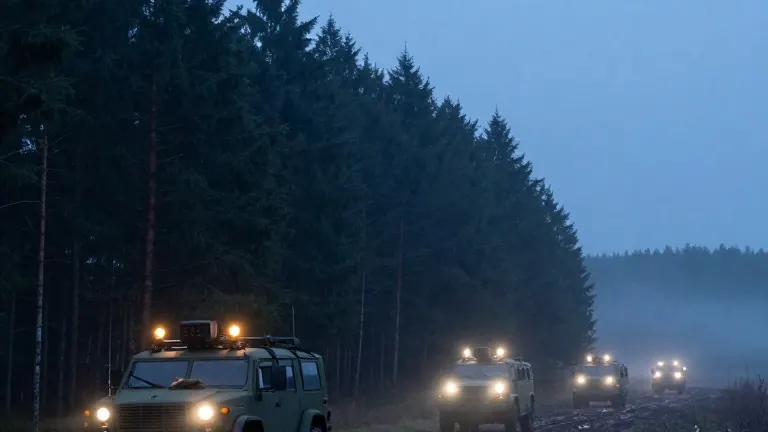
The operation involves additional police units, counterterrorism teams, and soldiers from GROM, the country’s elite military special forces. National police chief Marek Boroń confirmed that these forces are deployed in the northeast regions of Warmia-Masuria and Podlaskie. The police said the operation will run from Monday until at least Nov. 8. A special command center is coordinating the effort from police headquarters to monitor critical infrastructure and detect suspicious activity.
Intelligence agencies in Poland and allied nations had warned of potential sabotage and armed incursions during the first half of November. Tusk described seeing individuals with flashlights moving near the border with Russia’s Kaliningrad exclave overnight. He said the mobilization of forces on site successfully prevented any attempted acts of provocation, though he noted that complete confirmation of the intent is impossible.
The strategic context of the deployment centers on the Suwałki Corridor, a narrow land route that connects the Baltic NATO states to the rest of the alliance. This corridor sits between Russian and Belarusian territory, making it a focal point for security concerns. Kaliningrad, bordered only by Poland, Lithuania, and the Baltic Sea, is believed to host Russian security agencies, including the FSB and GRU.
European security officials have raised alarms about hybrid warfare tactics that stay just below the threshold for NATO collective defense. Sir Ken McCallum, head of Britain’s MI5, warned that Russian military and intelligence services are escalating these attempts. He described Moscow as "aggressor number one" while noting that the country is using tactics that stop short of conventional conflict.
The current alert follows a series of incidents across the continent this year. In August, a fire damaged a Polish factory that produces drones and military components. In September, an arson attack struck a Starlink satellite ground station, an event Polish officials attributed directly to Russia. Additionally, Russian drones have repeatedly entered NATO airspace in Eastern Europe. This week, the U.K. Royal Navy intercepted a Russian spy ship monitoring a NATO exercise near the Outer Hebrides.
Polish authorities had not released specific evidence of planned sabotage from Kaliningrad by Tuesday afternoon. However, Tusk linked his concerns to a recent conversation with NATO Supreme Allied Commander Alexus Grynkewich. That discussion reinforced his view that threats of sabotage, including potential provocations involving aircraft or border crossings, are increasing.
Source: CBS News