Long Island's military legacy spans 250 years of conflict
From Benjamin Tallmadge's spy ring to modern VFW members, the region's history is defined by local figures in every major war.
By Marina Weber ·
Three thousand shells of mustard and phosgene gas struck New York City soldiers near the Argonne Forest on June 24, 1918. That specific moment of chemical warfare is one of many documented events in the long military history of Suffolk County, New York, which stretches from the American Revolution to the present day.
Local veterans and historians argue that this timeline demonstrates a continuous pattern of service. Lieutenant Colonel Chad Lennon, a commander at VFW Post 6249, stated that veterans answered the nation's call at a moment's notice and sacrificed family time to protect the country. Captain Frank Lombardi, a former First Gulf War Army Ranger, added that Veterans Day reminds citizens that freedom is sustained by service and that gratitude must be reflected in how society cares for those who served.
The region's military roots begin with Benjamin Tallmadge, a Setauket native who attended Yale College. After his brother starved to death in a British ship, Tallmadge became George Washington's intelligence chief. He created the Culper Spy Ring on Long Island and questioned British officer John Andre regarding Benedict Arnold's plot to surrender West Point. Tallmadge was promoted to lieutenant colonel and accompanied Washington into New York City when the Continental Army reoccupied the area on November 25, 1783.
During the War of 1812, British ships including the H.M.S. Sylph harassed American vessels near the entrance of Long Island Sound. On June 23, 1814, the first submarine, described as a torpedo boat, was stationed at Southold. Sag Harbor militia forces attempted to stop enemy landings, but the boat was destroyed in the process.
The Civil War brought Walt Whitman to the front lines. At age 42, he traveled to Washington, D.C., to nurse his wounded brother. He met President Abraham Lincoln and documented the conditions of the injured soldiers. Following the Spanish-American War, 30,000 soldiers traveled to Camp Wikoff in Montauk. The base was built quickly near New York City, but disease claimed the lives of 260 soldiers, a situation that angered Colonel Theodore Roosevelt.
World War I saw the construction of Camp Upton near the railroad to train draftees. Major General J. Franklin Bell took command of 40,000 soldiers to prepare them for trench warfare. The 77th Division, which included over 28,000 soldiers from 25 different nationalities, fought in the Argonne Forest and the Lost Battalion. Sergeant Irving Berlin, a Russian-born immigrant, composed the song Yip Yip Yaphank during this period.
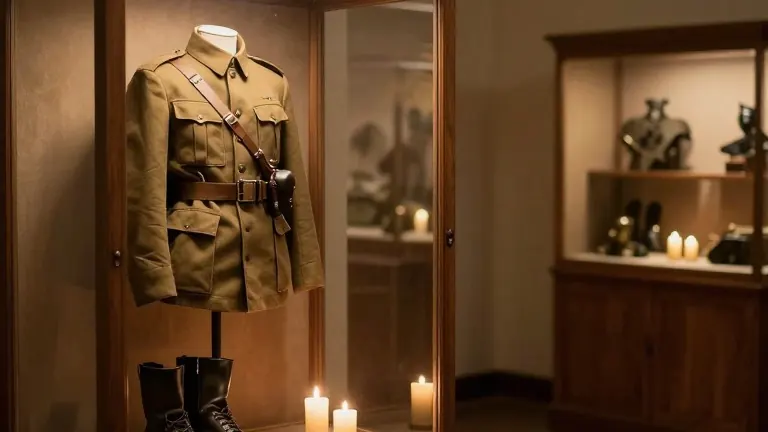
In World War II, local veterans like Staff Sergeant Robert J. Stefferson fought in the Pacific at Saipan and Okinawa. Lieutenant Theodore Schwartz, a Jewish-American bomber pilot, completed 66 missions over Europe. Maria Catherine Ganas served as a nurse in the Women's Army Corps in 1944. Their uniforms and personal items are displayed in the VFW Post 6249 museum.
Vietnam War veterans continue to support current servicemembers. Joseph A. Cognitore fought in Cambodia and later became a VFW commander. Richard Kitson, a Marine mortarman, serves as president of the Suffolk County Chapter of Vietnam Veterans. Janet D. Santeramo, a Marine from the Desert Shield and Storm era, is a member of the New York State Veterans Hall of Fame and advocates for armed forces representation in Veterans Affairs matters.