Spain's Daily Lunch Tradition Fades
The traditional set-price midday meal, once a staple of Spanish culture, is struggling to survive against rising costs and shifting habits.
By Arjun Patel ·
A quiet tension has emerged around the Spanish lunch table. For decades, the daily set menu has been the heartbeat of the workday, offering a predictable and affordable way to eat. Today, however, that rhythm is breaking. As costs climb and schedules tighten, the institution that defined midday for generations is finding it harder to keep up with modern life.
To understand the current struggle, it helps to look back at where this tradition began. In the mid-1960s, the government under Francisco Franco introduced the menu as a strategic tool for tourism. Following the post-war scarcity known as the years of hunger, officials wanted to show foreign visitors that Spain had plenty of good, cheap food. The original rules were strict. Restaurants had to serve a soup starter, a main course of egg, fish, or meat with a side, and a dessert of fruit, sweets, or cheese. Prices were capped, and the included wine had to meet specific quality standards to prevent watering down.
The name changed in the early 1970s to the current term, partly to distance the meal from its tourist origins and encourage local workers to use it. Over the following decades, it became so ubiquitous that many Spaniards forgot its political roots. Food journalist Lakshmi Aguirre, who recently published a book on the subject, noted that people were often shocked to learn it was a state initiative. She described the tradition as a mirror of Spanish society, one that has evolved alongside the country itself.
The habit is not gone, but it is shrinking. In 2009, renowned chef Ferran Adrià declared the daily menu dead, citing economic downturns and the rise of pricier bistro-style dining. That prediction proved premature, as roughly four million of these meals are still served on weekdays. Yet, the pressure is mounting. The average price has risen to about 14.70 euros, a significant increase for a simple three-course meal. Many workers now lack the time for a full sit-down lunch, opting instead to bring food from home or heat up supermarket meals.
Small, family-run restaurants face their own challenges. Rising energy and food costs make it difficult to maintain a rotating daily menu. Some establishments have simplified their offerings to a single dish of the day. Others have adapted to changing demographics by adding Latin American staples. Aguirre views this evolution as natural, arguing that the menu has always reflected the society that eats it.
For Aguirre, the ideal version of this meal remains simple. She envisions a vegetable stew followed by hake in green sauce or baby squid in ink, finished with a classic dessert like rice pudding. Her criteria for a good spot include a changing menu, fresh rather than frozen chips, and a regular clientele. She even suggests that a chalkboard listing trendy ingredients like avocado or sourdough bread is a red flag, whereas a child doing homework at a back table is a good sign.
The loss of this tradition goes deeper than just saving money. Aguirre argues that the menu serves as a vital social meeting point. It is a place where families with limited budgets can dine out and where people living alone can find a sense of community. The true value, she says, lies not just in the affordability of the food, but in the time it allows people to pause and enjoy a meal together.
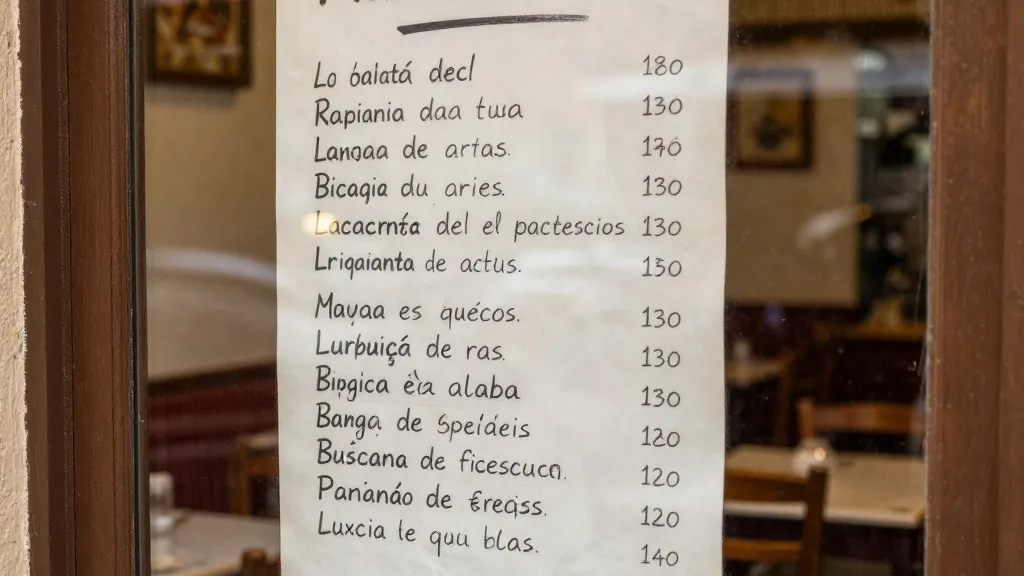
As the future of the daily set lunch remains uncertain, the debate continues. Is it a fading relic of the past, or a flexible tradition that will continue to adapt? For now, the chalkboards still appear in windows across the country, holding on to a way of life that many fear is slowly slipping away.
Source: The Guardian