Iran Threatens US Navy as Oil Prices Spike to Eight-Month High
Tensions escalate in the Persian Gulf as Tehran vows to target American vessels, driving Brent crude to $117 amid stalled diplomatic efforts.
By Tariq Mahmoud ·
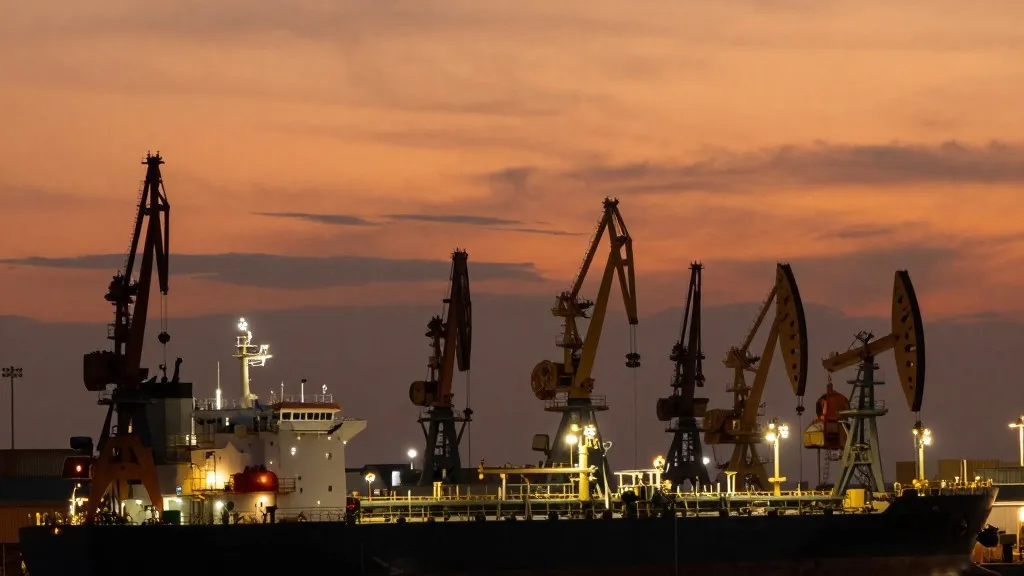
Global energy markets reacted sharply to renewed threats from Tehran, with Brent crude climbing to approximately $117 a barrel. This marks the highest price point since April, reflecting investor anxiety over the stability of supply routes in the Middle East. The price surge follows statements from Iranian military leaders who declared readiness to engage United States naval assets in the region.
The escalation stems from a decision point facing Washington. President Donald Trump indicated on Friday that the US has not finalized its next strategic move. He suggested the military might launch another major offensive, a campaign he referred to as Epic Fury, similar to the initial large scale bombing run at the start of the conflict. Trump weighed the option of ending the war quickly with massive strikes against allowing the current naval blockade and sanctions to continue pressuring the Iranian economy.
In a direct response to this ambiguity, Ali Abdollahi, the chief of the Iranian general staff, issued a statement on Saturday morning. He asserted that the US Navy cannot re enter Iranian territorial waters or their immediate surroundings. Abdollahi claimed that Iran can target any vessel in the region, stating that the US president can only dream of their soldiers and military again entering the Persian Gulf. This rhetoric signals a hardening of Tehran's stance on maritime dominance.
Abdollahi also criticized what he described as contradictory American rhetoric. He argued that US claims of having largely destroyed Iranian military capabilities are undermined by Washington's decision to keep its aircraft carriers and support ships at a distance. The Iranian general staff intends to trap the US and Israel in a military quagmire, a strategic counter to the surprise attack on February 28 that initiated the current eight month conflict.
The physical impact on trade is already evident in the Strait of Hormuz. The Islamic Revolutionary Guard Corps reported that seven tankers were attacked or hit mines in the early hours of Thursday. On Friday, the IRGC claimed that two supertankers struck mines. These incidents have reinforced the group's shift toward a more offensive doctrine, keeping shipping lanes under constant threat and forcing insurers to adjust risk premiums globally.
Beyond the immediate naval standoff, the conflict has broadened across the region. The Iran allied Houthis in Yemen launched new strikes on Riyadh on Saturday, following recent attacks on Dammam's international airport and the Shaybah oilfield. Saudi forces responded by bombarding Houthi held areas in Marib and Taiz. In southern Lebanon, Israeli air strikes hit areas near Nabatieh, while artillery fire landed near Zawtar ash-Sharqiyah. These multiple front lines complicate the economic outlook for the region.
Diplomatic efforts to de escalate have stalled, adding to market uncertainty. Senior diplomats from Turkiye, Saudi Arabia, Pakistan, and Egypt met with counterparts from the UK, France, Germany, and Italy in Istanbul on Friday. Neither the US nor Iran was present at the talks. Turkiye's Foreign Minister Hakan Fidan warned that a new attack on Iran would widen the war and spread the conflict, noting that no one is endorsing it at this point. European and regional ministers cited Israeli occupation and Iranian actions as primary sources of instability, demanding unrestricted passage through Hormuz.
Iranian state media characterized the Istanbul meeting as a gap between diplomatic claims and field realities. Reformist outlet Etemad suggested that the zero hour of another intense round of fighting is approaching. Analysts note that Iran has activated a dead hand doctrine, which allows attacks from all 31 provinces if senior leaders are assassinated. The IRGC has also threatened seabed internet and communication cables if civilian infrastructure is targeted again.
The outlook for global markets remains cautious as the risk of a full scale naval engagement rises. With US diplomatic staff being ordered to leave Saudi Arabia and other regional countries, the possibility of a broader geopolitical shock is increasing. Investors are watching for any signs of a second major US strike, which could further disrupt oil flows and push commodity prices higher in the coming weeks.
Source: Al Jazeera