Militias Count 171 US Air Moves Since Coalition Exit
Iran-backed groups in Iraq claim US jets operated 171 times in their airspace after the formal end of the anti-ISIS mission on September 30.
By Amir Navarro ·
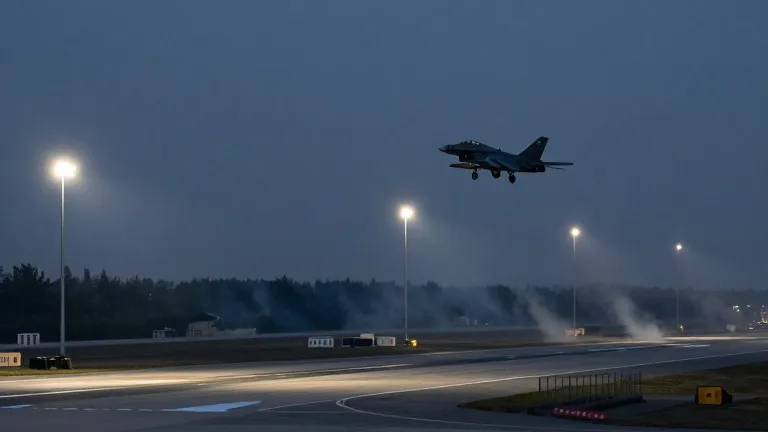
171. That is the number of US fighter and reconnaissance aircraft operations that Iran-backed militias in Iraq say took place in their national airspace over the last three weeks. The Islamic Resistance in Iraq, an umbrella organization for these armed groups, released the count on Friday. The period covered by the tally begins on September 30, the date the US-led anti-ISIS coalition formally concluded its military mission in the country. The group stated that the flights violated Iraqi sovereignty, a claim that has intensified friction between Baghdad and the armed factions it seeks to control.
The militias also leveled accusations at the Iraqi government, blaming Prime Minister Ali al-Zaidi for appeasing Washington. They argued that Baghdad is caving to US pressure by cutting commercial flights and closing border crossings with Iran. The IRI issued the statement while speculation swirled about a potential new war involving Iran. The group continues to align itself with Tehran, positioning its weapons as a necessary shield against American and Israeli influence in the region.
The allegations of airspace violations have not been independently verified. However, they coincide with a major policy shift by the Iraqi government. Zaidi has moved to bring militia weapons under state control, a process he aims to complete by June 30, 2027. He told Iraqi state media that by that date, no weapons will remain outside the framework of the state. The deadline represents an extension from previous timelines, reflecting the complex negotiations with various armed groups.
The path to disarmament is uneven. Kataib Hezbollah and Harakat al-Nujaba remain opposed to the government’s initiative. In contrast, Harakat Ansar Allah al-Awfiya and Kataib Sayyid al-Shuhada have signaled willingness to cooperate. Zaidi maintained his stance in an interview with state media, stating that Iraq will soon be a state free of factions, with weapons held exclusively by the Iraqi security forces. The divide among militias highlights the difficulty of consolidating control over armed groups that have operated independently for years.
Tensions in Iraq are compounded by warnings from Washington. The US State Department updated its travel advisory for Iraq on Saturday, citing increased regional threats. The document noted that attacks by the Iranian-backed Houthis against Saudi Arabia, including strikes on civilian airports and critical infrastructure, could trigger wider escalation. The State Department warned that hostilities have the potential to escalate rapidly beyond the immediate area.
The advisory specifically identified armed groups inside Iraq as key threats. It stated that terrorists, including ISIS and Iran-aligned militias, encourage and conduct attacks against US persons and interests. Potential targets listed in the warning include airports, energy infrastructure, hotels, and diplomatic facilities. The department also noted that the Iraqi government cannot guarantee the safety of US citizens against sudden outbreaks of violence and armed conflict.
US intelligence officials have raised additional alarms. A memorandum dated Friday from National Intelligence Director Jay Clayton to Secretary of State Marco Rubio warned of increased Iranian efforts to assassinate American diplomats and officials in the Middle East. The report indicated that some alleged plots had reached advanced stages. Washington has responded by reducing staffing at several embassies amid concerns about regional escalation.
Meanwhile, military activity on the Iran-Iraq border has intensified. The Islamic Revolutionary Guard Corps announced on Saturday that it targeted a gathering center belonging to the Kurdistan Free Life Party, an Iranian Kurdish opposition group. The attack occurred inside Iran but carries implications for Iraq, where Tehran has previously targeted these groups. Clashes between the IRGC and the party's armed wing, the Eastern Kurdistan Units, have intensified over the last week. Iran’s Mehr News Agency described the operation as a preemptive strike against members allegedly preparing attacks.
Source: The Jerusalem Post