Moscow vows mirror response after Western navies seize Russian oil tankers
Sergei Lavrov labeled European detentions of shadow fleet vessels as piracy, citing a growing list of interceptions across the Baltic, Mediterranean, and Indian Ocean.
By Amir Navarro ·
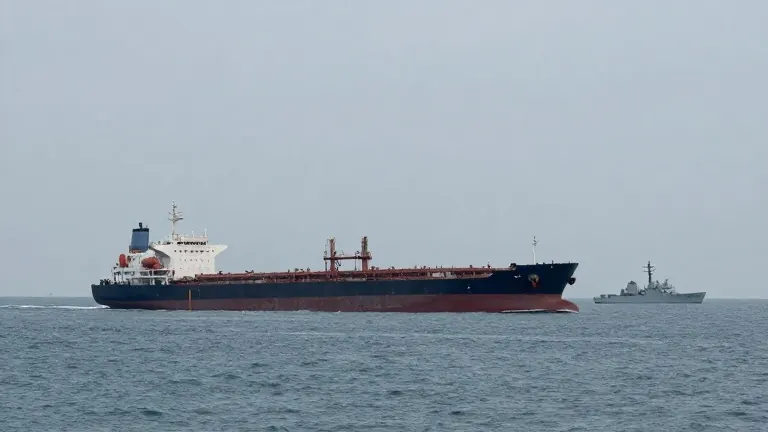
The standoff over maritime enforcement has intensified as Russian officials declare a new strategy of reciprocal action.
Sergei Lavrov, the Russian Foreign Minister, stated that Moscow will deliver a "mirror and asymmetric response" to Western nations. He accused European states of piracy, claiming they steal cargoes from seized ships. Lavrov argued that the label "shadow fleet" has no standing in international law and criticized the oil price cap for limiting European business ties with Russia's shipping sector.
The threat follows a surge in vessel detentions that began at the start of 2026. France, Sweden, and the United Kingdom have led these operations in the Baltic Sea, the Mediterranean Sea, and the Indian Ocean. The French Navy recently seized the DF Peak, a tanker flying the Benin flag. The vessel was bound for a port in Chile when it was intercepted. This detention marks the sixth shadow fleet tanker France has held in the past year.
The DF Peak was formerly owned by the Russian shipping company Sovcomflot. It has changed names twice and is currently operated by a Hong Kong firm. The Russian embassy in France described the seizure as a "gross violation of international law." Meanwhile, a Swedish court upheld the arrest of the cargo ship Caffa in the Baltic Sea. The court allowed the vessel to be transferred to Ukraine to aid an investigation into grain removal from occupied territories.
Ukrainian Defence Intelligence has gathered data on 28 specific shadow fleet vessels and published their captains' names. Reporting indicates that Russia has grown its gas carrier fleet to 25 ships by adding second hand vessels and its first domestically produced tankers. Russian and Iranian operators continue to use forged websites to create fake documents and mimic ship registries to bypass sanctions.
The European Union has also expanded its enforcement capabilities. Military personnel serving under Operation IRINI in the Mediterranean are now authorized to inspect tankers suspected of carrying Russian oil. This operation originally aimed to stop illicit arms supplies to Libya. The combination of naval seizures and legal rulings has placed the shadow fleet at the center of a new diplomatic dispute.