Italy urges EU peers to commit more ships to Red Sea security mission
Italy's defense minister criticized European partners for lacking concrete commitments to strengthen the Aspides naval mission amid ongoing Houthi attacks in the Red Sea.
By Marina Weber ·
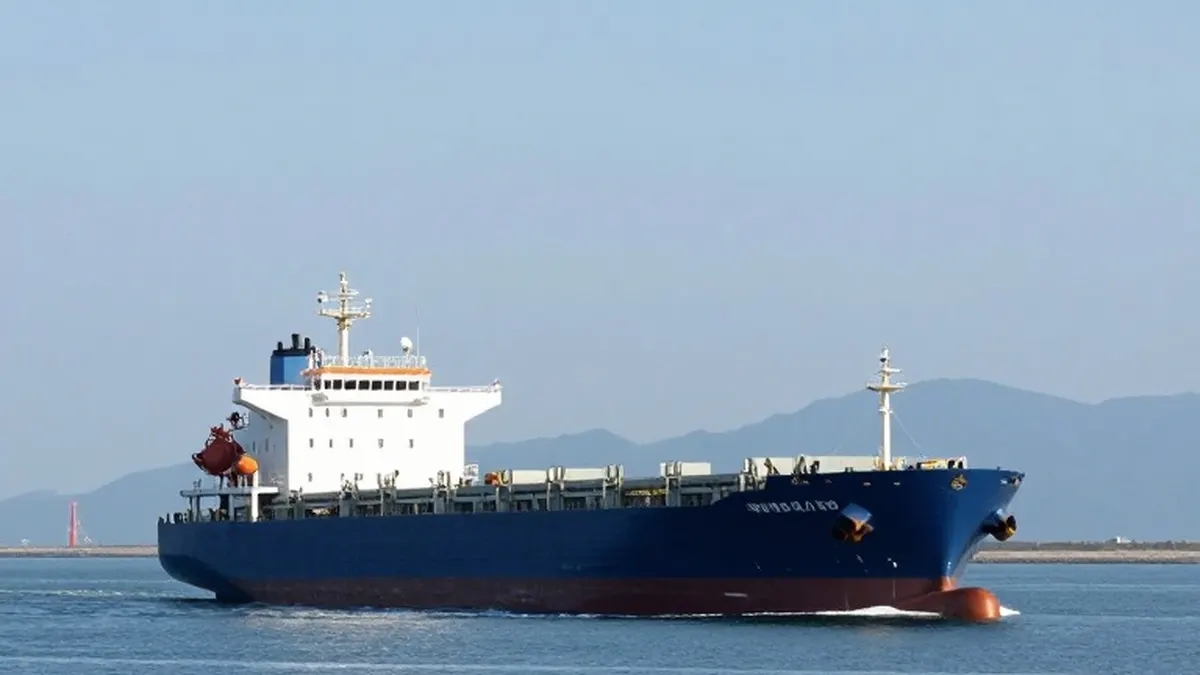
Italy’s defense minister stated on Tuesday that European nations have not yet taken concrete steps to enhance the protection of shipping in the Red Sea. Guido Crosetto noted that governments have failed to respond adequately to his repeated calls for strengthening the bloc’s naval presence in the region.
In September, Crosetto urged the European Union to significantly bolster its Aspides mission. This initiative was launched in 2024 to safeguard commercial vessels from attacks by Yemen’s Iran-aligned Houthi forces. These attacks have escalated in intensity as part of the broader conflict in the Middle East.
Speaking to Reuters, Crosetto expressed frustration over the lack of progress, stating that he has yet to see anything concrete from his fellow EU members. However, he acknowledged that Kaja Kallas, the EU’s foreign policy chief, fully understood the importance of Italy’s request for increased support.
Following the Italian minister’s appeal, Kallas sent a letter to the bloc’s 27 member states. In the correspondence, she urged countries to increase their contributions to the mission, noting that more than 10 warships would be required for the operation to be truly effective in securing the waterway.
The Italian daily newspaper Il Sole 24 Ore reported that negotiations among EU states regarding increased contributions have so far remained inconclusive. The lack of agreement is partly attributed to the reluctance of some member states with limited resources to deploy additional assets to the theater of operations.
Crosetto highlighted the disproportionate burden currently placed on Italy. He stated that approximately one third of all European operations in the region depend on Italy’s contribution, while other countries, which are often much larger, contribute significantly less. This imbalance has become a point of contention within the coalition.
The minister, who is a senior member of Prime Minister Giorgia Meloni’s government, emphasized the principle of shared responsibility. He argued that if it is justified to invest in these military missions, it is equally right that all participating nations contribute fairly to the effort.
The ongoing war between the United States and Israel and Iran has disrupted key maritime routes that are vital for global trade and energy supplies. These disruptions affect critical chokepoints, including the Bab al-Mandab Strait and the Strait of Hormuz. The instability has led to higher shipping costs, which in turn contributes to inflationary pressures across the globe.
For Italy, the economic stakes are particularly high. According to Assarmatori, one of the country’s main shipowners’ associations, around 40 percent of Italy’s trade with the rest of the world passes through the Suez Canal. This canal is located at the northern end of the Red Sea, making the region’s stability a direct concern for the Italian economy.
As the situation evolves, the Houthis have continued to intensify their attacks on commercial shipping and strategic infrastructure. Simultaneously, Saudi Arabia has carried out strikes against Houthi targets in Yemen, further complicating the regional security landscape and highlighting the urgent need for coordinated naval support.