Ra'am leader offers to recognize Hamas as terror group for coalition entry
Mansour Abbas has signaled he is ready to formally classify Hamas as a terrorist organization in exchange for a genuine partnership with the anti-Netanyahu bloc, a move that could clear a major hurdle for coalition talks.
By Marina Weber ·
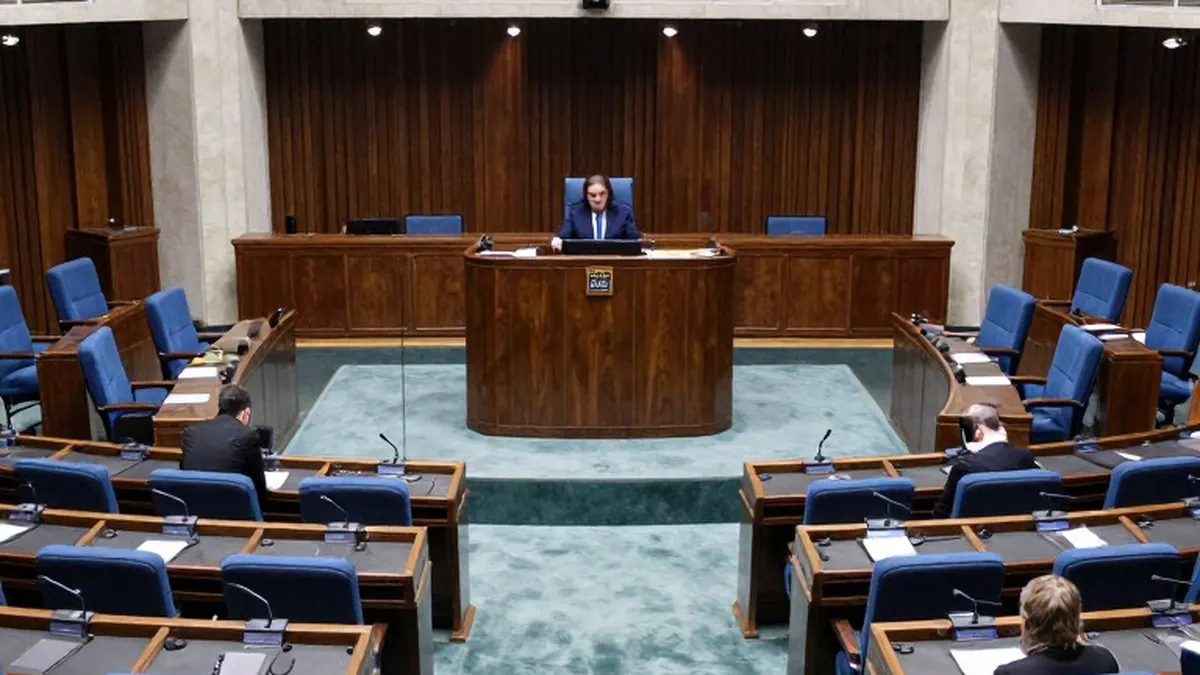
Ra'am chairman Mansour Abbas has informed members of the anti-Netanyahu coalition that he is prepared to officially recognize Hamas as a terrorist organization. This declaration, reported by Hebrew media on Tuesday, was made in exchange for what Abbas described as a genuine partnership with other Israeli political parties. The move represents a potential breakthrough in efforts to build a new government, as it addresses a condition long held by the bloc's leader.
Gadi Eisenkot, the chair of the Yashar party and leader of the 48-member bloc, has previously insisted that recognizing Hamas as a terrorist organization is a prerequisite for any coalition membership. Abbas had previously been reluctant to make such an explicit statement. If he follows through on this offer, it could remove a significant obstacle to Ra'am joining the government. Yair Golan, leader of the Democrats party, appeared to confirm these developments during his faction's weekly meeting. Golan stated that he does not believe the recognition issue would be an obstacle for Abbas and that negotiations are expected to take place.
During his own faction meeting, Abbas declined to comment directly on specific negotiations but reiterated Ra'am's stance. He noted that his party has repeatedly accepted the dismantling of Hamas as part of US President Donald Trump's peace plan. Abbas emphasized that Ra'am rejects and condemns all forms of terrorism. He added that the party wants to be part of the next government, calling it a basic right.
Clarifications were also needed regarding comments made by Ra'am MK Yasser Hujirat. In a recent interview, Hujirat was perceived to have called Hamas a charity organization. In a statement, he explained that his remarks were edited in a tendentious and distorted way, leaving only a single sentence that created a misleading impression. Hujirat clarified that he did not say Hamas is a charity organization and does not hold that position. He expressed firm opposition to Hamas's crimes, acts of murder, and abduction, while condemning all forms of terrorism without justification.
Despite these developments, some hurdles remain. Avigdor Liberman, chair of Yisrael Beytenu, reiterated that his party will not participate in a minority government that relies on outside support from the two Arab parties in the Knesset. Liberman did not address Abbas's reported willingness to recognize Hamas. He has also pushed for a partnership with the ultra-Orthodox parties, United Torah Judaism and Shas, despite policy differences. A central point of contention is Liberman's long-standing demand to remove the army draft exemptions for the Haredi community, a move the Haredi parties are determined to block.
The current Knesset composition includes eight seats for Ra'am and 11 for the Joint List. United Torah Judaism holds seven seats, and Shas holds six. Na'ama Lazimi, an MK for the Democrats, argued that Ra'am has a clear place in the government. She highlighted that Ra'am recognizes Israel as the nation-state of the Jewish people and the Declaration of Independence. Lazimi also noted that the party placed a Jewish ex-police commander, Yoav Segalovitz, at number two on its slate and proposes a framework for civilian national service for Arabs.
Eisenkot is working to form a government anchored by his 48-member bloc. Since this falls short of the 61-seat majority required for a stable government, members are seeking to replace Knesset Speaker Amir Ohana with Yashar MK Matan Kahana. This change would allow the bloc to advance legislation while Eisenkot negotiates with other parties. Ahmad Tibi, an MK for the Joint List, stated that his party will support Kahana. Tibi told the Kan public broadcaster that replacing the speaker is a crucial first step signaling change, and the party is ready to vote for him.
Incumbent Speaker Ohana, a member of Prime Minister Benjamin Netanyahu's Likud party, has agreed to schedule a discussion on the matter after the Knesset convenes on Tuesday. A majority of MKs have requested this discussion, and the opposition aims to hold a vote next Tuesday. If the opposition succeeds in electing a new speaker and taking control of the Knesset Arrangements Committee, it could potentially pass bills that Netanyahu has blocked. One such bill would establish a state commission of inquiry into the Hamas-led attack on October 7, 2023, though the legislative process is expected to be complex.
The political maneuvering highlights the ongoing efforts to stabilize Israeli governance. The coalition talks are focused on bridging ideological gaps while securing the necessary votes to form a functioning government. The willingness of key figures to compromise on long-held positions suggests a pragmatic approach to the current political challenges. As the Knesset prepares to convene, the outcome of these negotiations will determine the next steps in the government formation process.