Dozens of European flights diverted after coordinated false bomb threats
Security experts warn that the unexplained wave of alerts may be part of a wider strategy to disrupt infrastructure and sow uncertainty across the continent.
By Vanessa Lopez ·
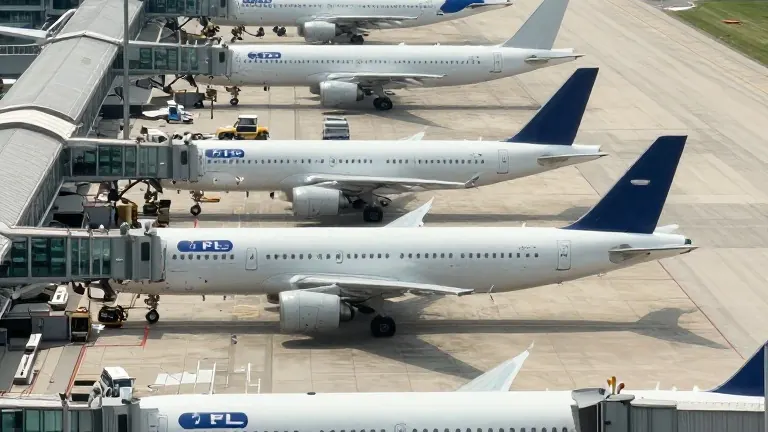
Travelers across Europe faced delays, diversions, and emergency landings this week after dozens of flights received false bomb threats. Airlines scrambled to keep passengers safe and manage air traffic flow, but European air traffic control authorities stated that the overall disruption to aviation remained minimal. No suspicious objects were found, and no injuries were reported.
The timing of these incidents has raised concerns among officials. The alerts arrived shortly after other disruptions in Europe, including cyberattacks on supermarket cooling systems and drone incursions. With questions about the source and intent of the threats still unanswered, security experts are scheduled to meet in Brussels next week to discuss how to counter these disinformation tactics.
The threats have begun to extend beyond the aviation sector. On Friday, three television networks received security alerts: Ireland’s public broadcaster RTE, the UK’s Sky, and Bulgaria’s private station NOVA TV. This expansion suggests the target list may be broader than just airports.
Italian Foreign Minister Antonio Tajani announced on Saturday that his personal data had been leaked on the dark web. He described himself as a target of threats and intimidation. Prime Minister Giorgia Meloni attributed the leak to pro-Russian hackers. Tajani, who also serves as deputy prime minister, did not specify which data was shared but indicated the cyber threat continues. He reiterated the Italian government’s support for Ukraine without naming a specific responsible party.
Further cyber incidents have emerged. BBT SE, the construction company building the 55-kilometer Brenner Base Tunnel connecting Austria and Italy, reported a cyberattack last month. The company stated that the data leak did not affect operations and that security protocols were activated immediately. The project’s completion deadline was recently extended by two years to 2034.
Authorities have not yet attributed the airline threats to a specific state or group. No evidence has linked the fake alerts to a government. However, an email sent to Rome airport authorities on Thursday, reviewed by the Associated Press, appeared to come from a self-described antifeminist group targeting a feminist regime. Another European airport received a similar text, though it is unclear if it came from the same sender.
In the Netherlands, the military police detained a man at Amsterdam Schiphol Airport on Thursday evening. He was linked to a threat against a flight bound for Prague. Spokesman Doron Wallin noted that the unit regularly handles such false alarms. The flight departed later that night, and the man was released the following day.
Matthew Borie, co-founder of Osprey Flight Solutions, outlined several hypotheses for the incidents. These range from a single threat triggering copycats to a coordinated hybrid war operation by state actors or their allies. Borie suggested a possible Russian connection, noting that Iran is also active in hybrid warfare in certain parts of Europe. He advised travelers not to panic, citing coordinated national response mechanisms that sometimes include NATO fighter jet escorts.
Jacob Funk Kirkegaard, a senior researcher at the Bruegel center in Brussels, stated that the threats are testing the response capabilities of European governments and airport operators. He suggested the underlying goal is to sow chaos and uncertainty regarding the reliability of European air traffic. This strategy could produce chain effects, including economic damage and costs related to inspections, investigations, and aircraft cleaning.