Breaking: Nvidia Chokes GPU Supply, Leaving Consumers To Pay For Anthropic IPO
As Anthropic prepares for a massive listing, Nvidia consolidates control over AI infrastructure, leaving the consumer market to absorb the cost of enterprise demand.
By Marina Weber ·
An initial public offering, or IPO, is the process by which a private company sells shares of its stock to the general public for the first time. This event allows the company to raise large amounts of capital from investors and provides a public market price for its equity. Anthropic, the developer of the Claude artificial intelligence models, is currently preparing for such an event. The company projects a valuation between 2.5 trillion dollars and 3 trillion dollars. This figure is staggering when compared to its current financial performance. Anthropic generates less than 20 billion dollars in annual revenue. To support its operations, the company carries compute commitments to partners like Amazon and Google of up to 900 billion dollars. The company is also running a deficit of about 500 billion dollars. The gap between the projected valuation and the actual revenue raises significant questions about the sustainability of the business model.
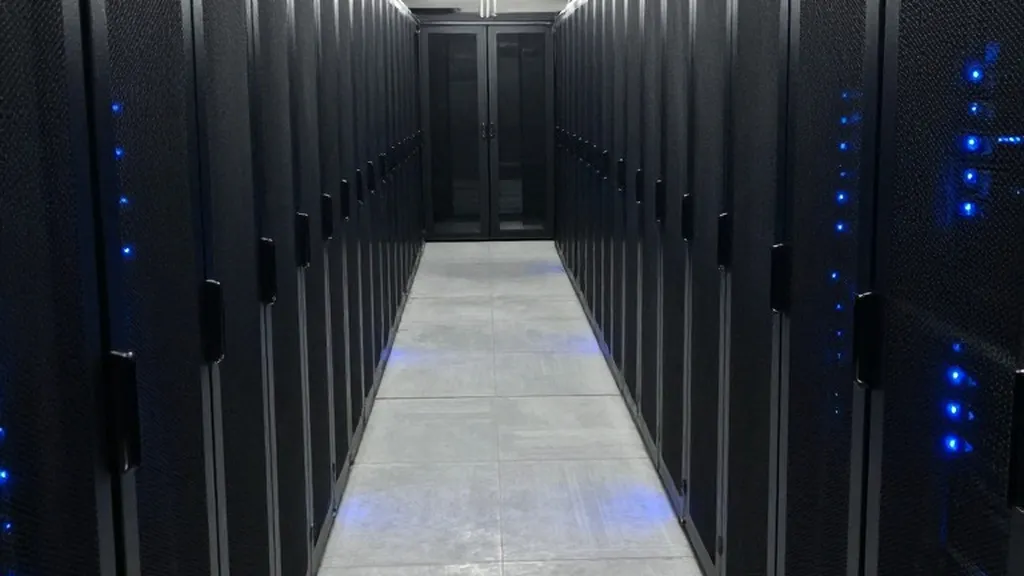
The core of the financial tension lies in the hardware required to run these models. Nvidia is the dominant supplier of the graphics processing units that power modern AI. The company has adopted a strategy that drives demand up while lowering supply. Nvidia directs its primary supply to large players such as Anthropic, Grok, and OpenAI. This allocation leaves the consumer market to fit the bill for the scarcity. A single Nvidia RTX Pro 6000 graphics card retails at 20,000 dollars. This price tag does not include the servers, switches, central processing units, or the data center facility costs and electricity required to run the machines. When purchasing directly from Nvidia at a wholesale price of 3,000 to 4,000 dollars, the GPU alone takes about ten months of a heavy user paying 200 dollars a month to pay back. The same breakeven period applies to 15 to 20 light users paying about 20 dollars a month on average.
The economics of the card are complex for individual users. A single RTX Pro 6000 can hold about 15 to 20 light users running light compute at about 60 to 70 tokens per second. Alternatively, it can serve 1 to 2 heavy coding users running Claude Code at about 40 to 50 tokens per second. This assumes constant use for 24 hours a day. Most light users will not use the chat for more than a few hours a day. This behavior can stretch the bandwidth number ten times. However, the acquisition cost and breakeven point remain huge. The compute and GPU bottleneck is a real problem for these companies. Nvidia knows this dynamic well. By controlling the supply chain, Nvidia gives the cards to the enterprise giants while the consumer market absorbs the rising costs.
Nvidia has moved to secure its position in the ecosystem through acquisition. The company agreed to acquire Hugging Face for 12.9 billion dollars. Hugging Face is the platform where most open AI models are distributed. In its peak years, the platform makes about 150 to 200 million dollars a year. This means the 12.9 billion dollar price is about 70 times its revenue. For Nvidia and its CEO Jensen Huang, this sum is considered pocket change. The stated reason for the acquisition was CUDA, the software that runs all these models. However, the deeper reason was control over the distribution of models on the market, especially the open source sector.
This move came as the open source market was being flooded by advanced Chinese models. These include Kimi from Moonshot AI, DeepSeek, Qwen from Alibaba, and models from Xiaomi. These companies were willing to give the models over to the public to increase innovation. Kimi K3 started to outperform the Opus 5 models from Anthropic and was given to the public. The internet users quantized these large language models down to make them usable on smaller machines like Mac Studios, A100 cards, and RTX Nvidia models. After Nvidia acquired Hugging Face, advanced models were deleted from distribution. Anything over a quant 4, meaning advanced and capable of beating out Claude's models, was removed. The 4 bit, 6 bit, 8 bit, and 16 bit full-sized models were banned from the Hugging Face platform.
Developers on Discord rallied to stop the censorship and corporate overreach. They opened a platform called Pirate Face, a place where you can upload and download all models. However, this happened after the large 400 gigabyte models at quant 3 and higher were scrubbed from the network. The consolidation of distribution channels has intensified the power dynamics in the AI industry. Anthropic has also engaged in efforts to shape government policy. The company demanded that Congress ban Chinese models because of national security. The real goal was to control the market. Anthropic recently conducted a publicity stunt by releasing media that AI will take over the world when one of its disgruntled employees, Jacob Coxon, quit amidst his disappointment in AI.
The goal was to get the government to pass bills banning models that were a huge threat to Anthropic's bottom line. The panic worked. Congress passed a bill that now bans any government and its affiliates from using any Chinese models. Anthropic is also trying to pass bills that would stop other companies like Verizon and other networks from launching their own AI models in house by using these advanced open source models. These legislative moves align with the company's broader strategy to limit competition. The company’s relationship with the government was further highlighted in the summer of 2026. Anthropic released Fable 5 in June 2026, and the government forced them to take it down.