Rubio calls Iran's peace terms absurd as US sees no need for new strikes
Washington downplays the risk of renewed combat while Tehran insists negotiations are currently stalled.
By Vanessa Lopez ·
US Secretary of State Marco Rubio described Iran’s conditions for a political settlement as absurd and not serious, asserting that Tehran should be paying reparations rather than collecting them. Speaking to reporters in Paris on Tuesday during a G7 foreign ministers meeting, Rubio said the president had made it clear that Iran’s demand for pallets of cash would not be met. He stated that while the administration is not planning to restart major combat operations, it is in no rush to finalize a deal because it believes it holds the upper hand regarding the Strait of Hormuz.
President Donald Trump offered a similar assessment on Monday following a meeting with Qatar’s prime minister at the White House. He described the war as effectively over and noted that there was momentum to end the conflict. Trump has employed de-escalatory language since the Republican Party suffered a defeat in the US midterm elections on 3 November. The Democrats, who campaigned against the war and rising energy prices, have since taken control of Congress.
Mohsen Rezaei, secretary of Iran’s Supreme National Security Council and a former Islamic Revolutionary Guard Corps commander, disputed the US characterization of the talks. In a television interview, he stated that Iran was not currently conducting any negotiations with Washington. Rezaei said Iran was maintaining its seven-point proposal from the summer, which includes the reopening of the Strait of Hormuz. He claimed that Iran’s initial communication of its conditions was met with an insufficient and deceptive response, and that Tehran is still awaiting a clear answer.
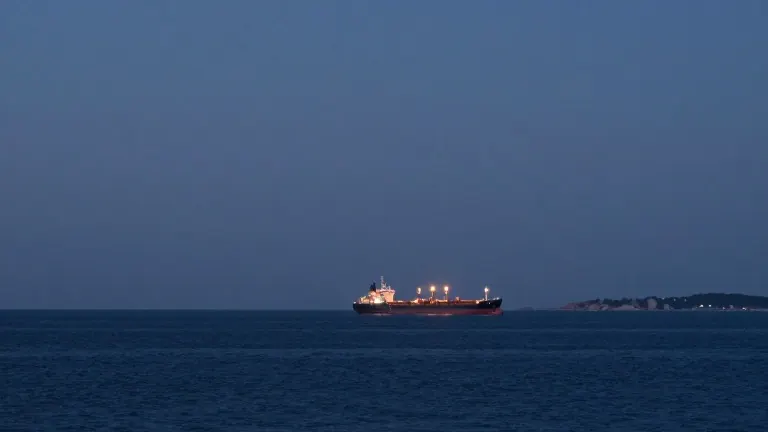
The conflict has centered on Iran’s nuclear program and control of the Strait of Hormuz. A June memorandum of understanding aimed to establish a framework for a final settlement but collapsed over Iran’s bid to control traffic in the waterway. This would have allowed Tehran to potentially impose a fee on passing vessels. The US and Iran have since imposed competing blockades in the strait. Iran has attacked commercial ships linked to US Gulf allies, while the US provides military escorts for exiting vessels.
Rubio characterized Iranian strikes on shipping as a nuisance rather than a tactical victory that would force US concessions. He noted that on some nights, 80 to 85 percent of pre-conflict oil and petroleum flows are still moving through the strait. He argued that the only oil consistently failing to exit the waterway is Iranian oil. The IRGC reported on Tuesday that three oil tankers caught fire after hitting mines in the Strait of Hormuz.
Market reactions have been sharp since the change in US congressional leadership. Brent crude, the international benchmark, fell almost 15 percent over the past week to $91.37 per barrel on Tuesday. US gas prices dropped by only four percent in the same period. Gulf partners are bracing for an environment of sporadic strikes without a settlement, a situation that could deter investment plans. Saudi Arabia is also facing missile and drone attacks from Yemen’s Houthis.
Rubio dismissed claims that Gulf states are facing an economic crunch, arguing that Iran is suffering the most. He said the US is waging an economic war on Tehran, and that the pressure is so effective that the president concluded there is no need for major combat operations to achieve the same objective through economic means.