Island County: Water Quality Improves Despite Persistent Septic Issues
Preliminary data shows a drop in poor water ratings on Whidbey and Camano islands, driven by increased septic system inspections and maintenance.
By Marina Weber ·
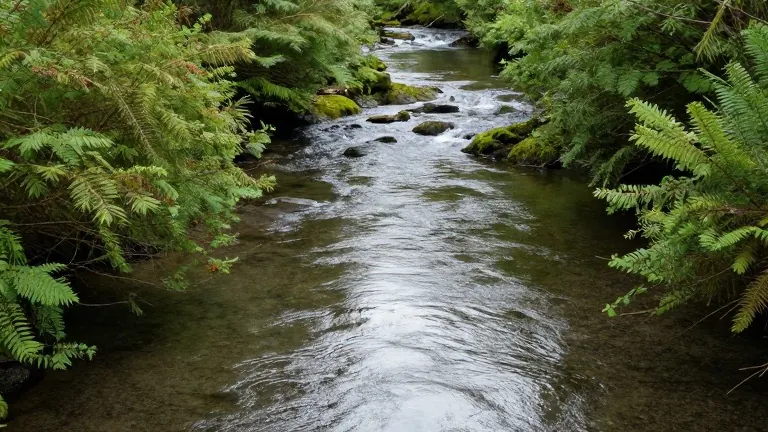
Water quality has improved at multiple monitoring sites across Whidbey and Camano islands over the last year, according to preliminary results from the Island County 2026 Surface Water Quality Report.
The report covers the water year that began on October 1, 2025, and ended on September 30, 2026. Among the 18 regularly monitored locations, the number of sites rated as poor decreased from 10 to 8. Levels of E. coli, a bacterium that indicates fecal contamination, also declined across the monitored streams. Island County Public Health Director Shawn Morris noted that these results reflect a steady improvement trend. While fewer sites received poor ratings, the count of sites classified as moderate or good increased.
Specific waterways saw the most notable gains. On Whidbey Island, Race Lagoon Creek, Race Lagoon, Skagit Creek, and Maxwelton Creek all showed improvements in water quality and lower pollutant levels. Cavalero Creek on Camano Island experienced similar positive changes. Jen Schmitz, manager of the Island County Division of Natural Resources, linked these gains to the county’s ongoing efforts to educate residents about private septic systems. Approximately 72% of county residents rely on private septic systems, which require consistent maintenance to prevent leaks that contaminate nearby waterways. Conventional gravity systems in the county must be inspected every three years, while alternative systems require annual checks.
The county’s on-site septic program has been active in encouraging compliance. In the third quarter of 2026, the program closed 193 cases, sent 407 inspection reminders, and distributed 126 septic inspection coupons. Thomas Griffith, the county’s Environmental Health Manager, said the incentive program has been effective in prompting residents to get their systems inspected before failures occur. Schmitz stated that there is a direct correlation between public awareness of maintenance and the resulting improvements in water quality.
Cleaner water supports aquatic habitats, public health, and the local economy by allowing beaches to be used for swimming and fishing. To sustain these gains, Morris said the county will continue promoting inspections and connecting residents with financial resources for maintenance. The county is also working to modernize its septic code and local management plan. Residents can help by maintaining their systems, picking up pet waste, limiting fertilizer use, fixing vehicle leaks, using commercial car washes, and planting native vegetation along streams. Morris credited the surface water quality and septic maintenance teams for their contribution to the progress.