Whidbey Island farm reopens after $9.1 million rescue
Keystone Preserve has opened to the public, featuring 20,000 native plants and the first wheat harvest on the historic property in over a century.
By Marina Weber ·
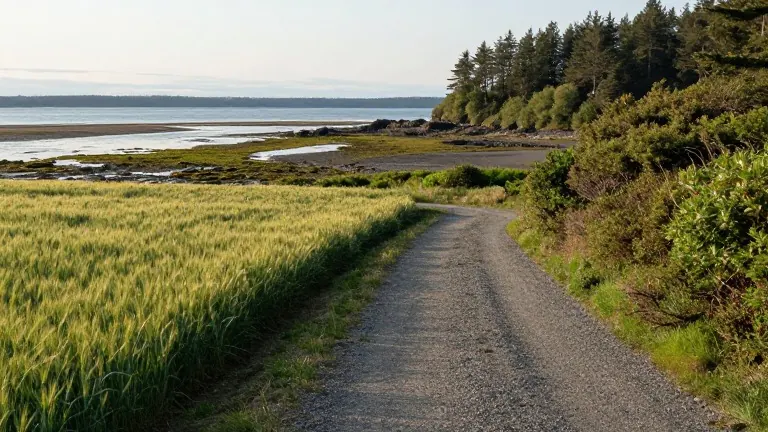
The number 20,000 defines the scale of the ecological work completed on Whidbey Island this month. That is the count of native plants the Whidbey Camano Land Trust has established across a 16-acre section of the newly opened Keystone Preserve. The property, which spans 216 acres just south of Coupeville, officially welcomed its first public visitors earlier this month after years of restoration and planning.
The site’s journey to public access began in late 2021, when the nonprofit learned that regional developers were marketing the land. An appraisal cited in a grant application to the Washington Recreation and Conservation Office estimated the property could be divided into 22 high-end waterfront homesites. The Land Trust warned that such development would fragment a large stretch of shoreline, forest, and open space. Although the organization had not anticipated owning the property itself, it moved quickly to secure the site.
In 2022, the Land Trust purchased the property for $9.1 million. The acquisition required two large loans and the use of nearly all the organization’s reserves. Ryan Elting, executive director of the Whidbey Camano Land Trust, noted that the group secured grant funding to pay off the loans and recover its investments within 18 months. He described the financial turnaround as a remarkable success that changed the organization’s view of what a land trust could accomplish.
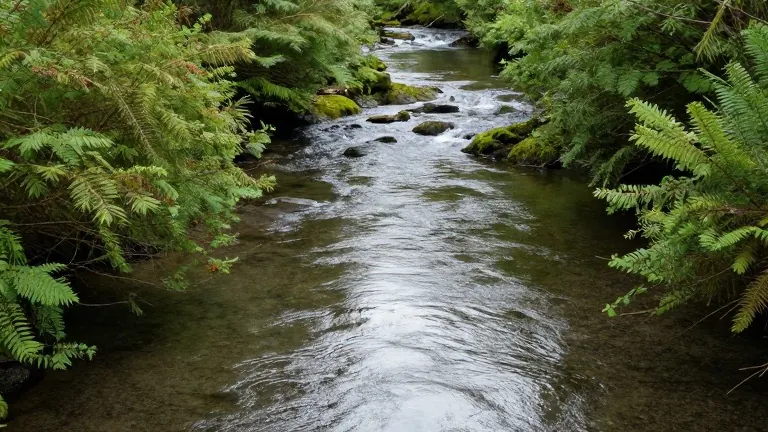
The subsequent years were dedicated to preparing the site for visitors. The Land Trust removed a preexisting house and secured necessary permits. Ecological restoration involved planting the 20,000 native specimens to restore four distinct ecosystems: a conifer forest, Garry oak woodland, Garry oak savannah, and prairie. The work also included removing shoreline armoring and creosote posts while restoring a stream and shoreline habitat, according to documents filed with the state Department of Ecology.
The preserve’s 216 acres now include two-thirds of a mile of shoreline, which serves as a migration corridor for salmon, including threatened Chinook. Marine habitat is supported by kelp and eelgrass beds in the adjacent waters. For land-based visitors, the site offers several miles of trails, including one mile of ADA-accessible paths funded by Island County.
The property also retains its agricultural history, which dates to the 1860s, making it one of Whidbey Island’s oldest farmsteads. The Land Trust has partnered with the Organic Farm School to manage the farmland using sustainable practices. The school recently harvested the first crop of wheat grown on the site in more than 100 years.
Future plans for the preserve are already in motion. The Organic Farm School and Land Trust are considering adding sheep within the next year to demonstrate rotational grazing. The Land Trust is also planning to add more trails. A grant application submitted to Island County this year outlines the construction of an outdoor education pavilion, with work anticipated to begin in early 2027. A future Conservation Center is tentatively targeted for 2029 or 2030, depending on funding.
To facilitate visitor access, the Land Trust worked with the Washington State Department of Transportation to install a left-turn lane off Highway 525. Funded with help from Island County, the project was completed by the end of summer 2026. Public Works officials described the improvement as necessary to provide safe access for thousands of residents, students, and visitors.
Elting envisions Keystone Preserve as a center for conservation on the Salish Sea and a permanent home for the Land Trust. He hopes the site will serve as a living outdoor classroom to educate the public and engage children in environmental stewardship. Keystone Preserve is currently open daily from 8 a.m. to 5 p.m., with seasonal hours subject to change in the spring.