Eisenkot Affirms Conscription Stance Amid New Coalition Talks
The leader of the Yashar party stated that the opposition bloc will maintain its commitment to mandatory military service for all citizens, even as negotiations with ultra-Orthodox parties begin.
By Amir Navarro ·
Gadi Eisenkot, leader of the Yashar party, declared on Tuesday that the opposition coalition aiming to replace Prime Minister Benjamin Netanyahu will not compromise on the issue of conscription for ultra-Orthodox Jews. This statement comes as the bloc engages in ongoing coalition discussions that include potential partnerships with haredi parties.
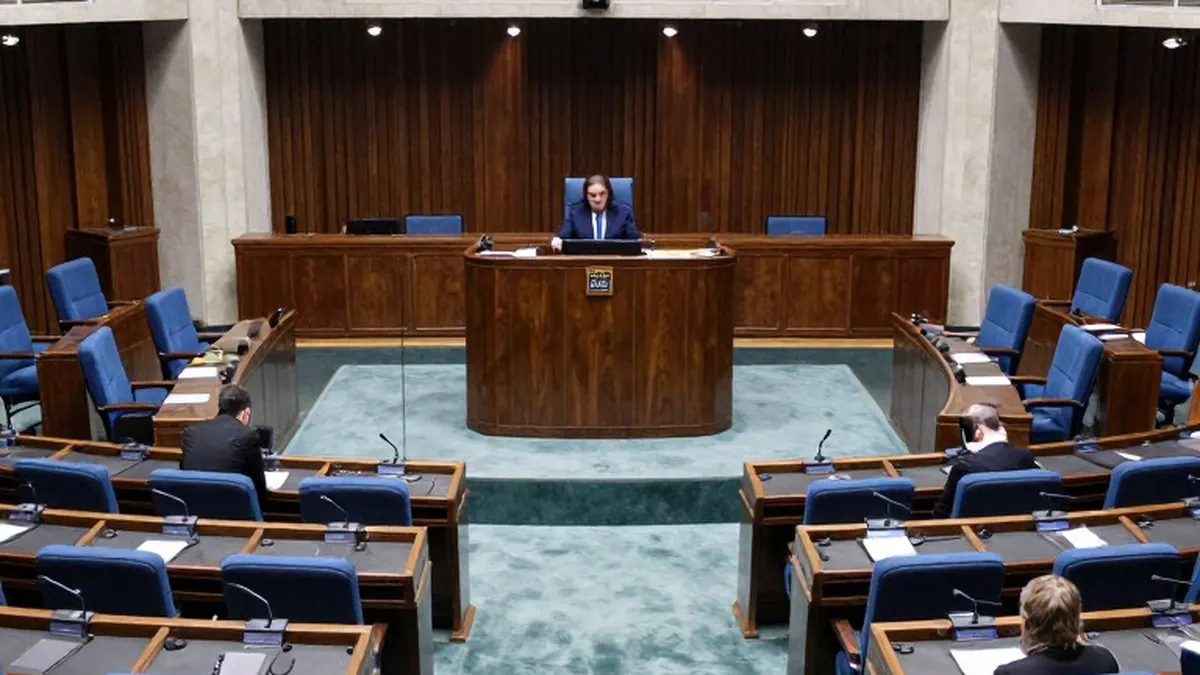
Speaking at the inaugural meeting of his faction in the Knesset, Eisenkot emphasized the group's dedication to universal service. He noted that the party would not surrender its principles or flags regarding the draft. The address took place just before the formal ceremony to swear in the members of the 26th Knesset.
Recently, leaders within the opposition bloc have signaled a willingness to negotiate with the haredi parties, a shift from their previous stance of drawing a strict red line against such partnerships. This move aims to provide a viable path for forming a government after the political deadlock that followed the October 27 elections.
The haredi parties, specifically Shas and United Torah Judaism, have consistently opposed legislation requiring their members to serve in the Israel Defense Forces. This opposition persisted throughout the previous government's term, a period marked by a severe manpower crisis within the military.
On Sunday, President Isaac Herzog officially granted Eisenkot the mandate to form a government at a ceremony held at the President's Residence. According to Israeli law, Eisenkot has 28 days from that date to complete the task. The President retains the authority to extend this deadline by up to 14 additional days if necessary.
Eisenkot expressed confidence in his ability to assemble a cabinet, noting that unconventional steps would be required to achieve this goal. He stated that the bloc would collaborate with its partners, including B'Yachad, the Democrats, and Yisrael Beytenu, while extending an invitation to any other partner who aligns with their core principles.
Other leaders in the opposition bloc also voiced their support during their respective faction meetings. Naftali Bennett, head of B'Yachad, said the bloc had received the necessary tools to establish a strong government. He urged for swift action, citing the urgent needs of reservists stationed along the country's borders.
Bennett described his efforts to assist Eisenkot in creating a Zionist government of reform. He expressed a desire to initiate what he called a revolution of servants, aiming to begin the process of repairing the State of Israel as quickly as possible.
Avigdor Liberman, leader of Yisrael Beytenu, pledged to serve as Eisenkot's right-hand man in the government formation process. Liberman acknowledged that while the election campaign highlighted three key flags, including the end of the Netanyahu era and a government without Arab parties, the results indicated a need for compromise. The bloc plans to push for an IDF conscription law that would likely withstand scrutiny by the High Court of Justice.
Yair Golan, head of the Democrats, called on the bloc not to exclude Arab parties from potential coalition talks. This position contrasts with earlier red lines drawn by other opposition leaders. Golan noted that the Arab parties secured a record 19 seats in the recent election and argued that representatives from the Arab public are entitled to participate in the government to help address the nation's challenges.