Congo Ebola Death Toll Hits 4,900 as Case Count Tops 10,000
The Bundibugyo strain has spread to six countries, with officials warning that most new infections are occurring outside of monitored contacts.
By Marina Weber ·
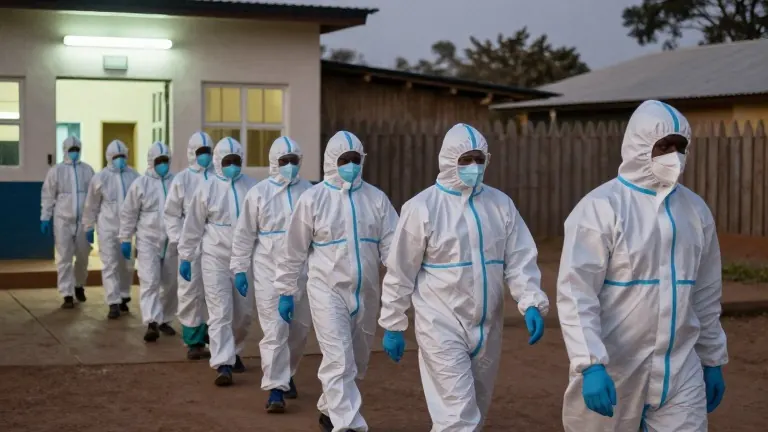
Congo's Ebola outbreak has crossed the 10,000 case threshold, making it the fastest growing and deadliest in the nation's history.
Government data released Tuesday confirmed 10,060 cases, with nearly half of those individuals dying from the disease. The outbreak, declared in May, is caused by the rare Bundibugyo virus. Health authorities note there is currently no approved vaccine or treatment for this specific strain.
The scale of the crisis dwarfs previous records. In just five months, the death toll and case count have reached three times the figures of the 2014 to 2016 West Africa outbreak, which remains the largest in history with over 28,000 cases. The current epidemic has spread across five countries, including Uganda, Kenya, and Nigeria, as well as France. Uganda and France have no active cases at present.
Transmission patterns indicate a failure in containment. Approximately 80 percent of new cases in Congo are not linked to monitored contacts. The Africa Center for Disease Control and Prevention states that officials generally consider an outbreak under control only when 95 percent of cases come from known contacts. This gap suggests ongoing chains of infection that health teams are not yet tracking.
Responders face logistical and social hurdles. Armed conflict, poor infrastructure, and community mistrust impede efforts to persuade residents to report symptoms. Many families remain skeptical, leading to delayed admissions. At least half of the recorded deaths occurred among people who never reached a treatment center. Health workers report that patients are often identified long after symptoms appear or after they have traveled.
The strain on the healthcare system is visible in several provinces. Treatment centers in some of the 66 affected health zones are becoming overwhelmed. Staff in Ituri province, the epicenter, frequently strike over unpaid wages. Last week, responders in the Nia Nia health zone walked off the job due to bonuses owed since late August. A nurse was killed and another injured on Saturday in Bafwasende, Tshopo province, when villagers attacked them during an alert response.
African health ministers convene virtually on Wednesday to coordinate a continental response. Dr. Jean Kaseya, head of the Africa CDC, said the disease is crossing borders and requires decisive political leadership. While 2,600 patients have recovered, the outbreak has disrupted routine services. Maternal mortality has doubled in some provinces as pregnant women avoid hospitals, and childhood vaccinations have been interrupted. WHO Director-General Tedros Adhanom Ghebreyesus acknowledged the ongoing danger while celebrating the recent discharge of patients in Mongbwalu.