UN Tribunal Rejects Argentina's Legal Challenge to Falklands Oil Drilling
An international maritime court has dismissed Argentina's request to halt oil exploration near the Falkland Islands, ruling that sovereignty questions fall outside its jurisdiction.
By Amir Navarro ·
The United Nations-backed International Tribunal for the Law of the Sea has rejected Argentina's bid to block an oil exploration project located near the Falkland Islands. The ruling concludes a significant diplomatic dispute between Buenos Aires and London, with the tribunal determining that it was the incorrect venue to resolve questions regarding the sovereignty of the British overseas territory.
Argentina had formally requested that the Sea Lion venture be suspended, arguing that an ongoing sovereignty dispute exists over the islands. The UK government has consistently rejected this claim, maintaining that the tribunal lacked jurisdiction over the specific territorial issues raised. The decision to uphold this view was made by a vote of 18 to 3.
Speaking on Saturday, the president of the tribunal explained that the court was not the appropriate body to adjudicate on matters of sovereignty. Following the announcement, Argentine President Javier Milei stated that the ruling was not the final word on the matter. He reiterated the national position by declaring that the Falkland Islands are Argentine.
In response, UK Foreign Secretary Ed Miliband and Attorney General Ellie Reeves issued a joint statement. They emphasized that Buenos Aires must respect the right of the Falkland Islanders to determine their own future. The officials noted that Argentina had attempted to stop the islanders from making sovereign decisions and urged the country to end its broader economic pressure against the territory.
This legal battle is the latest in a series of diplomatic tensions between the two nations, which fought a 74-day war over the islands in 1982. During the proceedings, Buenos Aires argued that nothing should change the status quo in disputed areas, including the construction of oil wells. The UK countered that pausing the project could have severe economic consequences for the local population and companies involved in the venture.
After the decision, Argentina released a statement clarifying its position. It asserted that the country had not asked the court to rule on sovereignty but rather to apply United Nations sea laws to the UK regarding the exploitation of resources. The government also announced that five individuals would face sanctions for their involvement in the oil drilling, though the specific names were not disclosed at this time.
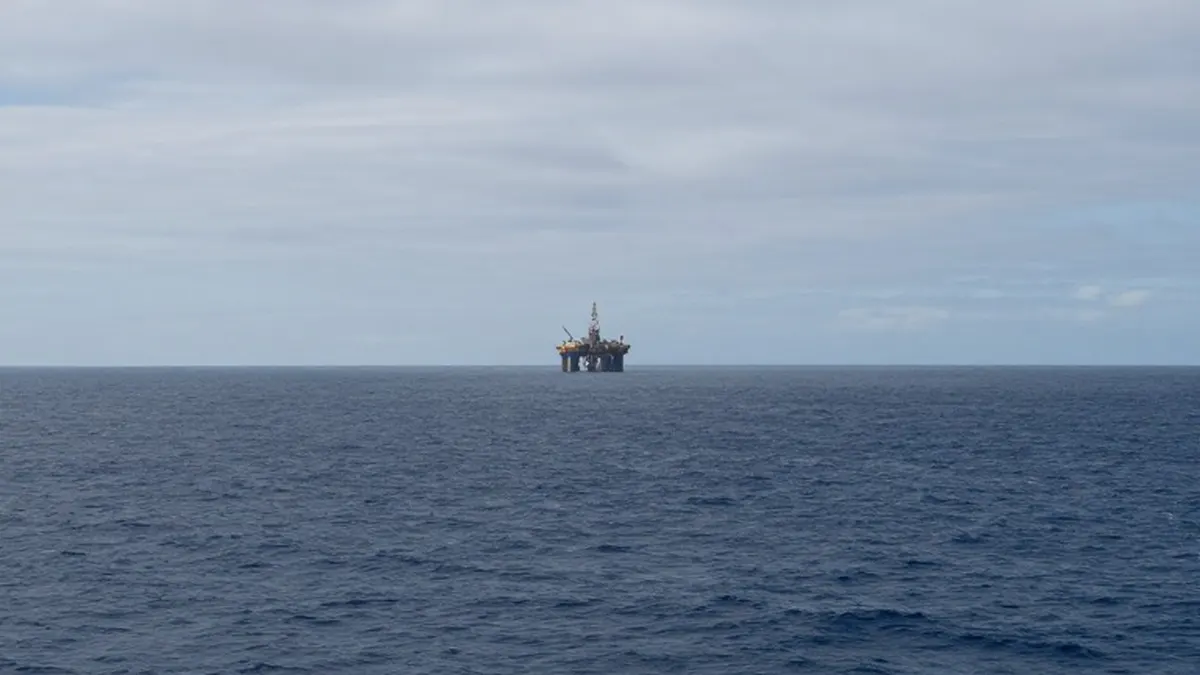
The Sea Lion oilfield is situated approximately 130 miles, or 209 kilometers, from the Falkland Islands. It is estimated to contain 1.7 billion barrels of oil. Two companies, Britain's Rockhopper Exploration and Israel's Navitas Petroleum, are scheduled to begin extraction within two years. This development could generate substantial revenues for the roughly 3,500 inhabitants of the islands.
The conflict traces back to the 1982 war, which began when Argentine forces landed on the islands to stake a territorial claim. A British military task force subsequently fought to eject them, resulting in the deaths of 255 British military personnel, three islanders, and 649 Argentine military personnel. Despite its defeat in that conflict, Argentina has consistently maintained its claim to the islands.
Successive Argentine governments have pressed their claim through various diplomatic and aggressive means over the years. The UK government has made clear that sovereignty remains with Britain and that the island's population holds the right to self-determination. This position was reinforced in a 2013 referendum, where residents voted overwhelmingly to remain a British overseas territory, with 99.8% in favor and only three voting against.