Albania Independence Day Marked by Clashes Between Police and Protesters
Police and protesters clashed in Tirana on Saturday during Independence Day demonstrations, marking the latest escalation in Albania's ongoing antigovernment movement.
By Amir Navarro ·
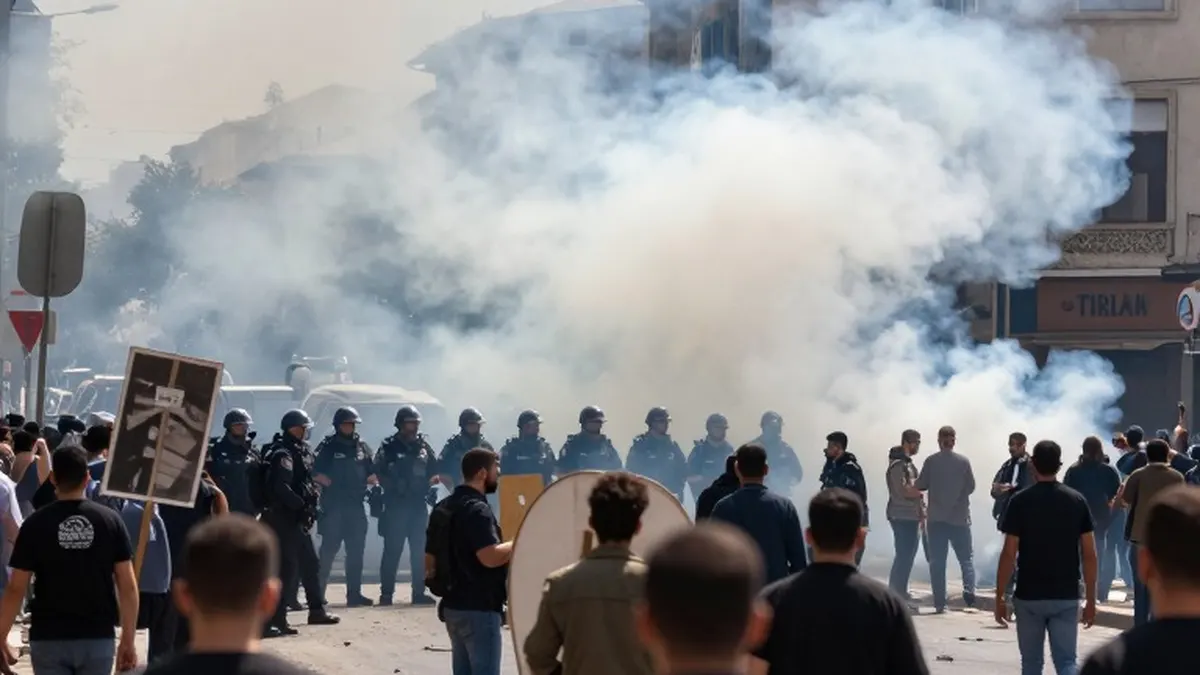
Albania’s national holiday was overshadowed on Saturday by violent confrontations between security forces and demonstrators in the capital, Tirana. The unrest occurred during a rally organized by students and opposition figures to mark the 114th anniversary of the country’s declaration of independence. Police deployed water cannon and tear gas to manage the crowd, while protesters responded by throwing stones and petrol bombs at street cameras and the windows of government buildings.
Footage from the scene depicted the main boulevard engulfed in thick smoke as both sides exchanged projectiles. According to the health ministry, eight individuals were injured during the clashes. Among those hurt were a police officer and two journalists, highlighting the intensity of the standoff in the heart of the city.
This incident represents the latest development in a prolonged series of antigovernment demonstrations that have demanded the resignation of Prime Minister Edi Rama. The movement, widely referred to as the Flamingo Revolution, initially emerged in May as a leaderless protest. It began with peaceful gatherings opposing a luxury hotel project located in a coastal nature reserve. The project was linked to the family of United States President Donald Trump and sparked widespread anger over allegations of corruption.
By October, the scope of the protests had broadened significantly. Demonstrators began addressing additional grievances, including inadequate healthcare facilities and limited future prospects for young Albanians. The momentum of the movement continued through the fall, leading to the large-scale gathering on November 28, a date typically reserved for national celebrations and public holidays.
Police presence was heightened on Saturday, with officers deployed along major roads leading into and out of Tirana. Vehicle checks were conducted to monitor the flow of traffic and participants. The combination of student activism and calls from opposition parties for a nationwide protest resulted in thousands of people gathering in central Tirana.
Among the demonstrators was Arian Lleshi, a 33-year-old resident of Tirana who had traveled from the United Kingdom specifically for the event. He expressed deep frustration, stating that the diaspora feels like stateless citizens because they have suffered for so long. Lleshi argued that political parties established since the fall of communism in the 1990s no longer represent the people. He called for a new generation of intellectuals to take the lead, individuals who have a greater stake in the country’s future.
Suzana Gjeta, a retiree living in Tirana, also joined the protest. She described demonstrating on behalf of both the youth and older citizens who struggle financially. Gjeta noted that many people like herself live on just 120 euros, or approximately 131 dollars, per month. She expressed hope that the current system and Prime Minister Rama would eventually step down, bringing an end to the perceived corruption.
The government had moved to tighten controls on demonstrations in late October. New regulations granted police the authority to temporarily restrict gatherings near public institutions. Additionally, protesters found looting or concealing their identity could be subject to fines. These measures have resulted in smaller crowds attending recent protests compared to the peak of the movement.
The European Union, a bloc that Albania aspires to join, has weighed in on the situation. The EU called for an investigation into instances of excessive force used by police. It also urged all sides involved to de-escalate the tension, emphasizing the importance of stability as the nation navigates its political challenges.