Ukraine's drone role in Mali reported
CNN alleges fifteen specialists assist Tuareg rebels against Russian-backed forces, while Kyiv maintains a cautious silence.
By Amir Navarro ·
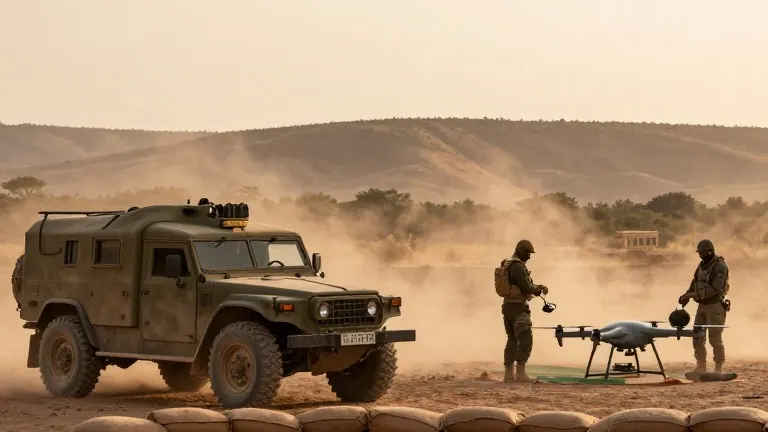
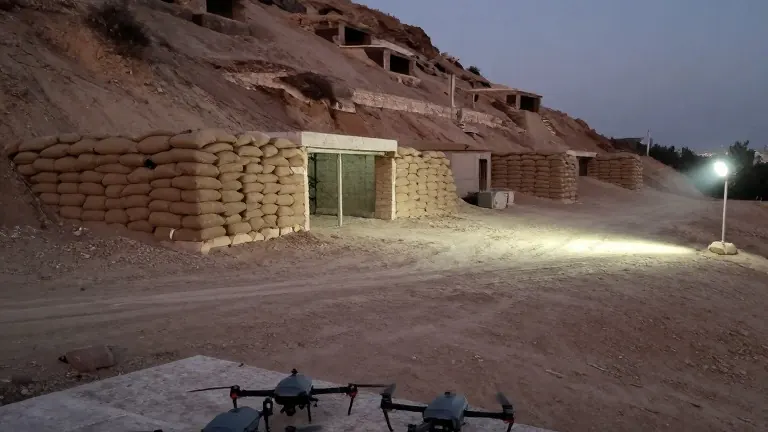
A US media investigation published in September claims that approximately 15 Ukrainian drone specialists are actively supporting Tuareg rebels in northern Mali. The report identifies the common adversary as the military government in Bamako and its Russian allies. CNN states that the Ukrainians provided drone training, operational planning, and remote support for missions, though Deutsche Welle has not independently verified these specific operational details.
The allegations place a potential proxy conflict on African soil, extending the Russia-Ukraine war beyond the continent. In July 2024, reports emerged that Ukrainian military intelligence, the HUR, aided Tuareg rebels in an ambush near Tinzaouaten that resulted in heavy losses for Russian Wagner Group paramilitaries. At the time, HUR spokesperson Andriy Yusov stated that the rebels received necessary information for the attack while Ukraine denied direct involvement in the engagement.
Kyiv has signaled its global reach without naming specific operations. Kyrylo Budanov, formerly the head of military intelligence and now chief of staff to President Volodymyr Zelenskyy, posted on X on September 7 that Ukrainian intelligence protects national interests worldwide. He referenced operations in "the burning desert sands and in the snows of icy Antarctica.." without explicitly mentioning Mali. The HUR told DW it might provide information at a later date regarding the deployment of personnel and political approval for such a mission.
Experts suggest a strategic motive for Kyiv to weaken Russia's expanding influence in the Sahel region. Marta Oliynyk-D'omochko, a coordinator at the National University of Kyiv-Mohyla Academy, argues that reducing Russian military presence diminishes its associated economic opportunities. Irina Filatova, a professor emeritus at the University of KwaZulu-Natal, describes the support as plausible but notes a lack of independent evidence. She argues that setbacks in Mali could tie up Russian resources and undermine Moscow's reputation as a security partner in Africa.
The alleged partners of Kyiv, the Azawad Liberation Front (FLA), maintain a controversial alliance with Jama'at Nusrat al-Islam wal Muslimeen (JNIM). JNIM is a jihadist group affiliated with al-Qaeda. While the FLA seeks self-determination in the north, JNIM aims to impose strict Islamic rule. Oliynyk-D'omochko characterizes the relationship as a situational alliance against a common enemy rather than a comprehensive partnership. She warns that this tactical arrangement poses a political risk for Ukraine, which advocates for equal partnerships with African nations.
The three Sahel nations of Mali, Niger, and Burkina Faso have severed diplomatic ties with Kyiv and deepened ties with Russia. In September, Mali's Foreign Minister Abdoulaye Diop accused Ukraine at the United Nations of providing open support to terrorist groups to undermine the country's territorial integrity. He did not provide evidence for the claim. The military governments in these nations have an interest in portraying Kyiv as a destabilizing actor to legitimize their partnership with Moscow.
Russia has reorganized its military presence in the region, replacing the Wagner Group with the Africa Corps in 2025. Ulf Laessing, head of the Syria and Iraq program at the Konrad Adenauer Foundation, stated that the Africa Corps still uses Syria and Libya as transit points for flights from Russia. He said these flights include refueling and loading to support operations on the continent. The engagement in Mali offers Ukraine a relatively low-cost method to pressure Russian forces, yet the potential for indirect support of Islamist fighters remains a concern for Kyiv's diplomatic standing in Africa.
Source: Deutsche Welle