Ukraine confirms Starshield satellite speeds return to 400 km/h
Zelenskyy declares the military network operational at full capacity after a two-week period of restrictions that hindered drone interception.
By Amir Navarro ·
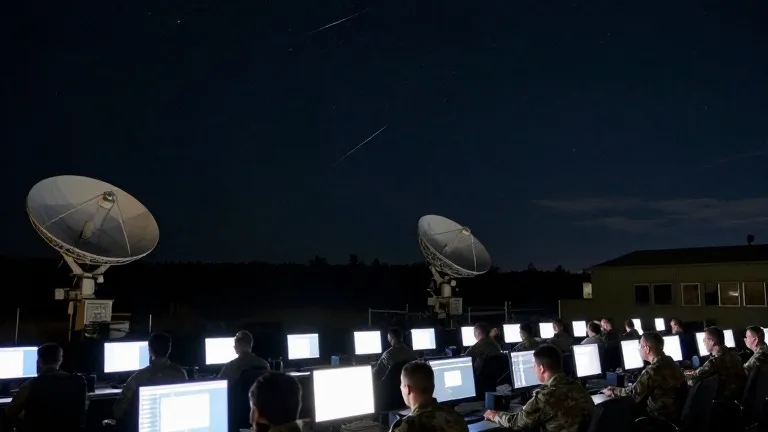
Ukrainian President Volodymyr Zelenskyy announced on October 24 that the Starshield satellite communications system is once again operating at its standard speed. The update concludes a two-week period of technical restrictions that limited the bandwidth available to Ukrainian military units. Zelenskyy described the restoration as essential for frontline logistics and for tracking high-speed aerial targets.
Starshield, a service developed by Elon Musk's SpaceX, serves as the military counterpart to the commercial Starlink network. Ukraine relies on both systems for command and control. Defense Minister Yevheniy Khmara stated that monitoring data confirmed connectivity was restored for equipment traveling at speeds exceeding 400 kilometers per hour. Khmara attributed the resolution to direct dialogue and the president's persistent advocacy.
The restrictions previously capped connectivity at approximately 161 kilometers per hour. This limitation prevented drone interceptors from maintaining stable links while maneuvering at high velocities. A Ukrainian official told RFE/RL the previous day that the links were still dropping at that lower speed. The cap significantly reduced the effectiveness of air defense systems against jet-powered Shahed drones.
Questions remain regarding who authorized the speed limits. Serhiy Beskrestnov, a defense technology adviser to Zelenskyy, suggested a connection to recent diplomatic tensions between Kyiv and Washington. However, the Trump administration maintains that the US government did not request the changes. Musk has noted that the military, and ultimately President Donald Trump, hold decision-making authority over Starshield usage.
The Wall Street Journal reported that Trump contacted Musk to urge the lifting of restrictions. Trump declined to comment directly on the exchange but stated he would resolve any issues. Members of Congress from both parties are demanding answers on who approved the changes and seeking guarantees for continued access.
The timing of the restriction coincided with other US policy moves that Kyiv and Western allies view as favorable to Russia. President Trump announced a deal promoting Russian diesel exports and waived sanctions under a law signed last month. He also urged Kyiv to pause attacks on Russian refineries, a move Zelenskyy accepted before President Vladimir Putin ordered continued strikes.
Combat operations continued through the night of October 24. Ukrainian air defense units reported destroying 100 of 130 Russian drones. Attacks on 15 locations resulted in at least two fatalities. Ukrainian forces targeted two industrial sites and a military airport in Russia, including a facility in Oryol that produces missile components.
Most of occupied Crimea experienced a near-total loss of electricity and connectivity in the early morning. Russian authorities cited a disruption to power lines outside the peninsula caused by a drone attack. Ukrainian monitoring channels reported a fire at the Taman electrical substation in the Krasnodar region, which supplies power to Crimea via the Kerch Strait.
Source: RFE/RL