Sri Lanka mass grave discovery sparks renewed search for missing Muslims
The recent excavation of skeletal remains in Kattankudy has revived efforts to identify victims of a 1990 massacre, offering hope to families who have waited decades for answers.
By Amir Navarro ·
Fouzul Hinaya has spent the past 36 years holding onto memories of her two brothers, who were killed during a largely overlooked episode of Sri Lanka's civil war. At 60 years old, she now sees a glimmer of hope. While she no longer expects a full judicial verdict, she prays that she can finally perform Muslim burial rites for them. Speaking from her home in the eastern coastal city of Kattankudy, Hinaya stated that she needs to provide her brothers with a dignified burial.
The civil war, which lasted from 1983 to 2009, claimed the lives of tens of thousands, predominantly civilians, in the conflict between Tamil rebels and Sri Lankan forces. The military has long faced accusations of war crimes against the Tamil population. Conversely, the government and the Sinhala majority have pointed to the bombings and assassinations carried out by the Liberation Tigers of Tamil Eelam, or LTTE, including the killing of President Ranasinghe Premadasa in 1993 and Indian Prime Minister Rajiv Gandhi earlier.
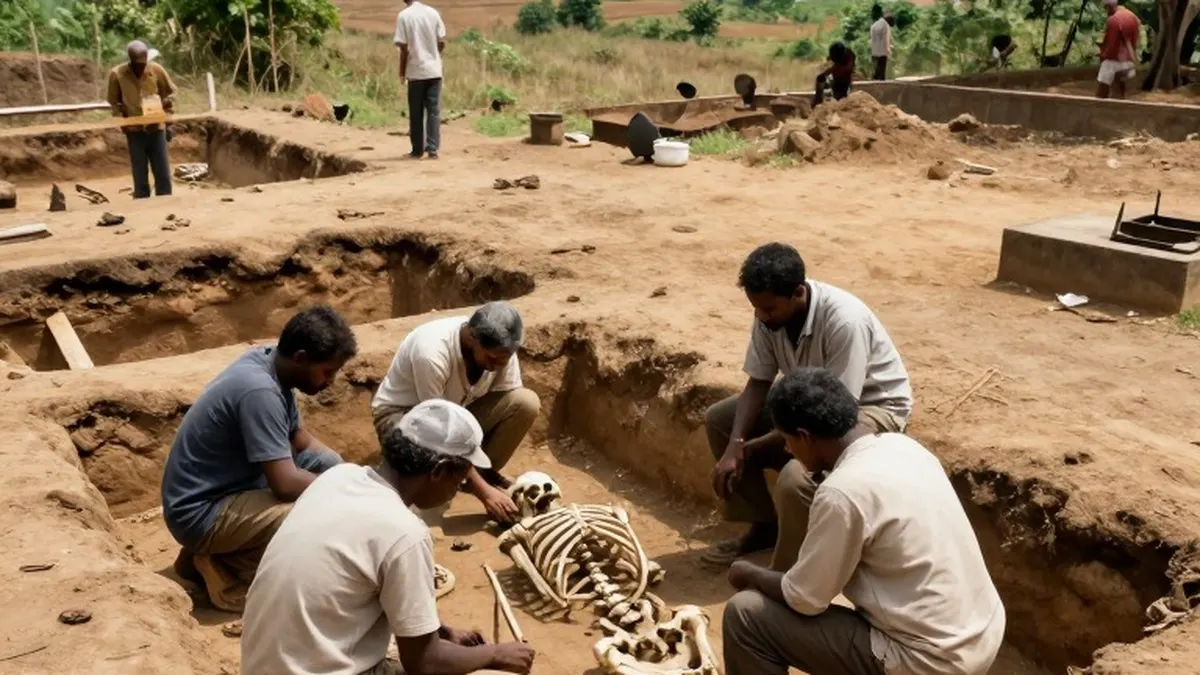
In the early 1990s, the LTTE also targeted Sri Lankan Muslims in the eastern towns of Kurukkalmadam, Kattankudy, and Eravur. Many who were abducted never returned, leaving hundreds of bodies unrecovered. Last month, a court-appointed archaeological team discovered skeletal remains with cut marks in a mass grave in Kurukkalmadam. Muazzam Mubarak, the lawyer representing the victims' families, confirmed the finding. Zacky Fouz, an assistant professor at the International Islamic University of Malaysia, noted that the immediate priority is to identify the remains, determine the circumstances of their deaths, and keep families informed.
Hinaya was one of six siblings. Her younger brothers, Fouzul Ameer and Abdur Rauff, helped support their family. Ameer used to travel to Akkaraipattu to sell garments. In July 1990, while returning from a trip, he was stopped by the LTTE near Kurukkalmadam and gunned down along with dozens of others. Estimates of the death toll in that specific attack range from 60 to 150 people. This event marked a turning point for Sri Lanka's Muslim community, shifting the LTTE's strategy from ransom to blood.
A month later, in August 1990, the LTTE killed at least 300 Muslims in two mosques in Kattankudy and Eravur. At that time, Hinaya's other brother, Abdur Rauff, was working in the north. After returning home to join his grieving family, he set out to buy provisions in Batticaloa but was abducted by the rebels and never found. He is presumed dead. In 2016, Sri Lanka established an Office on Missing Persons, and Hinaya lodged a complaint, joining hundreds of others seeking answers about their disappeared loved ones.
The conflict also disrupted the historical bond between Sri Lankan Tamils and Muslims. In 1987, Indian troops were deployed as peacekeepers, leading to the temporary displacement of residents in Mullaitivu. Mohamed Rizni, now 59, recalled this as their first displacement. By early 1990, the Indian military had departed, and the communities returned to a state of harmony. However, in October 1990, the LTTE forced the entire Muslim population of the Northern Province, estimated between 75,000 and 100,000 people, to leave within two days. They were allowed to take only their clothes, leaving behind livestock, land, and homes.
Fouz described the attacks as evidence of the LTTE's exclusionary vision of a Tamil homeland, arguing that the rebels reproduced the logic of exclusion they claimed to fight against. Although the LTTE was defeated in 2009, resulting in the death of nearly 40,000 civilians in the final stage of the war, many Muslim refugees have since resettled in the north. However, comprehensive resettlement has not yet been achieved. Riyas Farook, a parliamentarian, described the 1990 killings and expulsion as serious crimes against humanity, emphasizing the need for an independent investigation to identify victims and establish the facts.
Rizni expressed hope that the traditional harmony between Muslims and Tamils could be revived. He stated that while Muslims will not forget the expulsion, they will not blame the Tamil people for the actions of the LTTE. Fouz suggested that the excavation at Kurukkalmadam offers a pathway to closure. He believes that how the authorities follow through on this discovery will determine whether Sri Lankan Muslims can finally receive the answers they have waited for over three decades.