OEA Warns of Severe 2027 Climate Shifts Across the Americas
A new report projects up to 80% rainfall drops in dry corridors and heavy flooding on Pacific coasts, affecting food supplies and power grids in 2027.
By Vanessa Lopez ·
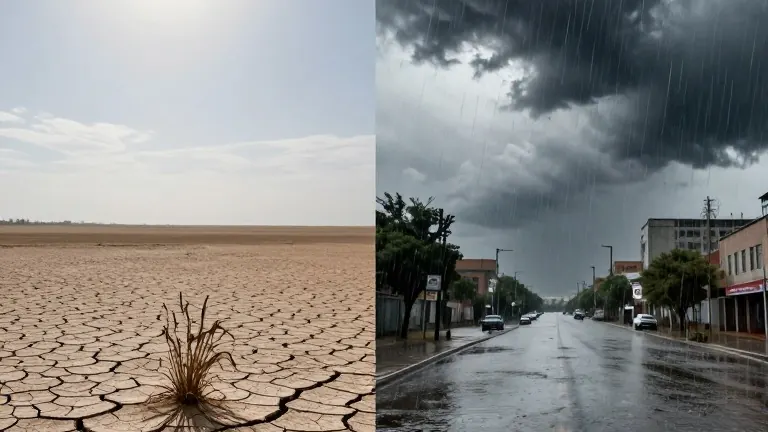
Ordinary residents in parts of Central America and South America face a stark choice next year: extreme drought or violent flooding. The Organization of American States released a report projecting that the El Niño-Southern Oscillation event will peak in intensity by 2027. This meteorological shift, triggered by sea surface temperatures in the equatorial Pacific rising more than 2 degrees Celsius above normal, will disrupt global weather patterns and force local governments to prepare for simultaneous crises in different regions.
The OEA report identifies specific zones of vulnerability across the continent. In Guatemala, Honduras, Colombia, and Venezuela, the dry season could become severe. The report notes that rainfall in the Central American Dry Corridor could drop by as much as 80 percent. These conditions threaten agricultural output and municipal water supplies. Colombia’s Andean and Caribbean regions are expected to see similar declines in precipitation, while Venezuela faces drier conditions that may worsen during the winter months.
Conversely, the western edges of the continent face the opposite extreme. Ecuador and northern Peru are at high risk for torrential rains, severe flooding, and landslides along their coastal zones. The OEA also lists parts of Brazil, Chile, Argentina, Bolivia, Paraguay, and Uruguay as areas where the phenomenon will leave a mark, though the specific nature of the impact varies by location. The report suggests that the event will not be uniform, requiring distinct strategies for different nations.
Mexico will also experience these changes, according to the National Meteorological Service. The agency predicts that northern regions may see lower temperatures and increased rainfall during the winter of 2026. However, the dynamic shifts as spring 2027 approaches. Rising global temperatures and increased atmospheric water vapor associated with the event raise the likelihood of heat waves, intense storms, and wildfires in the country’s central and southern areas.
The economic and social fallout extends beyond immediate weather events. The OEA warns that the disruption will hit food production, water supply, and electricity generation. In the Central American Dry Corridor, an estimated 500,000 to 750,000 people could face an acute food crisis due to crop failure. Drought conditions in other areas may reduce hydropower capacity, leading to potential power shortages in cities dependent on that energy source.