Army plans to detonate lead azide in Iowa by Sunday despite court pause
Legal filings indicate the Department of Justice is invoking an emergency exclusion to override a federal order halting the controlled explosion.
By Vanessa Lopez ·
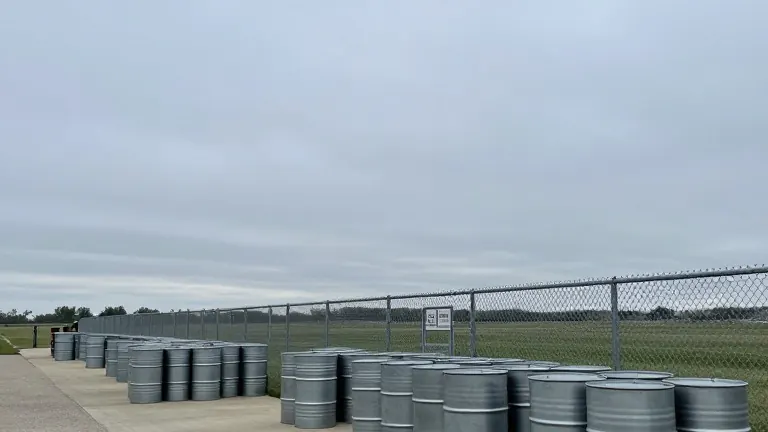
The Department of Justice told federal courts on Saturday that the U.S. Army intends to detonate more than 60 barrels of lead azide by November 24. This timeline overrides an indefinite pause ordered by the 8th U.S. Circuit Court of Appeals. The agency is invoking the emergency munitions and explosives exclusion to bypass the judicial block.
The conflict began when the Iowa Environmental Council and the Sierra Club Iowa Chapter filed a complaint against the planned blasts. The groups argued that the explosion would release elevated levels of lead dust into the air. That dust could travel 100 miles north of the Iowa Army Ammunition Plant. The lawsuit claimed the lead would linger in yards, gardens, and play areas for years.
The Army originally scheduled two detonations. A federal court halted the first planned explosion on Friday. Environmental groups warned that the activity could expose thousands of families in surrounding communities to toxic dust. The detonations were then rescheduled to Monday. The 8th Circuit granted another emergency motion to indefinitely pause the explosions.
In new court filings, the Department of Justice argued that the blocks should be ignored due to public safety risks. Lawyers for the agency stated that the Army must perform a controlled detonation to protect the public from a more significant threat from an uncontrolled explosion. The attorneys asserted that the Army needs to take swift action to protect its personnel and surrounding communities.
The Army coordinated with the Health and Human Services department and the Environmental Protection Agency on Friday. A joint statement said officials have been planning for this event since March. The agencies wrote that they are prepared to take extreme mitigation measures to ensure there is no risk to the public and that disruptions are minimized.
The Environmental Protection Agency notes that there are no known safe levels of lead exposure. Inhaling or swallowing lead poses serious health risks to humans and animals, particularly children. The lead azide is currently stored at the ammunition plant in Middletown, Iowa.