Kazakhstan Deputy PM Signs Tax Deal With Israel After Decade of Talks
Zhaslan Madiyev led a 50-person delegation to Jerusalem to finalize agreements on artificial intelligence, water, and critical minerals.
By Marina Weber ·
Kazakhstan’s Deputy Prime Minister Zhaslan Madiyev traveled to Jerusalem on Monday to sign a double taxation agreement with Israel. The deal concludes a negotiation process that has lasted more than ten years. Madiyev, who also oversees the national artificial intelligence program, is the highest-ranking Kazakh official to visit Israel in the past decade.
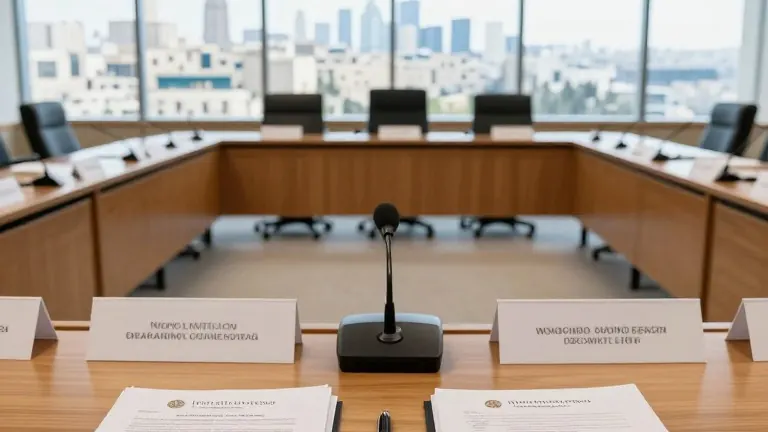
The signing took place during the tenth meeting of the Israel-Kazakhstan Joint Economic Commission. Ze'ev Elkin, representing the Finance Ministry, co-chaired the session. According to the Foreign Ministry, the gathering included representatives from 12 government ministries, including nine Kazakh deputy ministers. The two nations also signed memoranda of understanding on labor, cybersecurity, and artificial intelligence. A joint declaration on space cooperation and the commission’s official protocol were also executed.
Elkin described the tax agreement as a major step in reducing the financial burden on cross-border businesses. He noted that the framework establishes rules for taxation rights, preventing the same income from being taxed in both jurisdictions. Although the specific provisions and implementation date have not been publicly released, Elkin stated that the move aims to open new economic opportunities for investors.
Madiyev arrived with a delegation of more than 50 senior officials and representatives from state-owned companies. The visit followed a trip by Israeli President Isaac Herzog to Kazakhstan in April 2026 and a visit by Foreign Minister Gideon Sa'ar to Astana in January. During the stay, Madiyev met with Herzog, Sa'ar, and Foreign Ministry Director-General Eden Bar Tal. The meetings were designed to identify cooperation opportunities between public institutions and private companies.
A central focus of the discussions was water management. The two countries established their first joint working group on this issue, led by the Israel Water Authority on the Israeli side. Kazakhstan faces challenges with desertification and water resource management, particularly in agriculture. Israeli expertise in irrigation and water monitoring is expected to support Kazakhstan's modernization efforts.
Beyond the diplomatic talks, a bilateral business forum was organized by the Foreign Ministry and the Israel Export Institute. Israeli companies met with the Kazakh delegation to explore investments in advanced technology and infrastructure. A specific roundtable addressed critical minerals, a sector vital for battery production and renewable energy. Kazakh officials reported that seven commercial documents were signed during the forum.
The agreements carry diplomatic weight as Kazakhstan participates in the Abraham Accords. The country joined the US-brokered framework in November 2025 following a call involving US President Donald Trump, Israeli Prime Minister Benjamin Netanyahu, and Kazakh President Kassym-Jomart Tokayev. Analyst Dr. Anat Hochberg-Marom noted that Kazakhstan is Central Asia's largest economy, with a gross domestic product of approximately $301 billion. She highlighted the country's role as the world's leading uranium producer, accounting for roughly 40% of global output in 2024.
Madiyev stressed that the value of the partnership depends on practical implementation. He stated that cooperation must result in concrete projects, new expertise, and investments that are put to work in Kazakhstan, rather than being limited to the exchange of experience and the signing of documents.
Source: The Jerusalem Post