Italy introduces new protocols after wave of school bomb threats
The Italian government announced new measures to handle mass email threats after nearly 2,000 schools received bomb warnings on Thursday.
By Marina Weber ·
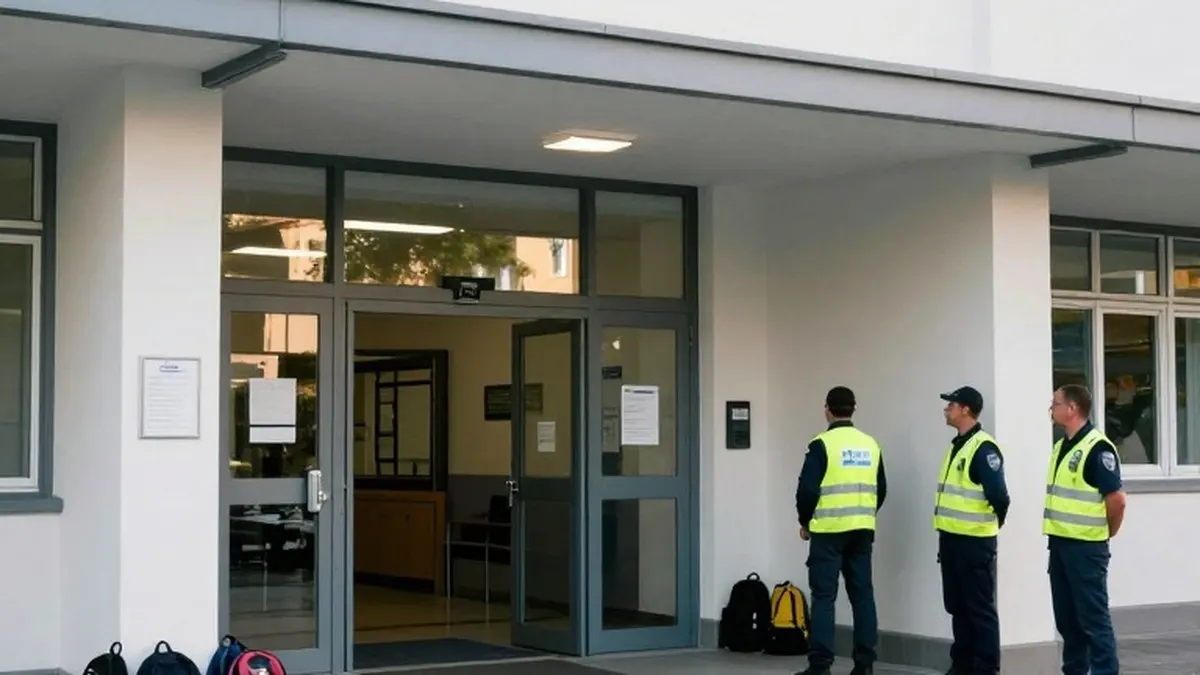
The Italian government announced on Thursday that 1,803 schools had received emails containing bomb threats. This development marked the second consecutive day of widespread security alerts that forced the evacuation of educational institutions across the country.
The incident follows a significant surge in cyberattacks and hoaxes targeting various sectors in Europe, including schools, supermarkets, blood banks, air traffic systems, and broadcasters. On Wednesday, approximately 6,300 schools in Italy were emptied after receiving similar warnings, causing substantial disruption to the daily routine of students and staff.
In response to the escalating situation, authorities stated they will implement new procedures for managing security alerts, particularly those delivered via mass email. Under the revised guidelines, buildings will generally not be evacuated unless there is concrete evidence suggesting a genuine danger exists.
Prime Minister Giorgia Meloni emphasized that mere receipt of a mass email should not trigger an evacuation in the absence of specific indicators of risk. Her office released a statement clarifying that concrete elements are required to justify clearing buildings of occupants.
Following the initial wave of threats on Wednesday, many schools closed immediately, leading to widespread chaos as parents rushed to collect their children. Concerns spread rapidly on social media, and while more alarms were reported on Thursday, some schools were again shut down. Police in Rome noted that while they received reports from several schools, the scale was smaller than the previous day, and there was no substantive proof to back up the threats.
The political fallout has intensified, with opposition leaders criticizing the government's handling of the crisis. After a two-hour meeting with Meloni, leaders from the center and left argued that the government needed to propose clearer solutions. They also pointed to what they described as inadequate investment in cybersecurity infrastructure.
Former Prime Minister Matteo Renzi, leader of the centrist Italia Viva party, questioned how public funds had been utilized. He suggested that a robust antivirus program could have mitigated the impact of the previous day's alarm. Renzi's comments highlight a broader debate about the allocation of resources between conventional military equipment and modern cyber defenses.
International comparisons have been drawn to highlight differences in response strategies. Authorities in Scotland, Northern Ireland, and the Republic of Ireland reported receiving similar threatening emails from abroad. However, these nations classified the messages as hoaxes and allowed classes to continue, often after warning schools in advance. Nicola Fratoianni of the Green-Left Alliance noted this difference, asking why Italy did not adopt a similar approach.
While some European officials suspect that Russia may be orchestrating a campaign to disrupt daily life in nations supporting Ukraine, Italian officials have stated there is no direct evidence linking Moscow to the Italian incidents. Russia has denied involvement, accusing Western nations of launching a smear campaign.
Elly Schlein, leader of the main opposition Democratic Party, called for stronger coordination among the bodies responsible for cybersecurity. She proposed shifting a portion of the available resources toward enhancing cyber defenses to better prepare for future digital attacks.