SpaceX Catches Starship at Texas Launch Tower for First Time
The spacecraft returned after 14 orbits of Earth, achieving a major recovery milestone even as SpaceX fell short of retrieving both rocket stages on the same flight.
By Vanessa Lopez ·
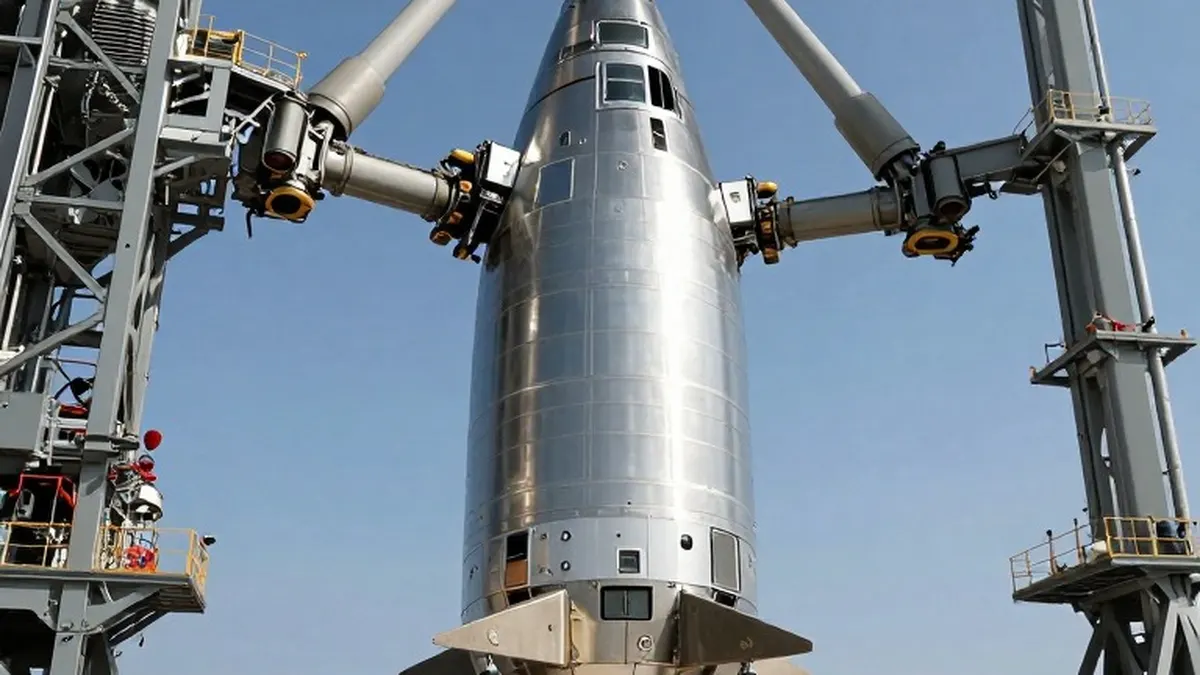
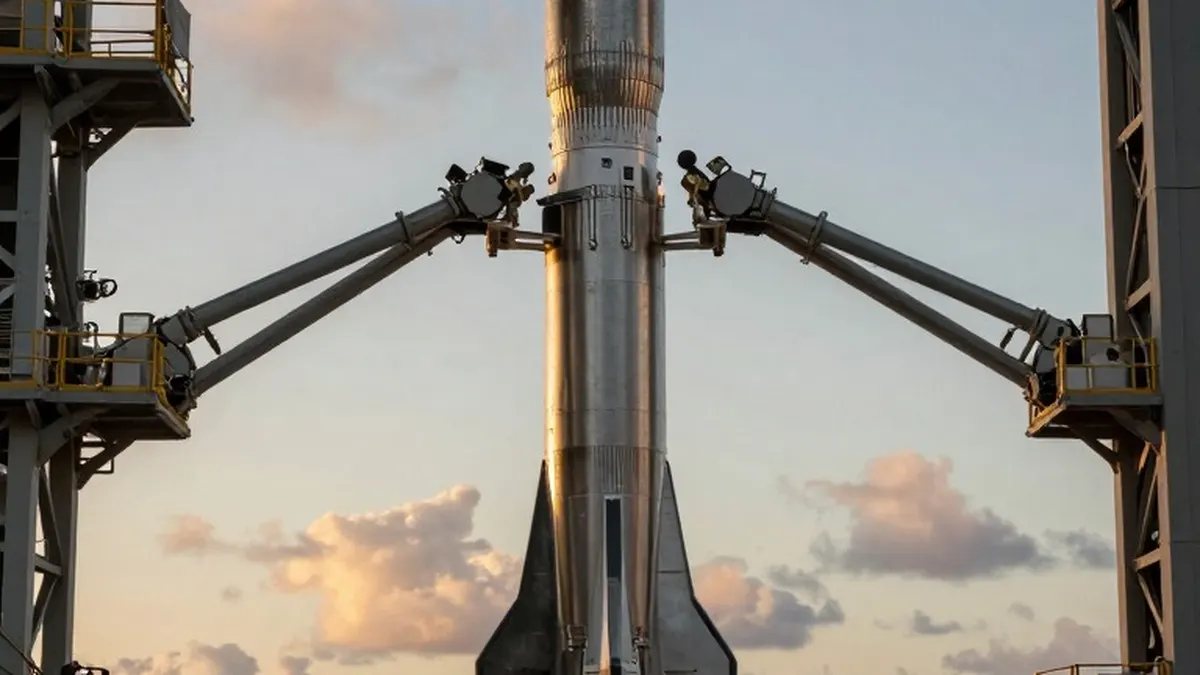
SpaceX recovered its Starship spacecraft with giant mechanical arms at its Texas launch tower on Saturday, completing the first such catch of the upper stage after more than 22 hours in orbit. The recovery marked a significant step in the company's decade-long effort to build a fully reusable rocket.
The 171-foot spacecraft emerged from thick clouds above the Starbase launch site, restarted its engines and turned upright before lowering itself between the tower's arms, known as Mechazilla. Its exterior was charred by the heat of reentry. Once secured, Starship switched off its engines and remained suspended, bringing the rocket system's longest mission so far to an end.
Starship had lifted off from SpaceX's Texas facilities on Friday aboard the Super Heavy booster, the lower half of the two-stage rocket. The booster failed to complete its own return to the launch pad about 10 minutes later. That failure prevented SpaceX from achieving its goal of recovering both stages during a single mission, something it has yet to accomplish.
The upper stage completed 14 circuits of Earth during the flight. On Friday night, it released 26 Starlink satellites while traveling at an altitude of about 161 miles, or 260 kilometers. On Saturday, the spacecraft fired one engine to leave orbit and begin its descent through the atmosphere toward the Gulf Coast of south Texas.
During that return, Starship endured intense heat as it slowed from an orbital speed of approximately 17,000 miles per hour to a supersonic free fall. Its successful recovery was an important engineering achievement for a development program that has cost billions of dollars.
Elon Musk envisions Starship serving several purposes, from supporting SpaceX's lucrative Starlink satellite business to placing data centers in orbit. His ambitions for the vehicle also include returning humans to the Moon and eventually establishing a settlement on Mars. The broader aim is a rocket system capable of repeated flights at a pace resembling commercial aviation.
SpaceX's existing launch business relies on Falcon 9, which has flown more than 700 times since 2010. Its first stage can be reused, but the second stage, which carries payloads into orbit, is discarded into the ocean after each mission.
Further work remains before Starship can meet its full reusability goals. Beyond recovering both stages together, SpaceX must improve the spacecraft's heat shield. Its black hexagonal protective tiles are not yet fully reusable, and the company is developing designs intended to need little or no refurbishment between flights.