Border Face-Offs in Arunachal Pradesh Test Modi's Cautious Thaw With China
The head of India's Indo-Tibetan Border Police has said confrontations with Chinese forces continue in Arunachal Pradesh, raising political pressure on Prime Minister Narendra Modi six years after the deadly Galwan clash.
By Amir Navarro ·
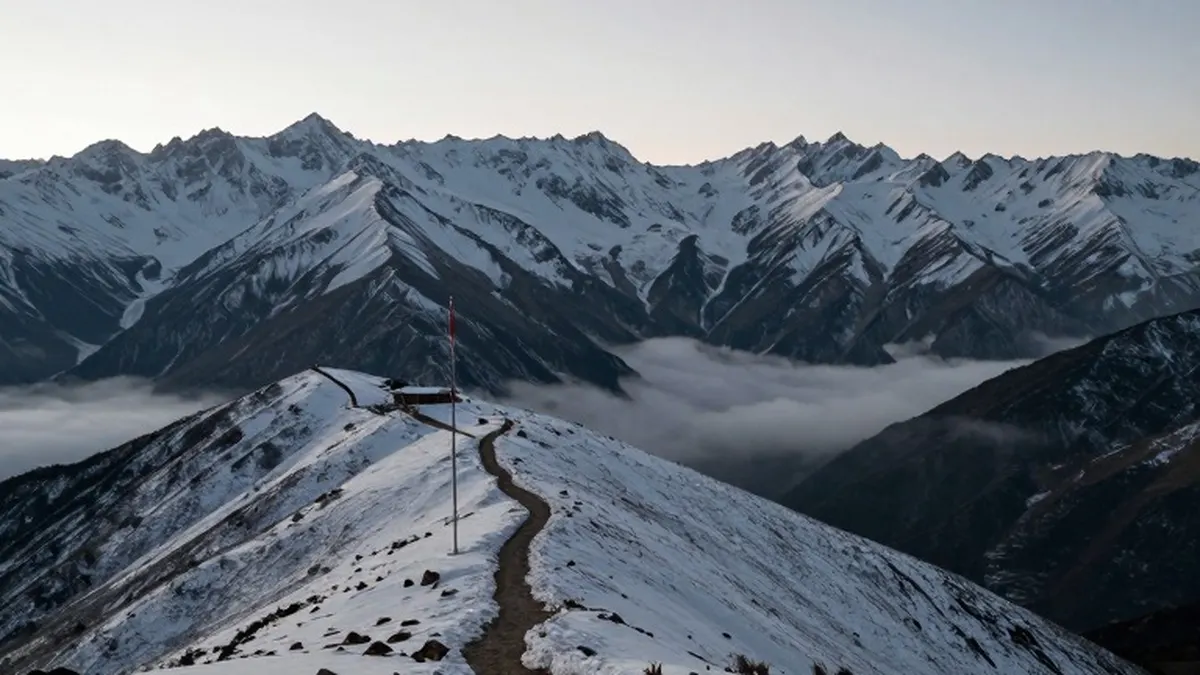
India's forces are engaged in several ongoing face-offs with the Chinese army along the border in the northeastern state of Arunachal Pradesh, according to the head of the paramilitary force that guards the Himalayan frontier. Shatrujeet Kapur, director general of the Indo-Tibetan Border Police (ITBP), made the remarks late last week at a ceremony honoring the force's personnel, where he said commandos have been active in the confrontations.
His comments come nearly four months after local civil society groups told Al Jazeera that Chinese forces were increasingly encroaching on Indian territory and blocking Indian troops from patrolling points. The reports are said to center on the remote Upper Subansiri region, which saw the first clash between independent India and China in August 1959, when at least two Indian soldiers were killed.
The tensions arrive during a careful improvement in relations. Chinese President Xi Jinping visited New Delhi last month for the BRICS summit, his first trip to India in seven years, and met Prime Minister Narendra Modi on the sidelines. The thaw is partly driven by US President Donald Trump's trade war, which has nudged the nuclear-armed rivals closer. Even so, friction along the 3,488-km border threatens to undercut efforts to normalize ties.
The dispute traces back to the McMahon Line, drawn under the 1914 Simla Convention between British India and Tibet. India has treated it as the boundary since independence in 1947, but China rejects it, arguing that it took no part in the negotiations. Beijing claims all of Arunachal Pradesh, calling it "South Tibet" or "Zangnan". In 1962, the two countries agreed to treat the Line of Actual Control as a de facto boundary while they negotiated wider differences, which were never resolved.
The risks became clear in June 2020, when troops clashed in the Galwan Valley in eastern Ladakh. At least 20 Indian soldiers died, and China later acknowledged four deaths among its own. Satellite imagery and accounts from within India's security establishment have since suggested China took control of parts of previously disputed territory, yet the Modi government has refused to concede any loss of land. Five days after Kapur spoke, it had still not confirmed the nature of the current tensions.
Foreign ministry spokesperson Randhir Jaiswal said the situation in border areas "gets disturbed from time to time when Chinese forces diverge from established patrolling patterns," but did not address the ongoing face-offs. Bosiram Siram, the Congress party's top leader in Arunachal Pradesh, said Chinese troops have pushed nearly 50km (31 miles) into Indian territory in Upper Subansiri. "You can see the [Chinese] Army. They are on top of the mountains, while we are down below," he said after leading a party delegation to the area in August.
Praveen Donthi, a senior analyst at the International Crisis Group, described the incidents amid a thaw as "part of a pattern" and "likely a pressure tactic by Beijing." He said the government projects a hard security image but tends to downplay events that reflect poorly because of the sharp power gap with China. The issue also revives old criticism of Modi's handling of Galwan, when his statement that no one had entered Indian territory appeared to conflict with the foreign ministry's account. His office later clarified he meant no Chinese troops remained on Indian soil after the clash.
Kapur, who is due to retire this week, also warned that China's frontier military capabilities have advanced and that Indian forces may not be able to fight head-on by traditional methods. He outlined a specialized training program meant to prepare personnel for a Ladakh-like situation.
Diplomatic channels have continued to operate. The 36th meeting of the Working Mechanism for Consultation and Coordination on India-China Border Affairs was held on August 6, and a first-ever commander-level meeting took place in Arunachal Pradesh in September. BR Deepak, a professor of Chinese studies at Jawaharlal Nehru University, said such meetings can bring temporary relief but cannot alone deliver a lasting solution. Without clear political guidance in both capitals, he said, border arrangements will "remain fragile and reversible."
Source: Al Jazeera