EU and Five Key Nations to Form Joint Team for Ukraine Peace Talks
European leaders have agreed to send a diplomatic team from the EU and major member states to ensure a unified voice in upcoming negotiations on ending the war in Ukraine.
By Vanessa Lopez ·
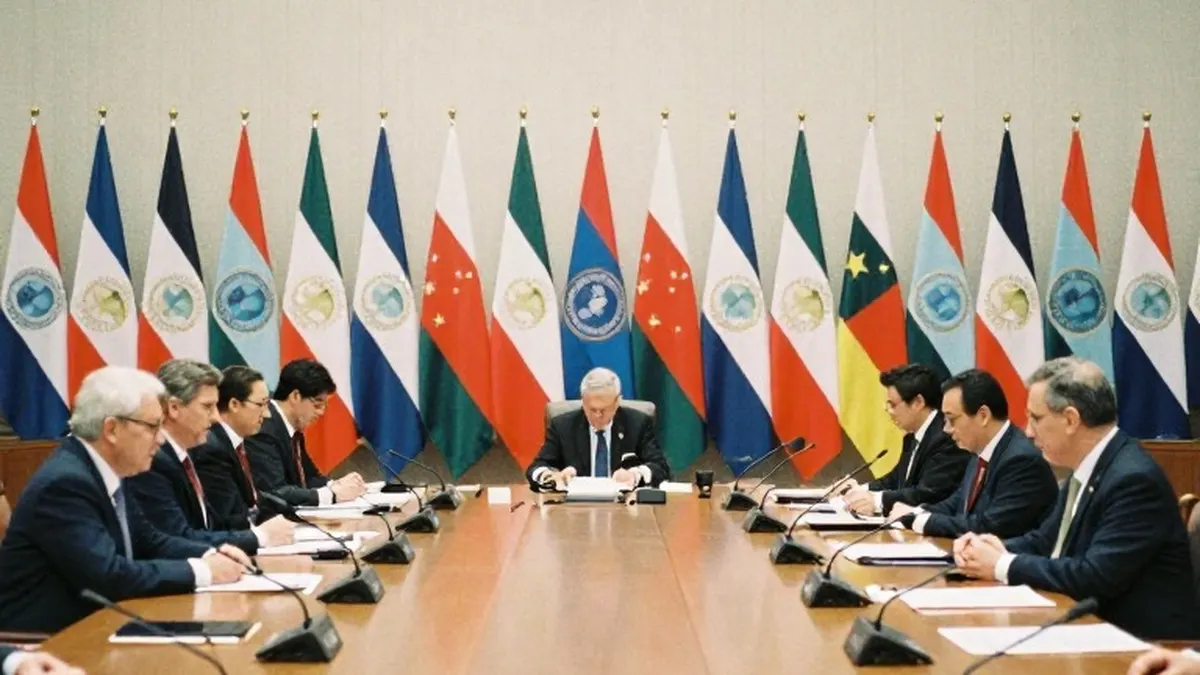
European leaders have finalized a strategy to secure a prominent role in the next round of peace talks regarding Ukraine. On Friday, European Council President Antonio Costa announced that the continent will be represented by a combined delegation. This team will include diplomats from the 27-nation European Union as well as officials from five key countries: the United Kingdom, France, Germany, Italy, and Poland.
The decision to form a collective group follows a summit focused on preventing Europe from being sidelined in US-led negotiations. The conflict, which has lasted nearly five years, has roiled the continent, and European officials fear that a process dominated by Washington and Moscow could leave Kyiv vulnerable. Costa emphasized the need for integration, stating that it is essential to have a team that speaks with only one voice.
Ukraine has expressed a strong desire for continued support from its European allies. Kyiv is hesitant to leave the diplomatic process entirely in the hands of a US administration that has frequently aligned with Russian perspectives. Conversely, Moscow has opposed direct European involvement, arguing that these nations are actively financing and supplying Ukraine’s military efforts.
Distrust toward US President Donald Trump as a primary negotiator has grown among European leaders. This sentiment is fueled by recent tense standoffs over trade, Greenland, and conflicts in Iran and Ukraine. French President Emmanuel Macron highlighted this dynamic during a meeting in Dublin on Thursday. He asserted that without Europeans, there is no support for Ukraine, adding that the continent must define and decide its own future security.
Concerns remain that Russian President Vladimir Putin may pressure Trump to accept a settlement that weakens broader European security. Putin has demanded that NATO troops be pulled back from Russia’s borders and that no European forces be deployed in Ukraine. During recent meetings in Abu Dhabi, envoys from Washington, Moscow, and Kyiv held talks while several European nations attended nearby discussions but were excluded from the main sessions.
US envoy Jared Kushner and Ukrainian President Volodymyr Zelensky confirmed after meeting in Dublin that Europe would participate in the next phase. Zelensky noted that the European team would have a voice, while Kushner stated that a deal could not be concluded without Europeans at the table. Kushner also indicated that Putin was willing to attempt the process.
The choice to send a team rather than a single representative was a point of contention. Russia and the US had suggested that a single envoy would be preferable. Kremlin spokesperson Dmitry Peskov criticized the European approach, describing their internal debates as chaotic. Italian Prime Minister Giorgia Meloni supported the idea of a single envoy, arguing that a lack of a united voice has allowed for fragmented diplomacy.
The ambiguity of who represents Europe has long frustrated Washington, with the question echoing a famous remark often attributed to Henry Kissinger about whom to call for Europe. The inclusion of non-EU members like the UK allows for a broader coalition of willing nations. Poland’s role is significant as it represents the EU’s eastern flank, which faces constant hybrid threats from Russia.
It remains unclear which specific EU official will lead the institutional side of the delegation. Speculation has focused on Costa and EU top diplomat Kaja Kallas. Kallas asserted her role in foreign and security policy, arguing that she is the appropriate representative. She noted that while Russia may not prefer her, Europe must send someone with a clear institutional role, similar to how the Americans are selecting their representatives.
Despite the unified front, some leaders maintain a cautious outlook. Polish Prime Minister Donald Tusk described the term negotiations as an exaggeration, warning that a new security architecture cannot be built solely on the wishes of the Russian or US presidents. With Trump scheduled to meet Putin in Beijing next week, German Chancellor Friedrich Merz urged for no surprises, calling for continued teamwork between Europe and Ukraine. Latvian Prime Minister Andris Kulbergs added that Europe must show greater confidence given its superior population, economy, and military strength.