Eisenkot and Liberman Reach Deal on Knesset Speaker and Haredi Outreach
Opposition leaders agreed to place a Yashar party member as Knesset speaker and pursue coalition talks with ultra-Orthodox parties to form a government.
By Marina Weber ·
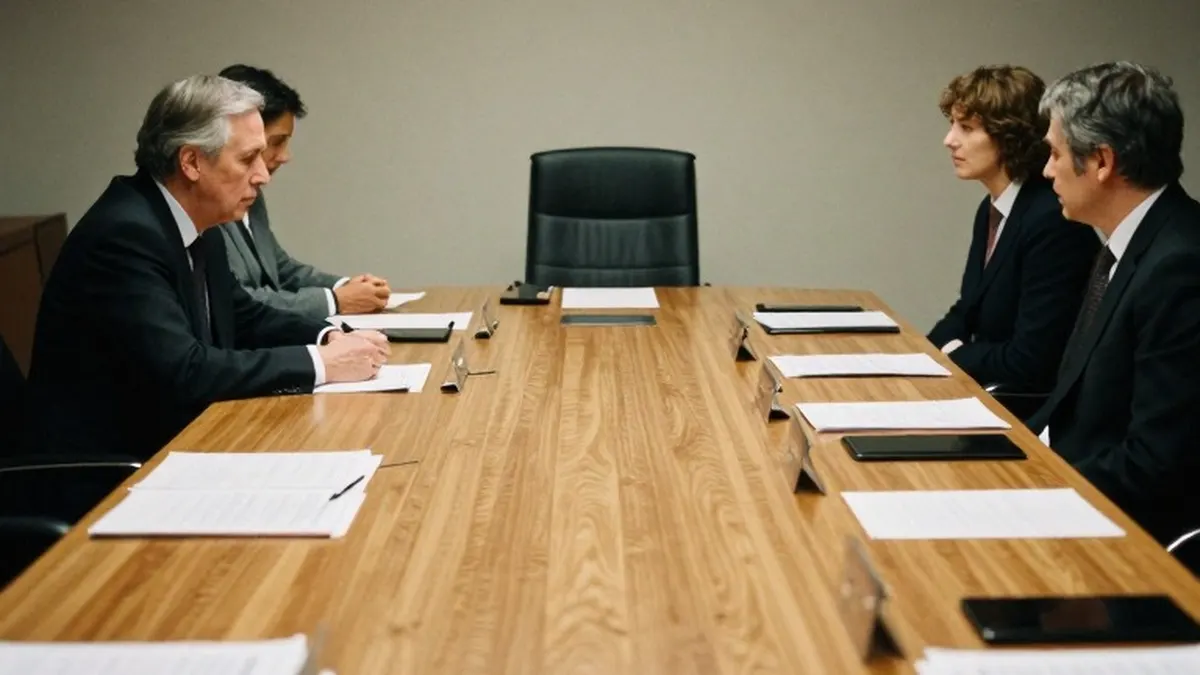
Gadi Eisenkot and Avigdor Liberman reached a preliminary agreement on Monday regarding the formation of a new government. The two opposition leaders reportedly decided that the next Knesset speaker should be selected from Eisenkot’s Yashar party. This move is part of a broader strategy to replace current Speaker Amir Ohana, a close ally of Prime Minister Benjamin Netanyahu, before a formal coalition is finalized.
Eisenkot leads a bloc of 48 lawmakers that lacks the 61-seat majority required to pass legislation. By securing the speaker role, the opposition aims to gain control over the legislative agenda while Eisenkot continues negotiations with other parties. The Yashar party candidate for the position is expected to be Eisenkot himself, who would serve in the role temporarily while attempting to assemble a cabinet.
A key component of the agreement involves outreach to the ultra-Orthodox parties, United Torah Judaism and Shas. Although Eisenkot’s bloc campaigned on a platform of universal military service, a policy strongly opposed by the Haredi communities, Liberman urged cooperation with these groups. He argued that a government relying on Arab parties would be unstable and that partnering with the Haredim would create a durable administration.
Liberman reportedly told Eisenkot that he was not seeking the prime ministership for himself, addressing concerns about a potential rotation agreement. He emphasized that the coalition-building process would require time and compromise. The two leaders are now expected to consult with other bloc members, including Naftali Bennett and Yair Golan, before making a public announcement. While some reports suggested the entire bloc had already agreed to Yashar’s control of the speaker role, others indicated that further discussions were necessary.
The ultra-Orthodox parties have expressed interest in negotiations, according to reports from the Kan public broadcaster. However, no official talks have yet taken place between their leaders and the opposition bloc. Channel 12 reported that discussions are in early stages, with the Haredi parties seeking a transitional arrangement of one to 18 months. During this period, they hope to delay strict enforcement of enlistment laws and sanctions against draft dodgers.
The Haredi parties are also seeking legal assurances that such an arrangement would withstand scrutiny from the Attorney General and the Knesset legal adviser. They believe legislation may be required to establish conscription policy, rather than relying solely on government decisions. This approach would allow them to work out a broader draft framework on military service without immediate confrontation.
Meanwhile, Prime Minister Netanyahu is actively working to prevent the opposition from coalescing. According to Channel 12, he has attempted to meet with senior spiritual leaders of United Torah Judaism, including Rabbi Dov Lando and Moshe Hillel Hirsch, but was rebuffed. The Prime Minister’s Office is reportedly pressuring these figures to vote against an Eisenkot-led government rather than abstain. Netanyahu hopes that a failed coalition attempt will lead to new elections, which he believes he can win.
Despite his public stance against partnering with Arab-led parties, a close associate of Netanyahu has been in contact with Ra’am leader Mansour Abbas. Natan Eshel, who previously led coalition talks with Ra’am, has reportedly urged Abbas not to support Eisenkot. In transcripts released by Channel 12, Eshel questioned whether Ra’am would help Eisenkot in the Knesset without being included in the coalition. Abbas indicated that Ra’am would wait for election results before making a final decision.
Eshel claimed to have conveyed a message to Abbas, asking if the party had self-respect if it supported a leader who did not want them in his coalition. Abbas replied that Ra’am would do what was best for them. The opposition now faces a complex path to power, balancing the need for Haredi support against the legal and political challenges of implementing military service reforms.
The Knesset is scheduled to convene on Tuesday. If a majority of members requests it, Ohana is expected to schedule a discussion on his potential replacement, likely for next week. He cannot block the vote, which requires a simple majority, provided the opposition parties agree on a single candidate. The outcome of these negotiations will determine whether Eisenkot can move forward with his government-building efforts or if Israel faces another cycle of political uncertainty.