Likud Fears UTJ and Shas Could Join Eisenkot Government Over Draft Deal
With Gadi Eisenkot holding the mandate to form a government, Benjamin Netanyahu is racing to keep the ultra-Orthodox parties from defecting to the opposition bloc.
By Amir Navarro ·
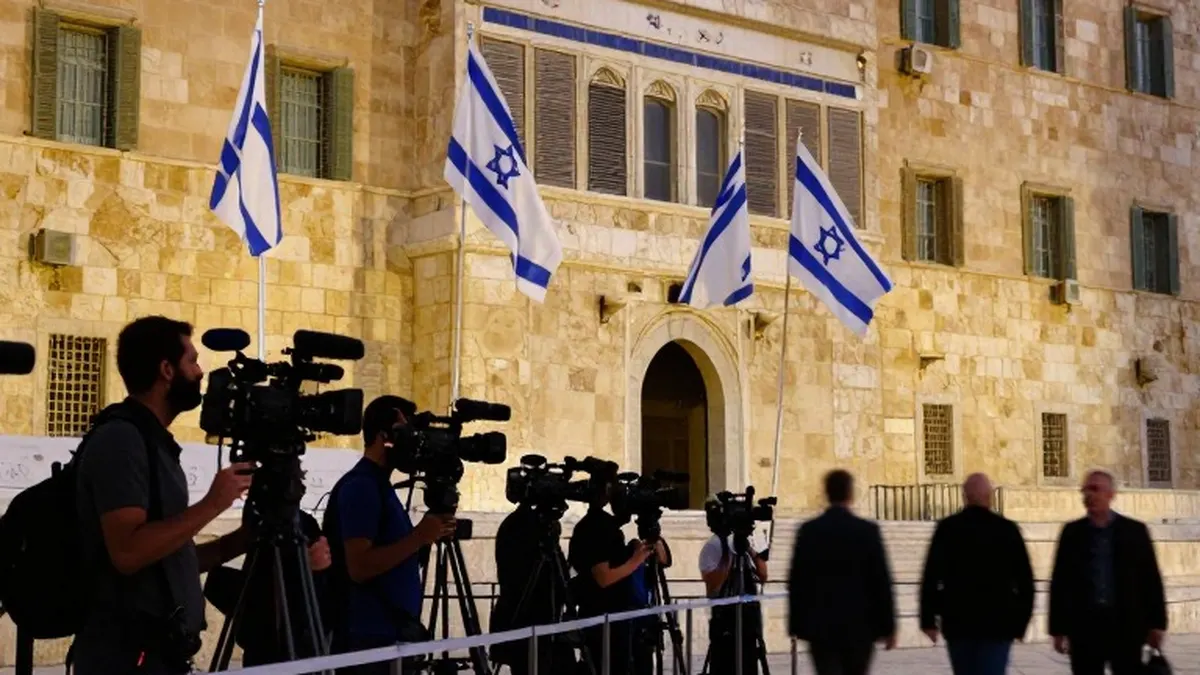
Yashar leader Gadi Eisenkot received the mandate to form a government on Sunday, and Prime Minister Benjamin Netanyahu has since launched an effort to block a government led by the opposition bloc, amid growing concern in Likud that the ultra-Orthodox parties could join the emerging coalition.
In recent days, Netanyahu has consulted senior Likud officials and assigned tasks to ministers and political partners. The push has centered on the haredi leadership, on persuading lawmakers from the anti-Netanyahu bloc not to back the new government, and on exploring ways to bring Avigdor Liberman back into the right-wing camp. As part of the outreach, ministers were asked to approach associates of Rabbi Dov Lando and Rabbi Moshe Hillel Hirsch, while Finance Minister Bezalel Smotrich was tasked with contacting Yashar figures who oppose relying on the Arab parties.
Within Likud, including among veteran ministers and MKs, some doubt Netanyahu can stop United Torah Judaism from joining an Eisenkot government if the rabbis receive an offer that meets their demands. Party officials privately acknowledge that Netanyahu currently lacks meaningful political tools to keep the haredi parties in the right-wing bloc. Some said that "in the current situation, all that remains is to put our trust in God and hope for a miracle." Netanyahu has also kept calling for a national unity government, but disagreements persist over who would serve as prime minister, the coalition's makeup, and its basic policy guidelines.
At the center of Likud's concern is Rabbi Dov Lando, the spiritual leader of Degel Hatorah. "Rabbi Lando has never considered himself committed to the right-wing camp," Likud officials said. "Already in the 1980s and 1990s, he publicly disagreed with Rabbi Shach's position against cooperation with the Left. His position has not changed, but now he heads the spiritual leadership, and Degel Hatorah representatives follow his rulings."
In talks with senior ultra-Orthodox figures, Netanyahu has also run into the argument that an enlistment arrangement negotiated with Eisenkot could prove more durable in court. When he warned that Eisenkot would not deliver an enlistment law for the haredi community, senior officials replied: "Unlike your enlistment law, the High Court of Justice will not strike down Eisenkot's." Likud also fears the ultra-Orthodox parties may not insist that an enlistment law pass before the government is formed, relying instead on a signed coalition agreement, which could ease negotiations between the anti-Netanyahu bloc and United Torah Judaism.
Inside United Torah Judaism there is still no agreement on joining an Eisenkot government. Alongside a willingness to consider an enlistment arrangement, there are reservations about partnering with parties in the anti-Netanyahu bloc, particularly the Democrats. Senior party officials have made clear that any deal would also need commitments on Shabbat, kashrut, conversion, and preserving the religious status quo, and representatives of Agudat Yisrael have voiced reservations as well. Likud is pinning its hopes on those internal disagreements.
The possibility of Shas joining is also worrying Netanyahu's associates. Updated assessments in both the anti-Netanyahu bloc and the Right suggest Arye Deri would be prepared to join an Eisenkot government if United Torah Judaism moved first. In that scenario, the 48 MKs of the bloc's Zionist parties, United Torah Judaism's seven MKs, and Shas's six MKs could form a 61-seat coalition. Ultra-Orthodox sources believe "Deri will find it difficult to stand against a decision by the Ashkenazi leadership to join a government that will regulate the status of yeshiva students," while a right-wing source warned: "They want to see Deri enter Eisenkot's left-wing government? In the next election, Shas won't pass the electoral threshold!"
Yisrael Beytenu chairman Avigdor Liberman has dropped his opposition in principle to serving with the ultra-Orthodox parties, but insists he will not join a government that relies on Arab parties and will demand an enlistment arrangement. He has proposed examining a framework based on the enlistment bill he advanced in 2018, adapted to the IDF's manpower needs following October 7, though he has yet to present a version agreed with the haredi parties. Eisenkot must also bridge gaps between the ultra-Orthodox demands and the positions of Liberman, Naftali Bennett, and Yair Golan on enlistment and religion-state issues, while bloc leaders remain split over the next Knesset speaker: Liberman backs Yair Lapid, and Eisenkot has not agreed to his candidacy.
Liberman has also raised the prospect of recruiting Likud defectors, telling Maariv: "Once a government of 61 is formed, there is a high probability that it will be possible to bring in at least 3-4 MKs from Likud." Likud rejects that assessment. "There are people who are in contact with Liberman and talk to him, for example, David Bitan," a Likud source said. "But even he won't leave Likud, because Bitan is a Likudnik through and through."
At the same time, it has emerged that Likud figures have tried to renew political cooperation with Liberman, hoping he could be persuaded to "come home, to the Right and to Likud." According to party officials, those efforts have failed. "Liberman doesn't want to. There have been many attempts to speak with him, but he is not prepared to sit with Bibi under any circumstances," they said.