Breaking: Election Day is here! Make your selections: A global referendum on US power
American voters are heading to the polls today to decide the fate of Congress and 36 governorships, with outcomes that will ripple through global markets, trade policy, and geopolitical alliances.
By Amir Navarro ·
It is Tuesday, November 3, 2026, and the United States is in the midst of its midterm election. For readers outside the country, this event occurs halfway through a president's four year term and serves as a crucial check on executive power. The results will determine which party controls Congress for the final two years of President Donald Trump's second term. This is not a race for the presidency, but a decision on the legislative branch and state leadership that will shape American policy for the foreseeable future.
The stakes are high for the global community. The U.S. House of Representatives has all 435 seats up for grabs. Republicans currently hold 218 seats, while Democrats hold 214, with one independent and some vacancies. Democrats need a net gain of three districts to secure a majority, whereas Republicans can afford to lose no more than two. Ballotpedia has identified 46 battleground districts, highlighting the tightness of the contest. In the Senate, 35 of the 100 seats are on the ballot, including 33 regular elections and two special elections for the terms of Marco Rubio and JD Vance. Republicans hold 53 seats, Democrats 45, and two independents caucus with Democrats. A net gain of four seats for Democrats would flip control of the chamber.
Beyond Congress, voters in 36 states are choosing their governors. Republicans currently hold 26 governorships, while Democrats hold 24. Of the races on the ballot this year, each party holds 18 offices. Nineteen of these races do not have an incumbent on the ballot due to term limits or voluntary retirement. If Democrats can secure a net gain of two governorships, they would achieve a nationwide majority for the first time since 2010. Six states, including California, Florida, Texas, and Ohio, are using new congressional maps drawn after the mid decade redistricting, which adds a layer of complexity to the House races.
The mood in the United States is tense, with the Associated Press describing the election as a referendum on Trump's second term. Voters are grappling with high prices and expressing anger over an unpopular war with Iran. According to AP NORC polling, only 35 percent of U.S. adults approve of Trump's job performance, and 25 percent approve of his handling of the economy. About seven in 10 Americans say the country is heading in the wrong direction. More than 57 million people had already voted as of Monday, surpassing early vote totals from four years ago in many closely watched states.
For international observers, the implications for markets and trade are significant. Reuters notes that Wall Street is watching for more than just control of Congress. The results could add to investor concerns regarding artificial intelligence spending and debt ceiling negotiations. The U.S. plays a central role in global trade, and the outcome of this election will influence tariff policies and trade agreements. The war with Iran has also strained relations with allies, and a shift in Congress could alter the U.S. approach to foreign policy and military commitments.
In the Senate, the battlegrounds are fiercely contested. Maine is a toss up on all major race ratings, with economic strain and tariffs making the state competitive. In Georgia, Senator Jon Ossoff faces Republican Representative Mike Collins. In North Carolina, former Governor Roy Cooper is running against former Republican National Committee chair Michael Whatley. Ohio sees a match between former Senator Sherrod Brown and Senator Jon Husted. In Michigan, former Representative Mike Rogers is competing against Abdul El Said. These races are critical because they could tip the balance of power in the Senate, which has the power to confirm judges and approve treaties.
The governor races are also pivotal. In Georgia, Republican health care executive Rick Jackson is facing Democratic former Atlanta Mayor Keisha Lance Bottoms. In Nevada, Republican Governor Joe Lombardo is running against Democratic Attorney General Aaron Ford. In Ohio, Vivek Ramaswamy is competing against Amy Acton. The Associated Press calls Texas, Florida, and Iowa competitive governor races. A Democratic victory in these states could signal a broader shift in American politics and impact state level policies on energy, environment, and education.
The election is also a battle over the administration of the vote itself. A federal judge temporarily barred the Trump administration from carrying out a plan to prevent noncitizen voting, a move that critics say risks disenfranchising eligible voters. Another judge ordered the administration to stop demanding that California election officials segregate ballots cast by people on lists of suspected noncitizens. The U.S. Postal Service has added hours and staff to ensure mail ballots are counted on time. These administrative battles highlight the ongoing tension over voting rights and the integrity of the electoral process.
Money is playing a significant role in this election, with the 2026 elections likely to be the most expensive in history. Republican committees have out raised and out spent Democratic committees, aided by Trump affiliated groups and Elon Musk. However, at the candidate level, Democrats have out raised their opponents. Analysis of advertising data shows that 88.1 percent of Republican general election TV ad spending went to states and districts Trump won in 2024, including more than 850 million dollars in areas where he won by 10 points or more. This spending strategy reflects an attempt to lock in support in safe Republican areas while competing in swing states.
Voters are being encouraged to turn out in large numbers. RNC Chairman Joe Gruters stated that everything depends on turnout, noting that if they turn out their voters, they win. DCCC Chair Rep. Suzan DelBene said the American people are angry and want change. Individual voters are expressing their views, with some praising Trump's work and others citing higher costs for taxes, healthcare, and daily goods. The outcome will influence the path for potential 2028 candidates, including Gavin Newsom, JB Pritzker, and Pete Buttigieg, and could complicate the political future of Vice President JD Vance.
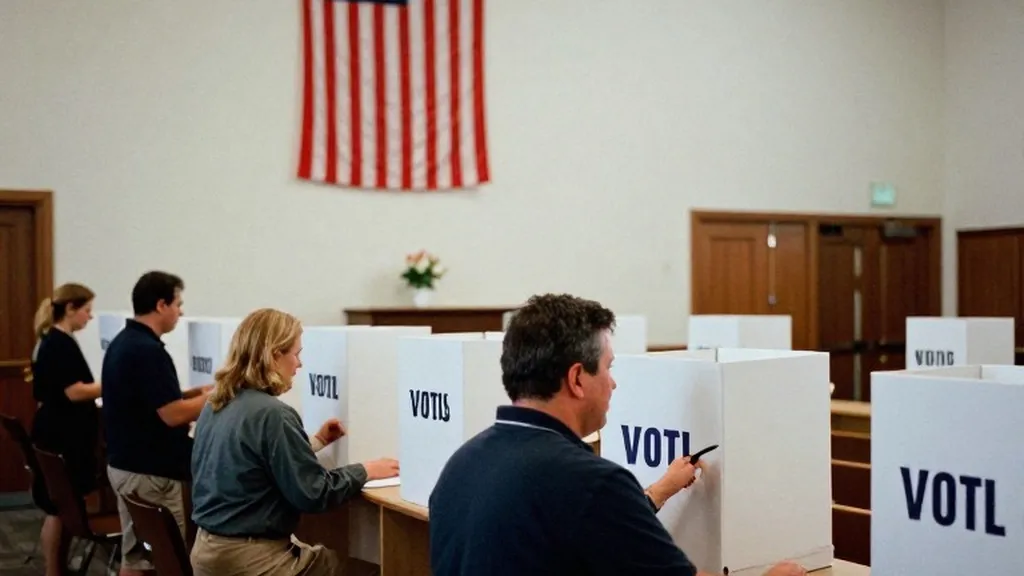
Today, voters across the country are heading to the polls. According to Ballotpedia, poll hours vary by state. For example, polls in Alabama are open from 7 a.m. to 7 p.m., while in California they are open from 7 a.m. to 8 p.m. Many states, such as Oregon and Utah, rely heavily on mail in voting. Voters can find their polling place at vote.gov or their state election office. It is important to note that anyone in line when polls close is entitled to vote. ID rules vary by state, so voters should check their state's rules before heading to the polls.
The world is watching as the United States decides its political direction for the next two years. The outcome of this midterm election will have far reaching consequences for global markets, trade policies, and international relations. Whether Democrats manage to take control of one or both chambers of Congress, or Republicans hold on to their majority, the results will shape the U.S. role in the world. For now, the polls are open, and the fate of American and global policy rests in the hands of the voters.