51% Wayne County Deficit: The Mountain Abdul El-Sayed Must Climb in Michigan
Former President Barack Obama returned to the campaign trail in Detroit to address the specific voting gap that threatens his endorsed nominee's Senate bid.
By Marina Weber ·
Abdul El-Sayed trails by a 51 percentage point margin in Wayne County, a gap that defines his path to the U.S. Senate in the November 3 election. This deficit, established during the August primary, represents the single largest obstacle for the Democratic candidate in a state that has not elected a Republican senator in 25 years. The county, which includes the city of Detroit, is the focal point of the current campaign strategy.
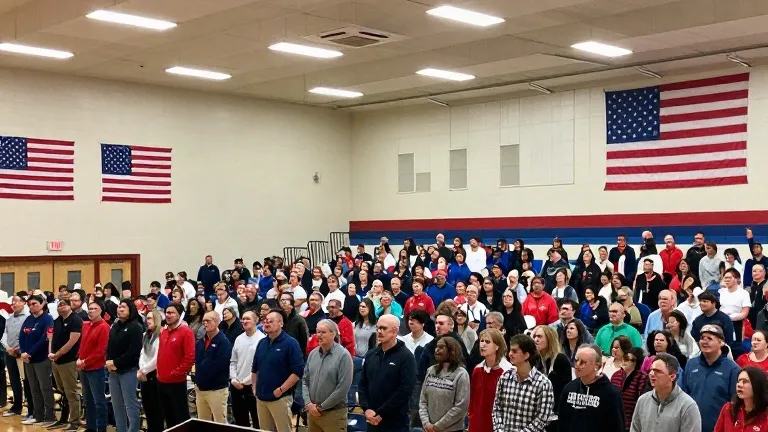
Barack Obama addressed this numerical reality directly during a rally at Cass Technical High School in Detroit on Saturday. The event coincided with the opening day of early voting in Michigan. Obama, who had remained silent during the contentious primary, delivered his first public endorsement of El-Sayed. He framed the race as a continuation of the policy work begun during his own presidency, specifically regarding healthcare access and economic fairness.
The former president identified the specific geography of the challenge. He noted that El-Sayed must reverse the results from the August primary, where former Congresswoman Haley Stevens defeated him in Wayne County by approximately 51% to 45%. Stevens had supported the Democratic establishment and pro-Israel groups, whereas El-Sayed, a physician and former county health official, ran as a progressive challenger. Obama acknowledged their past disagreements, stating that they do not agree on every detail, but emphasized their shared goal of ensuring a fair societal structure.
Obama also used the stage to critique the current administration, focusing on tariffs and executive behavior. He pointed out that President Donald Trump imposed the highest tariff rates on Canada, a neighbor located just across the bridge from Detroit. Obama joked that the trade policy targeted a "well-known evil empire" that provided the United States with maple syrup and the comedian Martin Short. He also mocked the White House renovation projects, comparing the aesthetic choices to a Cheesecake Factory opened by Saddam Hussein.
The national context of the race remains tight. A Marist poll conducted in mid-October placed El-Sayed at 50% and his opponent, Mike Rogers, at 48% among likely voters. RealClearPolitics averages show a similar margin, with El-Sayed leading by about 2.6 points. The Cook Political Report classifies the contest as a toss-up. Rogers, a former congressman endorsed by Trump, lost a close Senate race in 2024. If El-Sayed wins, he would become the first Muslim and first Egyptian American to serve in the U.S. Senate.
Other Democratic figures joined the effort to solidify the coalition. U.S. Senator Elissa Slotkin, who lost to El-Sayed in a previous cycle, spoke at the rally. She stated that Michigan voters prefer candidates who fight, noting that she and El-Sayed share more common ground than differences. Jocelyn Benson, the Democratic nominee for governor, also appeared. She faces Republican John James, whose victory would make him Michigan’s first Black governor.
The campaign intensity will increase on Sunday when President Trump holds a rally in Port Huron. This location, on the Canadian border, will host its first presidential visit to St. Clair County. Trump has previously attacked El-Sayed’s background, calling him a "jihadist" and alleging ties to the Muslim Brotherhood, claims the candidate strongly denies. The Detroit rally marked the start of Obama’s first weekend of in-person campaigning, having previously appeared in Cleveland, Ohio, to support local candidates.
Source: The Guardian