Argentina challenges UK sovereignty in Falklands oil arbitration
Argentina has asked an international tribunal to halt UK oil drilling near the Falklands, arguing that the British should not act as a 17th-century colonial power in the disputed waters.
By Amir Navarro ·
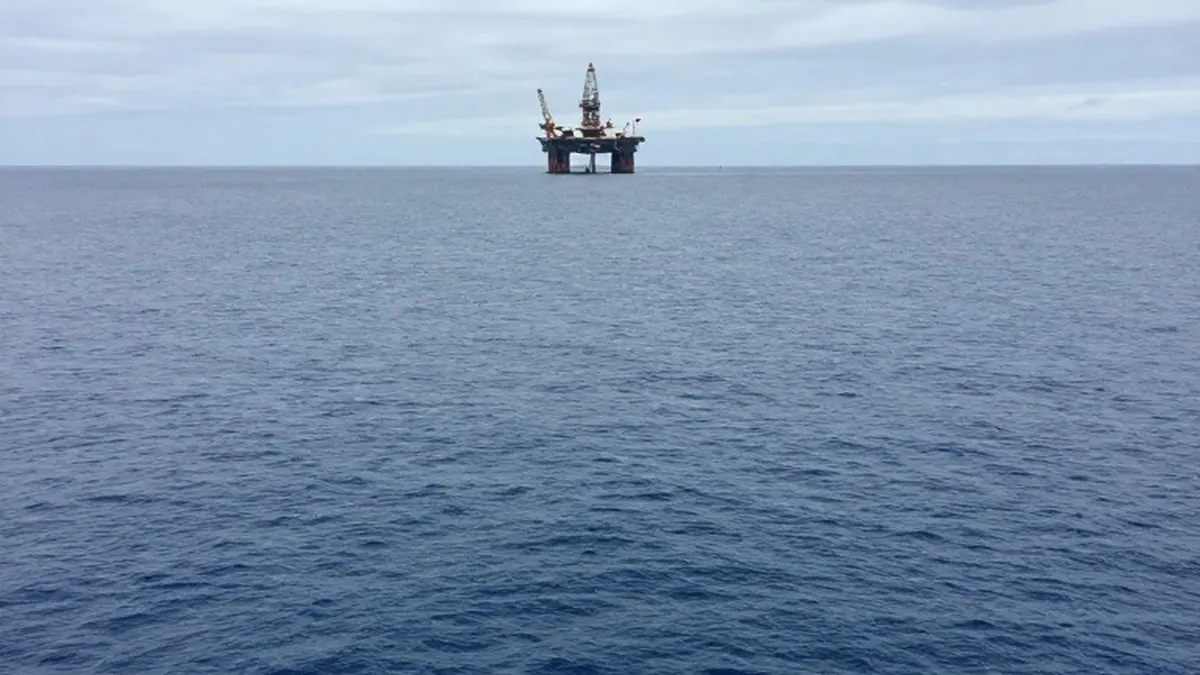
Argentina has urged an international tribunal in Hamburg to order the United Kingdom to suspend oil drilling operations near the Falkland Islands, arguing that the British should not act as a 17th-century colonial power. During the second day of hearings, Argentine representatives mocked the UK for relying on historic doctrines that claim crown sovereignty over expansive ocean areas. The country has applied to the International Tribunal for the Law of the Sea (Itlos) for a ruling that would halt drilling in the North Basin while further arbitration proceeds.
The legal dispute centers on the Sea Lion oilfield, located approximately 130 miles north of the Falkland Islands. The archipelago is a British overseas territory, though Argentina maintains a longstanding sovereignty claim over the land and surrounding waters. Marcelo Kohen, who is representing Argentina, told the judges that the ongoing dispute over the 700-island archipelago, known in Argentina as the Malvinas, does not create a legal vacuum. He argued that the UK cannot simply treat the area as its own exclusive domain.
Kohen stated that the fact that both parties dispute sovereignty does not transform the surrounding waters into a British maritime domain. He emphasized that the world is no longer in the 17th century and that it is time to end the final vestiges of colonialism. The Argentine legal team contended that the exploitation of hydrocarbons in the region would significantly increase the wealth of the islands, potentially placing them among the highest ranks of global wealth, just below the principality of Monaco, while simultaneously depriving Argentina of its rights to those resources.
The United Kingdom presented a contrasting view through Ellie Reeves, the attorney general for England and Wales. Speaking to the panel of judges, Reeves argued that Argentina’s application to suspend drilling was primarily a move to further its sovereignty ambitions. She warned that such a suspension would effectively kill the Sea Lion project, leading to disastrous consequences for both the Falkland Islanders and the companies involved. The UK also maintained that the tribunal, which adjudicates maritime matters, does not have the jurisdiction to delve into issues of sovereignty.
Argentina’s legal team stressed the urgency of their request, noting that drilling is scheduled to begin in March of next year. They argued that without a suspension, the UK could cause irreparable damage to Argentina’s rights. The team also pointed out that the UK had failed to address what Kohen called the elephant in the room, referring to the UN’s classification of the Falklands as a non-self-governing territory. In 1976, the UN called on both sides to refrain from making unilateral decisions that would change the situation before the sovereignty dispute was settled.
The UK countered that there was no immediate urgency because oil extraction would not commence until 2028. By that time, an Itlos arbitration panel would have reached a conclusion on the future of the oilfield. In his closing remarks, Mario Oyarzal, a legal adviser to Argentina’s ministry of foreign affairs, rejected the UK’s characterization of the proceedings as an attempt to litigate the broader sovereignty dispute. He clarified that the question before the tribunal was much narrower: whether the UK could unilaterally authorize or carry out new drilling in the disputed maritime area while the underlying dispute remained unresolved.
Argentina’s President Javier Milei has publicly supported the legal effort, describing the legal team in Hamburg as tremendous. He told his cabinet that the country is working on the Falklands issue like no one else in history. Milei previously described the reclaiming of the islands as a national cause during a speech at the United Nations General Assembly. The islands have been a point of contention since Argentina’s 1982 invasion under dictator General Leopoldo Galtieri. That 74-day conflict ended with the surrender of Argentine forces and resulted in the deaths of 649 Argentine military personnel, 255 British military personnel, and three Falkland Islanders.
The UK is scheduled to offer further submissions to the panel of 20 judges on Wednesday. The outcome of this arbitration could have significant implications for the management of the region’s natural resources and the ongoing diplomatic tensions between the two nations.