Iran Considers Tanker Convoy as Oil Revenue Nears Zero
Hardline voices in Iran are pushing for a direct challenge to the US naval blockade as the country's oil export income is projected to vanish by mid-December.
By Marina Weber ·
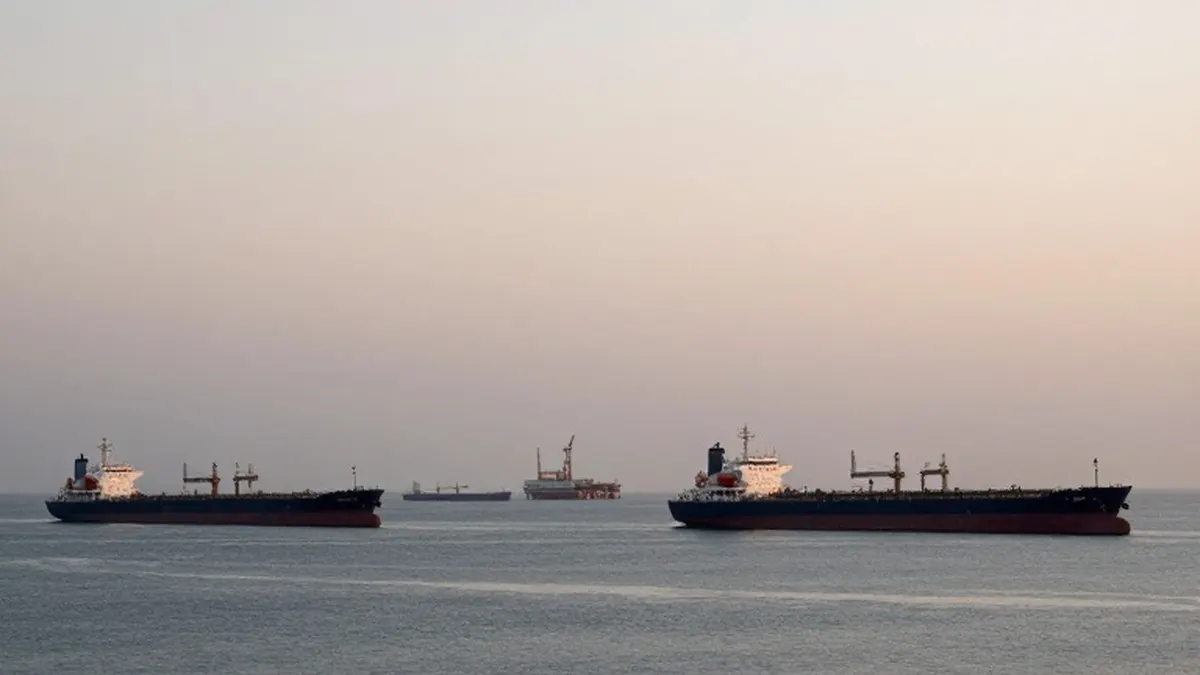
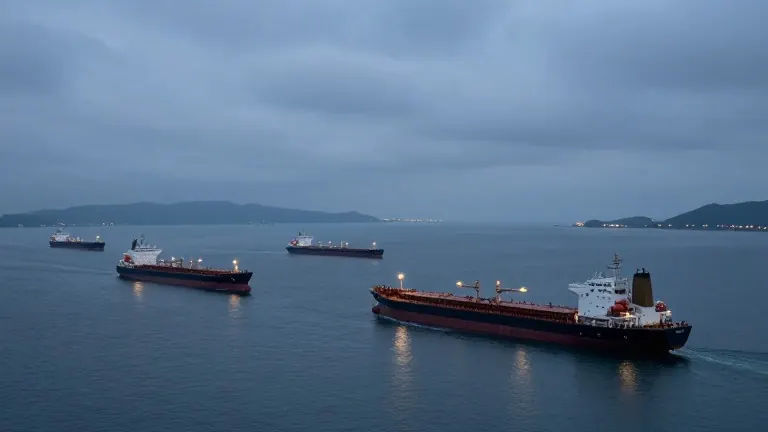
As Iran's income from crude oil and condensate exports approaches zero, hardline commentators and media outlets linked to the Islamic Revolutionary Guards Corps are urging a direct confrontation with the US naval blockade. Their proposed strategy involves sending a declared convoy of tankers through the blockade while threatening to target the oil infrastructure of neighboring Gulf states if US forces attack Iranian vessels.
The momentum behind this idea increased on November 19, when the IRGC-affiliated Fars news agency published a column advocating for the tanker convoy. On the same day, the ship-tracking service TankerTrackers.com noted on X that Iran appeared to be preparing to ship out oil again. Although no official body has formally announced a plan, the growing discussion highlights the severe financial pressure the blockade is placing on Tehran.
The closest official signal came from IRGC spokesman Hossein Mohebbi, who addressed a gathering in Tehran on November 19. He stated that the country would not allow the continued naval, land, and air blockade. In supporting the strategy, the Fars column referenced the national epic, the Shahnameh. It compared the situation to the hero Fereydun, who refused to wait for boats and instead rode his horse across the Arvand River to defeat the tyrant Zahhak. The column argued that Iran would open the route and raise the cost of closing it so high that the opposing side would logically choose to leave it open.
Fars warned that any attack on an Iranian tanker could lead to retaliation against oil facilities in Qatar, Saudi Arabia, and the United Arab Emirates. Hardline figures quickly embraced the proposal, with some presenting it as an impending decision rather than a mere suggestion. Ebrahim Azizi, chairman of the parliament's national security and foreign policy committee, declared in an English-language post that Iran cannot be blockaded, ending his message with an hourglass emoji. Other pundits, including Ruhollah Jomei and Mojtaba Najafi, suggested that Tehran was no longer willing to remain a passive spectator to the blockade and threats.
Hamidreza Azizi, an analyst at the International Crisis Group, noted that if these reports are accurate, Iran is seeking to actively challenge the blockade. He argued that if a tanker successfully passes through, the blockade loses its credibility. Conversely, if US forces stop or strike the vessel, Tehran gains a direct trigger for retaliation. Azizi added that Iran aims to take the military initiative while leaving Washington responsible for triggering the next escalation.
According to the energy-intelligence firm Kpler, Iran's oil revenue could fall to zero by mid-December for the first time in its history. The blockade's impact is visible in shipping data. Kpler reported that the volume of Iranian oil outside the blockade zone peaked at 88.8 million barrels on July 14, when the blockade was reimposed. By mid-October, that figure dropped to zero as the last cargoes were discharged in China. An additional 43 million barrels remain stranded inside the blockade area, leaving Tehran with a dwindling stockpile of deliverable oil.
Kpler senior commodity analyst Homayoun Falakshahi cautioned against interpreting recent developments as a concerted effort to break the blockade. He stated that it is still too early to say Iran has taken serious action. Kpler has identified about 20 tankers near Kharg Island, Iran's main export terminal. Most have loaded their cargoes but remain stationary, likely waiting for the blockade to lift. Only one tanker has been observed moving so far.
One notable development occurred on November 17, when Kpler detected an Iranian tanker transferring crude to another vessel. The receiving tanker was one typically used for Russian fuel oil. Falakshahi suggested this transfer might be due to a technical problem rather than a broader circumvention effort, especially since such transfers usually happen near Malaysia or Oman. He advised waiting to see if more tankers attempt to move in the coming days.
The US first blockaded Iranian ports on April 13 after talks in Islamabad collapsed. The blockade was lifted on June 18 but reimposed on July 14. Iranian ports have now been under blockade for about 195 days, with the current continuous period lasting 129 days. The operation is costly for Washington, with estimates placing the expense at $32.5 million per day. It also ties up more than 30 percent of US Navy warships. The Pentagon estimated the overall cost of the Iran war at $48.3 billion as of November 13, a figure that remains a fraction of the daily oil revenue losses facing Tehran.