VAQ-140 faces potential twelve-month deployment in Middle East
Navy leaders told families of the USS George H.W. Bush strike group that the mission may extend to a full year, affecting approximately 7,000 service members.
By Marina Weber ·
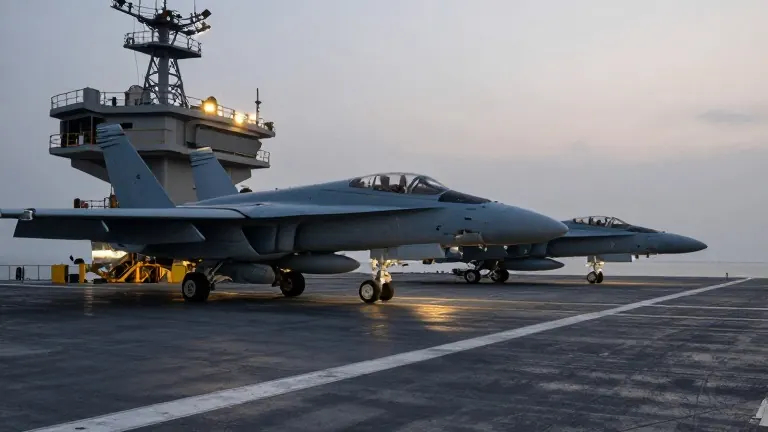
Electronic Attack Squadron 140, designated as the “Patriots,” is currently operating in the Middle East as part of the USS George H.W. Bush carrier strike group. Navy leadership informed family members that the unit’s deployment could extend to twelve months, a duration significantly longer than the initial plan.
The strike group departed on March 31 with an anticipated deployment period of six to seven months. During a town hall meeting held earlier this week, officials advised families to prepare for the extended timeline. This announcement followed reports that the squadron has been operating with Carrier Air Wing 7 since November 9.
A senior Navy official stated that operational demands on forward-deployed sailors and marines are consistently unpredictable. The official did not specify an end date for the deployment, citing security reasons. According to data from MS NOW, the strike group includes approximately 7,000 service members.
Mike Welding, the public affairs officer at Naval Air Station Whidbey, noted that a single Growler squadron consists of roughly 200 sailors. At the town hall, families expressed frustration regarding the extension. Witnesses described the atmosphere of the meeting as combative, though squadron ombudsmen did not confirm whether VAQ-140 families received specific notification of the change.
This extension follows a similar experience for another Whidbey-based unit. Electronic Attack Squadron 133, the “Wizards,” returned to the island in October after a ten-month deployment with Carrier Air Wing 9. That squadron spent 265 days at sea without a port visit, a duration that raised concerns about conditions on the USS Abraham Lincoln and the mental health of the crew.
The Navy has indicated a shift toward longer overseas assignments. Master Chief Petty Officer of the Navy John Perryman said last month that sailors should anticipate deployments of up to ten or eleven months when attached to carrier strike groups. The current operation against Iran has added pressure to these already extended timelines.
The squadron’s return to Naval Air Station Whidbey is now uncertain, leaving families without a confirmed date for the end of the mission. The extension impacts the broader readiness and rotation schedule for the strike group’s personnel.