UN report highlights growing alarm over unverified Iranian nuclear site
A confidential IAEA report reveals growing concern over an unverified uranium enrichment plant in Isfahan, with Iran citing military threats as a barrier to inspection.
By Marina Weber ·
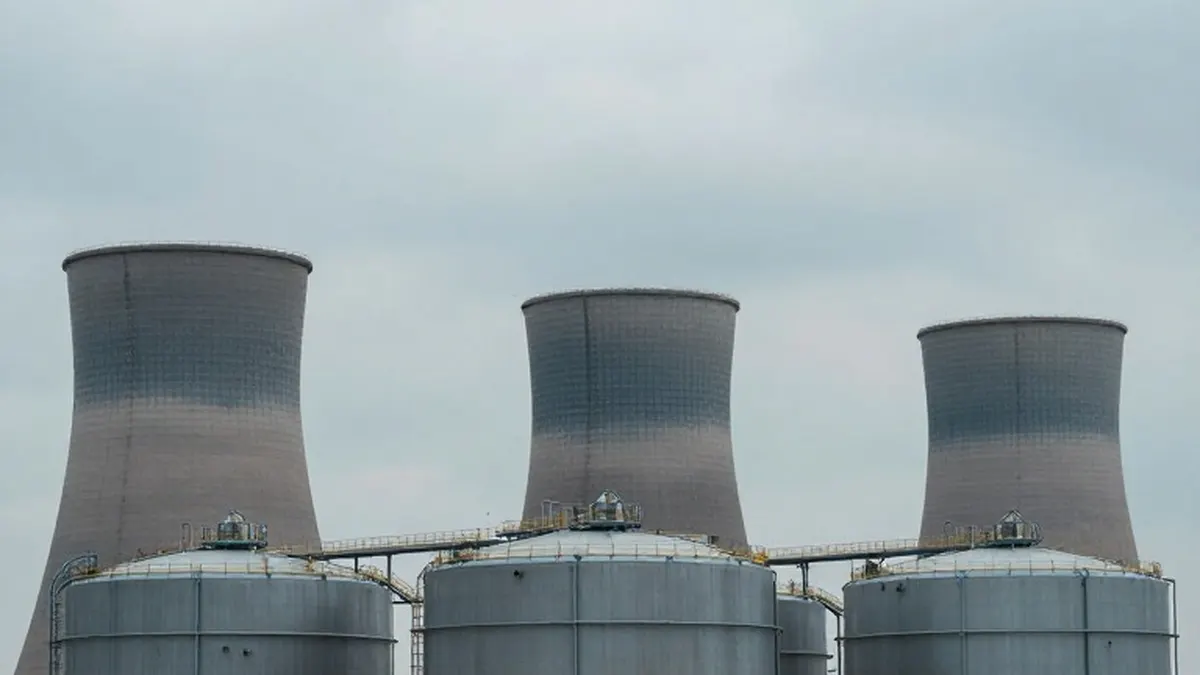
The International Atomic Energy Agency has expressed deepening concern regarding a specific uranium enrichment facility in Iran that remains unverified by international inspectors. A confidential report issued on Friday and viewed by major news agencies reveals that the agency is increasingly worried about the Isfahan Fuel Enrichment Plant. Iran officially declared this plant to the IAEA last year but has not yet permitted the watchdog body to conduct an inspection.
The lack of access stems from a series of military events that have disrupted normal monitoring procedures. Iran has stated that nuclear monitoring talks cannot move forward while the country feels threatened by potential military attacks. Since a twelve-day campaign of strikes by Israel and the United States in June of last year, Tehran has not allowed IAEA inspectors to return to any nuclear facilities that were bombed during that conflict. Those attacks destroyed or significantly damaged other key enrichment plants that form the core of Iran's nuclear program.
Diplomats believe the undeclared Isfahan Fuel Enrichment Plant is located within a tunnel network at the Isfahan site. Although the plant was declared to the agency on June 12, 2025, a senior diplomat noted that its exact whereabouts and current status remain unclear. The IAEA had originally planned to inspect the site the following day, but the start of the bombing campaign on June 13, 2025, made that mission impossible.
The confidential report to member states notes that the agency does not know the plant's precise location, its status for safeguards purposes, or if it contains nuclear material. The IAEA is also concerned that Iran has not allowed it to inspect the plant or review its design plans. In response, Iran told the agency that the situation will not resolve until the root causes are addressed and the essential requirements for normal safeguards are restored.
IAEA Director General Rafael Grossi stated in March that his agency believed a significant portion of Iran's most highly enriched uranium was stored in the Isfahan tunnel complex. While the report focuses on the enrichment plant, it also reiterates the need for Iran to inform the IAEA about the status of its enrichment facilities and its stockpile of highly enriched uranium. This stockpile includes material that is close to weapons grade. The report describes the lack of information and access as a serious proliferation concern that needs urgent rectification.
Tensions have been further complicated by a recent U.S. offer of a reward of up to 20 million Canadian dollars for information on Iran's nuclear program. In a letter to the IAEA, Tehran expressed concern over this offer, emphasizing the need to maintain the confidentiality of the agency's activities. Iran stressed that information regarding its nuclear program must not be disclosed, misused, or exploited. The IAEA has encouraged Iran to consider technical and gradual measures to facilitate the return of inspectors.
Since the June strikes, the only Iranian facility inspected by the IAEA has been the Bushehr nuclear power plant. Inspectors visited that site from September 12 to 15. The reactor at Bushehr uses uranium enriched to 4.5 percent, a low level required for power generation, and the uranium is supplied by Russia.
Military dynamics have shifted again following further U.S. and Israeli strikes on February 28, which targeted Revolutionary Guard command facilities, air defense systems, and military airfields. Those attacks resulted in the death of Iran's Supreme Leader Ayatollah Ali Khamenei and other top officials. According to the IAEA, Iran currently maintains a stockpile of 440.9 kilograms of uranium enriched to 60 percent purity. This level is technically a short step away from the 90 percent needed for weapons.
Grossi warned in an interview last year that this stockpile could theoretically allow Iran to build up to ten nuclear bombs if it decided to weaponize its program, though he clarified that this does not mean the country currently possesses such weapons. Under normal IAEA guidelines, such highly enriched material should be verified every month. While Iran has long insisted its program is peaceful, the IAEA and Western nations maintain that Tehran had an organized nuclear weapons program until 2003.