Ukraine war briefing: Rescue efforts continue as Russia launches massive energy strikes
Ukrainian officials report over fifty people trapped in rubble after Russian strikes on an aid hub, while a coordinated attack on energy infrastructure leaves major cities without power ahead of upcoming peace talks.
By Amir Navarro ·
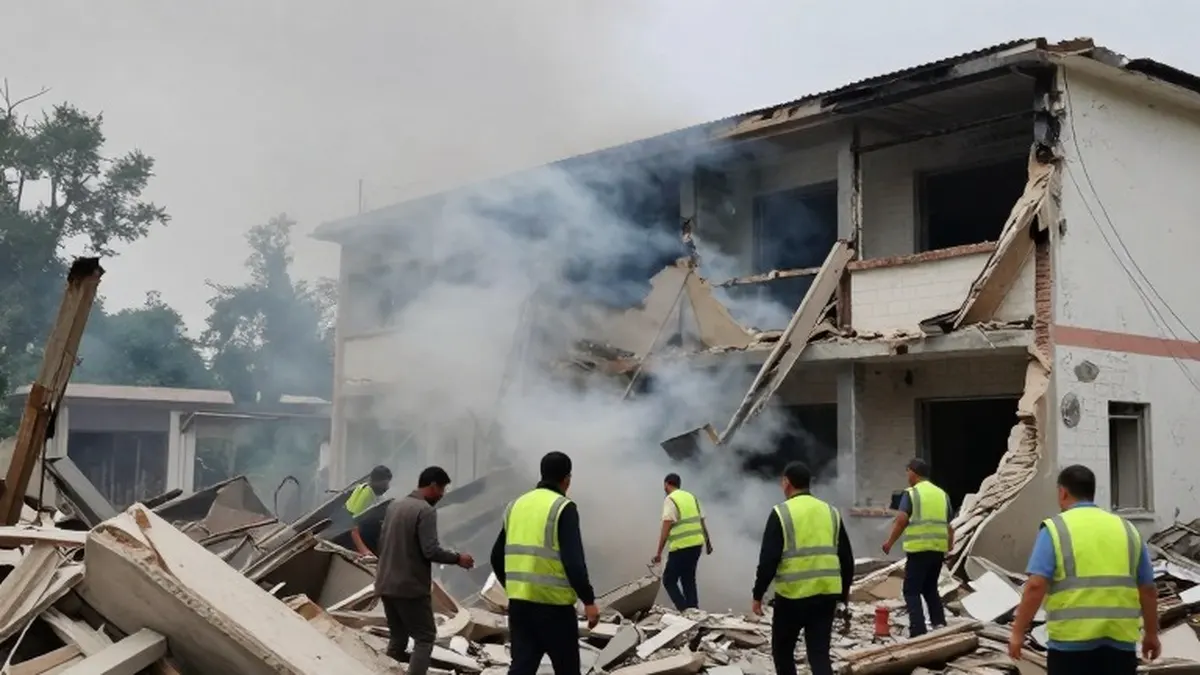
Rescue teams are working to free dozens of people trapped under the rubble of a former school building in Komyshuvakha, a frontline village in southeastern Ukraine, following a series of Russian strikes. President Volodymyr Zelenskyy stated on Tuesday that thirty-three individuals have been confirmed dead, with more than fifty others potentially buried beneath the debris. He described the incident as one of the worst attacks of the war, noting that the building was being used to distribute humanitarian aid. The strikes occurred after a fragile ceasefire had held for several days in the Kherson region, which had allowed for a rare aid mission to take place.
In a separate but related offensive, Russia targeted Ukraine's energy infrastructure with a large-scale barrage of missiles and drones. Zelenskyy reported that Moscow launched 289 drones, 17 ballistic missiles, and 59 cruise missiles during the overnight attack. The strikes hit power plants and substations across the country, stretching from the Black Sea port of Odesa in the south to the western city of Rivne. The timing of the attack is notable as it comes just one week before peace talks brokered by the United States are scheduled to resume.
The impact of the energy strikes has been severe, knocking out power to vast areas of the country. DTEK, Ukraine's largest private power generation company, announced that three of its five thermal power plants were forced offline due to the damage. Vitali Klitschko, the mayor of Kyiv, posted on Telegram that the situation regarding electricity supply in the capital is extremely difficult, highlighting the strain on the national grid during the winter season.
German prosecutors revealed that a third suspect has been arrested in connection with a fire that damaged a Starlink station in Poland in September. The new detainee, a Turkish national, was held in the city of Reutlingen. This arrest follows the detention of two other Turkish men in Germany in October, who are currently in custody pending potential extradition to Poland. Polish Prime Minister Donald Tusk has characterized the fire as an act of hybrid warfare, a label that aligns with recent accusations by Ukrainian allies regarding Moscow's tactics.
Domestic tensions in Ukraine have also risen due to an investigation into the alleged illegal detention of army deserters. The State Bureau of Investigation opened a probe after social media reports surfaced about soldiers being held against their will in a house in the Kyiv region. Videos shared online showed angry crowds gathering outside the property, where the agency said clashes had occurred. This incident has renewed public focus on the sensitive issue of military conscription as the war continues.
Tensions at the Zaporizhzhia nuclear power plant, which remains under Russian control, also escalated on Tuesday. Plant management stated that a Ukrainian drone struck a car, killing two people including a female employee. The statement did not specify the exact location of the incident but noted that the employee was the third person killed in the past two weeks and the thirteenth since April. The management described the attack on a civilian vehicle as targeted terrorism, while Ukraine has not yet issued a formal comment.
In the world of sports, four European nations have decided to refuse a match against Russia at next year's men's Ice Hockey World Championship in Germany. Norway, Denmark, Sweden, and the Czech Republic cited safety concerns and geopolitical tensions for their decision. This move comes after the Court of Arbitration for Sport ruled last week to allow Russian teams to compete in International Ice Hockey Federation events again, reversing the previous exclusion that had been in place since Moscow's invasion of Ukraine in 2022.
Source: The Guardian