SpaceX Catches Starship Upper Stage at Texas Launch Tower in Test Flight Milestone
SpaceX completed the 15th test flight of its Starship megarocket by catching the returning upper stage at its launch tower, a first for the company despite the loss of the booster at sea.
By Amir Navarro ·
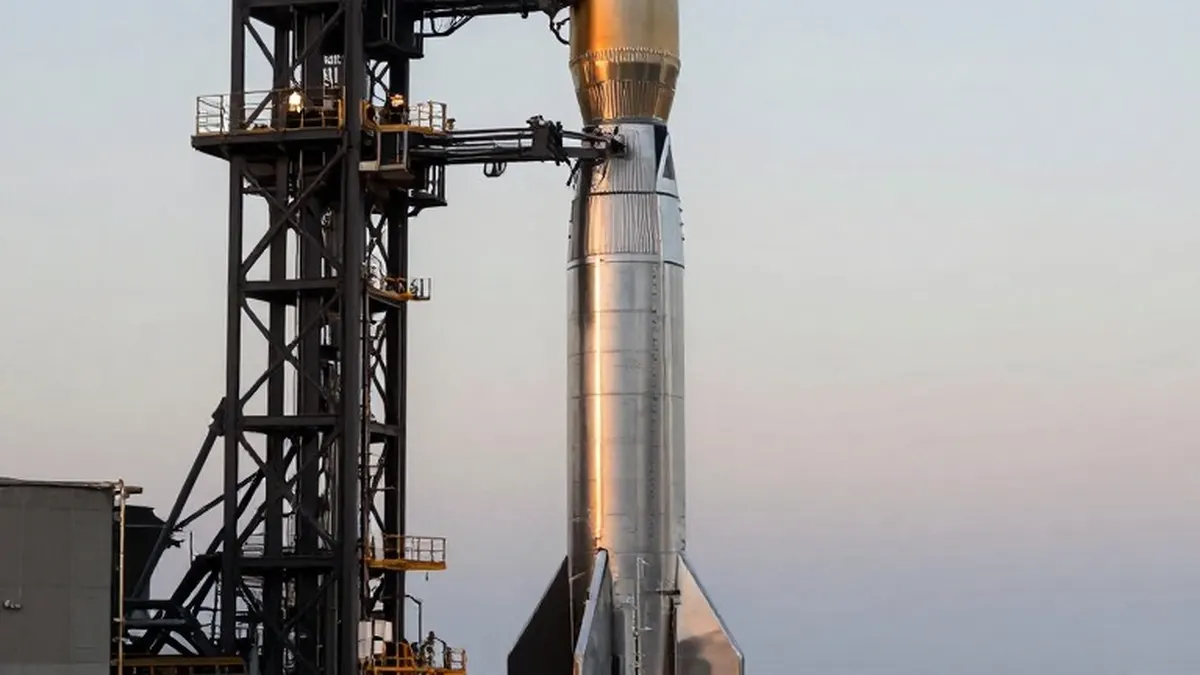
SpaceX's Starship megarocket returned to its launch tower in Texas on Saturday, a milestone in the company's push to make the craft ready for human spaceflight.
The 171ft (52-meter) bullet-shaped upper stage descended into the clutch of the tower's mechanical arms, closing out a 22-hour mission in which the craft orbited Earth 14 times.
The 15th test flight had been envisioned as a historic double-catch mission, in which every part of the rocket would return intact to the launch site rather than being recovered from the sea, as happened on some earlier test flights.
The massive spacecraft is made up of two parts: a lower booster stage called Super Heavy, whose Raptor engines powered the ascent into orbit, and an upper stage that is also called Starship.
The double-catch plan fell apart on Friday, when the booster diverted a few minutes after liftoff and exploded in the Gulf of Mexico. The rocket's guidance, navigation and control system, known as GNC, triggered the no-go call.
"It was doing what it was supposed to do. Basically, it detected that the booster was not in the place it was supposed to be to proceed with a catch," SpaceX spokesperson Dan Huot said early on Saturday.
Even so, the test flight counted as a victory for SpaceX, because it marked the first time the company caught its upper stage.
The achievement comes as the 2028 target approaches for Nasa's planned return of humans to the lunar surface. The agency has contracted both SpaceX and Jeff Bezos's Blue Origin for the mission.
SpaceX intends to increase the pace of Starship test flights to a weekly and then twice-weekly cadence, chief executive Elon Musk said on a recent earnings call. Musk has sought to make Starship rapidly reusable so that it can land and take off much like a standard airplane.
Beyond another Moon landing, Musk has also promoted a plan to carry humans to Mars.