Russian Diesel Tankers Reroute After US Buyers Hesitate
Ukrainian officials say Russian diesel tankers are seeking new markets after facing resistance from American ports, even as Washington grants a sanctions waiver.
By Marina Weber ·
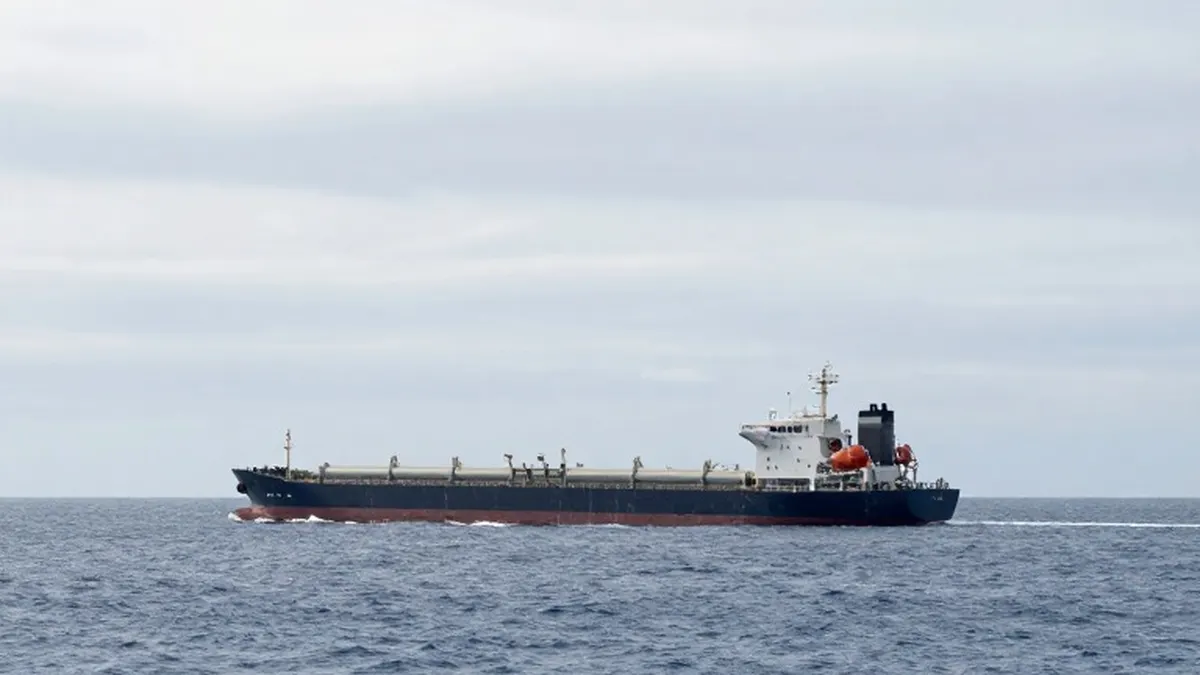
Several tankers carrying Russian diesel have altered their course while en route to the United States. The vessels were originally heading for American ports but changed direction after struggling to find buyers willing to accept the cargoes. This development occurs amid increasing political and legal opposition to the Trump administration's efforts to facilitate the import of Russian fuel.
The US Treasury Department announced a sanctions waiver for Russian diesel in early October. This decision was made in response to growing concerns within the United States regarding rapidly rising diesel prices. Following the waiver, Ukrainian authorities began tracking eight specific tankers that were believed to be loaded with Russian diesel and destined for US shores.
Despite the waiver, no shipment of Russian diesel has successfully arrived at an American port. Resistance has come from various quarters, including lawmakers, financial institutions, and port authorities. On November 11, Senator Jeanne Shaheen, who serves as the top Democrat on the Senate Foreign Relations Committee, stated that Congress is closely monitoring the situation.
Vladyslav Vlasiuk, Ukraine's chief official for sanctions policy, spoke with RFE/RL on November 12. He expressed satisfaction that the cargoes had not yet been delivered to the US. However, he warned that the ships remain at sea and are actively seeking alternative customers. He described the current status as a positive sign but stopped short of calling it a definitive victory for Ukraine's sanctions campaign.
According to Vlasiuk, monitoring data indicates that several tankers originally bound for the US have redirected toward the Mediterranean. Meanwhile, new tankers are being loaded with diesel in the Baltic region. He emphasized that the cargo has not disappeared and is currently looking for a different buyer. Vlasiuk defined a real victory as a scenario where Russia earns less revenue for every barrel and ton of fuel sold.
The Ukrainian official noted that this episode demonstrates the continued effectiveness of sanctions pressure, even when political leaders attempt to relax restrictions. He explained that sanctions involve more than just government decisions. They rely on banks, insurers, traders, and port operators who assess risk. When rules are unclear, the market often prefers to avoid the risk associated with Russian cargo.
Vlasiuk pointed to previous actions for context. When the US sanctioned major oil companies Rosneft and Lukoil, discounts on Russian crude widened within days. He argued that the market reacts immediately to serious measures and also responds to signals that pressure is easing. This highlights why consistency in enforcement is critical.
Even if the diesel does not reach America, Russia can sell it elsewhere. Vlasiuk confirmed that Moscow is losing money in these transactions. Every diverted cargo results in longer voyages, higher freight costs, and the need for extra intermediaries. These factors lead to bigger discounts, and each step takes a cut out of Russia's revenue. He noted that money paid to middlemen and shadow fleet operators is money that does not go toward missile production.
Sanctions rarely stop trade completely, but they make it slower, more expensive, and less profitable. Over time, these factors add up. Vlasiuk stated that the main lesson from the war is that sanctions work where they are enforced. He cited data showing that Russia's oil and gas budget revenues fell by about a quarter in 2025. Additionally, around $300 billion of its central bank reserves remain immobilized. After the US sanctioned Rosneft and Lukoil, Russian crude was sold at discounts of over $20 a barrel.
Russia adapts quickly by localizing production, finding new suppliers, and building new evasion routes. Other countries, including Iran and North Korea, also learn from each other rapidly. Vlasiuk identified a key weakness in Western enforcement. He noted that Western electronics are still found in Russian weapons, with the Geran-4 drone alone containing around 55 foreign components from seven countries. He argued that too few criminal cases are brought against intermediaries and that there is often a long gap between announcing measures and implementing them.