European leaders in Dublin address hybrid threats and peace talks
European leaders in Dublin discuss the impact of hybrid attacks and the role of the continent in renewed Ukraine peace negotiations.
By Vanessa Lopez ·
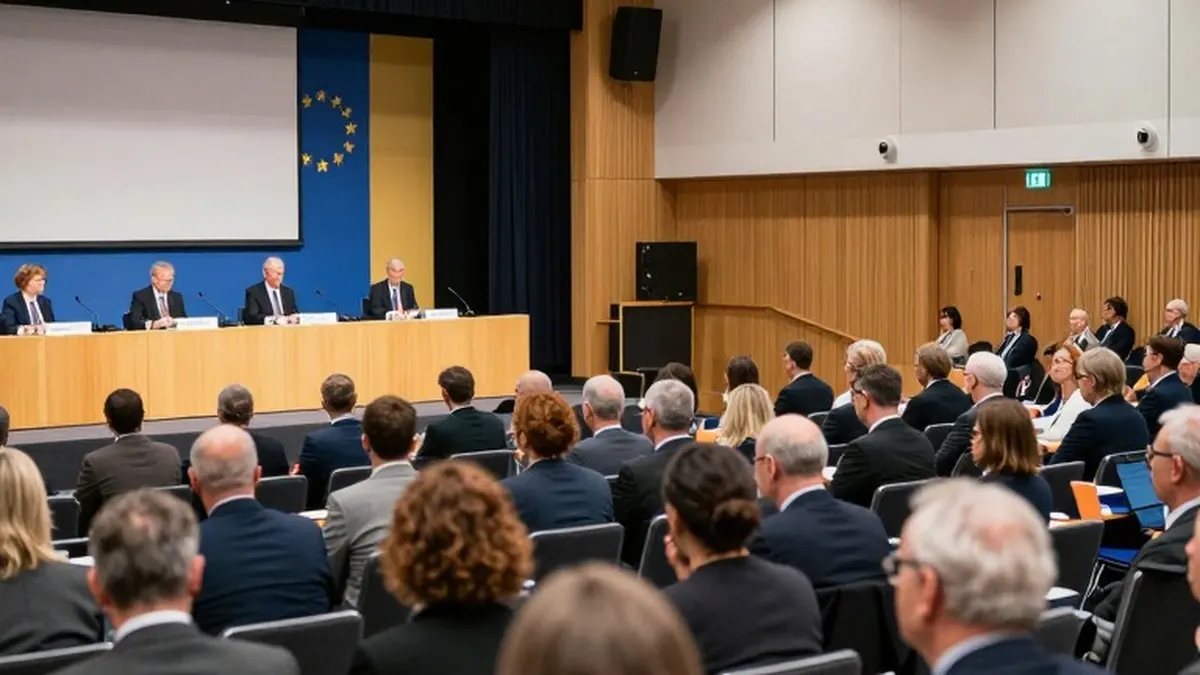
Heads of state and government officials from more than 40 European nations convened in Dublin for the biannual European Political Community summit. The gathering, which took place on Thursday, focused heavily on the rising frequency of hybrid attacks across the continent. This regional group was established in 2022 following Russia’s full-scale invasion of Ukraine and serves as a platform for discussing the region’s fragile security landscape.
The summit arrived at a critical juncture, marked by a new United States-backed initiative to restart negotiations between Russia and Ukraine. The timing is particularly sensitive given a recent wave of disruptive incidents that have targeted essential services. Supermarkets, blood banks, passenger airlines, schools, and media outlets have all been subject to hoaxes and cyberattacks in recent weeks.
The strain on public infrastructure was highlighted by a series of alarming events in Italy. Earlier on Thursday, over 3,700 schools in the country received fake bomb threats. This incident followed a similar widespread alert the previous day, which affected approximately 6,300 schools. These coordinated disruptions have intensified concerns among European policymakers regarding the resilience of their democratic systems.
Micheal Martin, the Prime Minister of the Republic of Ireland and known as the taoiseach, addressed reporters regarding the strategic intent behind these attacks. He stated that the perpetrators aim to create confusion, sow division, and weaken public confidence in democratic institutions. Martin assured the public that Europe would not allow these tactics to succeed and emphasized the importance of sharing experiences and working together through forums like the EPC to protect their democracies.
European officials have pointed to Russia as the likely mastermind behind these disruptive operations on key infrastructure, which they argue fall below the threshold of conventional war. However, Moscow has denied allegations of involvement in the recent series of threats. The debate over attribution remains a central point of contention among the leaders present in Dublin.
A significant portion of the agenda was dedicated to the question of European representation in the upcoming peace talks. Both Washington and Kyiv have called for a European envoy to participate in the discussions, yet it remains unclear who will ultimately be named to this role. The selection of a representative has become a major topic of conversation among the assembled leaders.
US envoy Steve Witkoff provided an update earlier on Thursday, announcing that Russian President Vladimir Putin agreed to allow European representatives to join the next round of Ukraine discussions. This development followed a meeting held in Moscow and signals a potential shift in the diplomatic dynamics of the conflict.
British Prime Minister Andy Burnham expressed his complete support for Ukrainian President Volodymyr Zelenskyy during the summit. Burnham stated that he would actively push for European inclusion in the US-brokered talks. He also co-chaired a specific group meeting on Ukraine alongside President Zelenskyy, underscoring the collaborative effort to secure a role for the continent in the negotiation process.
The political atmosphere in Europe remains tense as the summit coincides with significant domestic shifts. The gathering occurred just one week after the US midterm elections, which resulted in extensive losses for President Donald Trump’s Republican Party. In Europe, populist leaders have recently been ousted in Serbia and Hungary, although the far right continues to gain ground, particularly in recent regional elections in Germany.
Voters in major European countries, including Spain, France, Italy, and Poland, are expected to cast their ballots in the coming months. Amidst these political developments, two individuals were arrested in Dublin’s city centre during a protest organized by the group Mothers Against Genocide. The demonstrators, who were protesting Israel’s war on Gaza, carried Palestinian flags, Irish tricolours, and banners calling for a boycott of Israel while the EPC sessions were ongoing.