Five new horned frog species identified in Arunachal Pradesh
Researchers from Harvard and Delhi University have discovered five new species of tiny horned frogs in the eastern Himalayas, significantly expanding the known biodiversity of the region.
By Vanessa Lopez ·
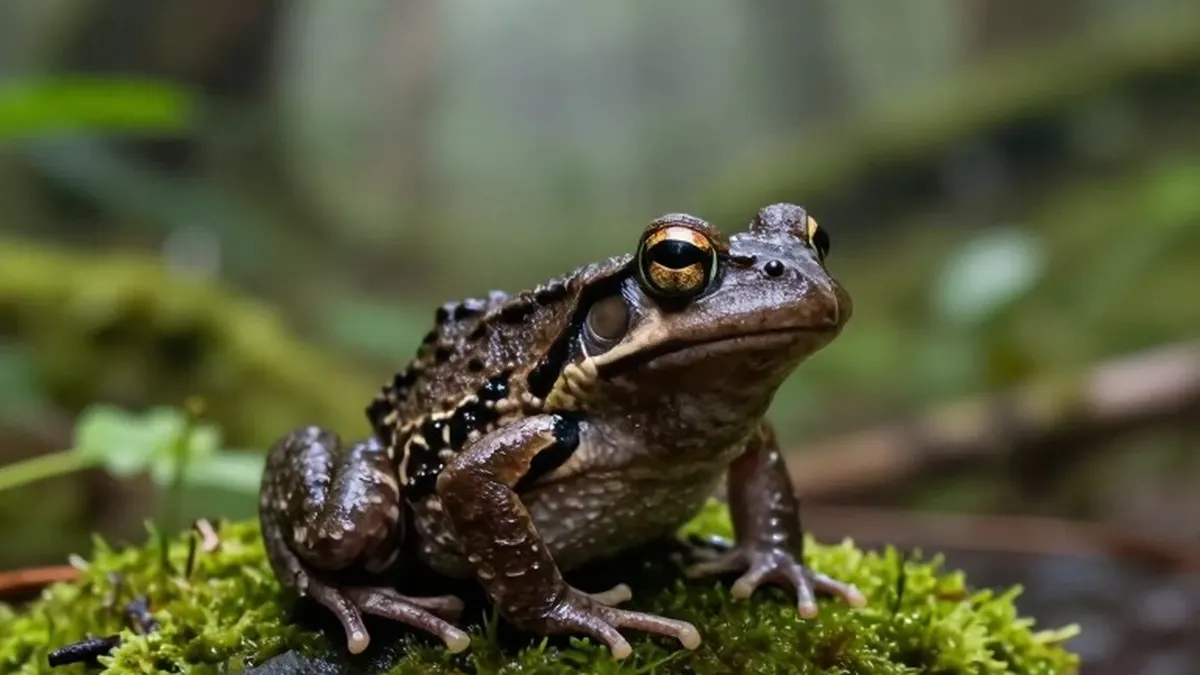
Scientists have announced the discovery of five new species of diminutive horned frogs in India's eastern Himalayas. This finding more than doubles the number of known species within the Jingophrys group. The identification was achieved after a five-year period of intensive fieldwork by a collaborative team from Harvard University and the University of Delhi.
The research team, led by Dr. Sonali Garg from Harvard University's Museum of Comparative Zoology, worked alongside colleagues James Hanken, SD Biju, Tage Tajo, and Radhakrishna Upadhyaya K. from Delhi University. Their findings were published on 11 November in the journal Royal Society Open Science under the title 'two-fold hidden diversity of diminutive horned frogs (Megophryinae: Jingophrys)'.
One of the most notable discoveries is Jingophrys tanogogo, commonly referred to as the snail-eating horned frog. This species marks a significant evolutionary milestone as it is the first frog known in India to feed on snails. It is also the first member of its family to be recorded with such a specific dietary habit.
Dr. Garg noted that the study underscores how substantial evolutionary changes can remain unnoticed in species that are rarely studied. The Himalayas, which range from tropical forests to alpine meadows, are recognized as one of the world's most biodiverse regions. However, many areas within this range have not been fully explored by the scientific community.
The state of Arunachal Pradesh has emerged as one of the least-studied areas within the Himalayan biodiversity hotspot. The researchers suggest that the mountain range has played a far more significant role in frog evolution than previously assumed. The varied terrain and climate have created unique conditions for ecological development.
DNA analysis conducted by the team indicates that these horned frogs rapidly diversified into multiple distinct species over millions of years. This evolutionary process coincided with the rising of the mountain range and the formation of the Asian monsoon. These geological and climatic shifts helped drive the evolution of the region's broader plant and wildlife communities.
SD Biju, a key member of the research team, highlighted the challenges of studying these animals. He stated that some of the new species are extremely secretive and can only be found in remote forests during a very short breeding season. This rarity makes them difficult to observe and document.
The research team credited local tribes with providing essential field support and traditional knowledge that made the discoveries possible. In recognition of this collaboration, some of the new species were named after local communities. For example, the Tanii horned frog, Jingophrys taniitatii, derives its name from the Tanii tribe and the word 'tatti', which means frog in the local Apatani language.
The five newly named species include Jingophrys taniitatii, Jingophrys tanogogo, Jingophrys siangensis, Jingophrys hrdy, and Jingophrys wularsoni. These additions to the scientific record highlight the hidden richness of the Arunachal Pradesh ecosystem.
Researchers emphasize that further studies are necessary to better understand the biology and conservation needs of these newly identified frogs. As the Himalayas continue to be recognized as an overlooked hotspot for biodiversity, these findings may guide future conservation efforts in the region.